Tokyo to Fukui by E-Bike, Day 7: Over Ushinoya Pass and Into the Dinosaur Kingdom
The last leg of the ride, from Kaga to Fukui Station, was only about 40 kilometers, but it still packed in a forested border pass, a long downhill, a very familiar onigiri, and a cartoon dinosaur on the pavement telling kids to raise their hands. By eleven in the morning I was standing in front of Fukui Station, getting roared at by a six-meter-tall Fukuititan.
I dropped the room key off at Sun City Hotel early in the morning, around seven if I remember right, then went out to do what I had done every morning of this trip. Before the Beast goes anywhere, I run through a checklist, half out loud, like a pilot who has watched a few too many movies. Keys, check. Battery, check. Phone and wallet, check. Route loaded in Garmin, check. Ortliebs clipped on properly, check. Helmet on my head, check. Everything, check. It sounds a bit silly, but by day seven it had turned into a kind of ritual.
This was the big day — the day I would finally reach Fukui Station. Compared to some of the earlier days, the distance was almost nothing, only around 40 kilometers, so it felt more like a victory lap than a real ride. I wasn’t in a hurry at all.
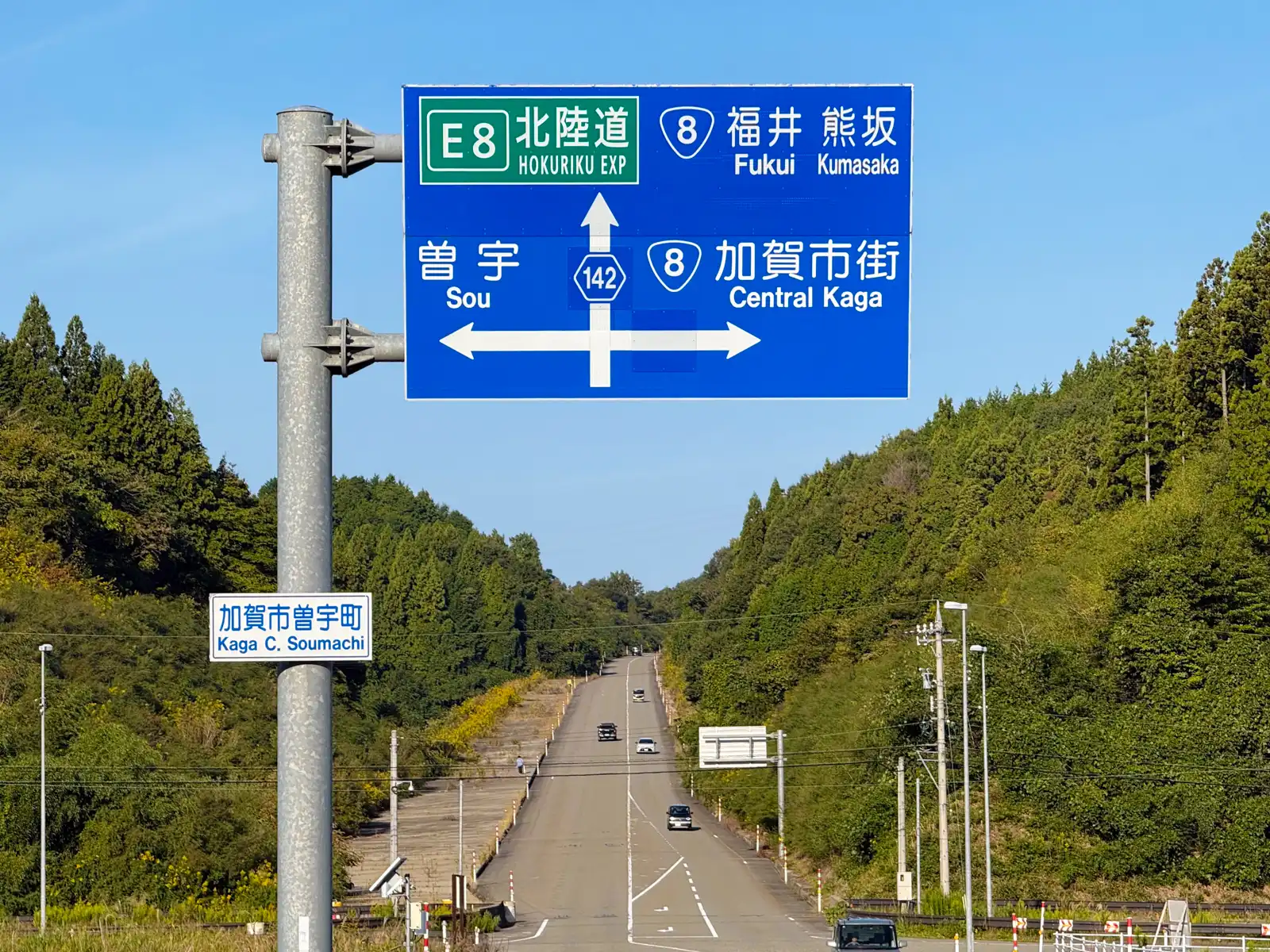
Kaga sits right at the southern edge of Ishikawa, so it didn’t take long before the road started to climb. On Route 8, the border between Ishikawa and Fukui runs over Ushinoya Pass, cutting right across the top of a tall, thickly forested hill. This part of Route 8 is a two-lane road with a steep slope, where the trucks don’t really slow down for anyone, so I stayed close to the edge, letting the motor do most of the hard work. Apparently, there are plans to dig a tunnel through the pass someday to get rid of that steep section, but for now everyone, trucks and e-bikes alike, still has to climb over the top. Right at the top, a sign welcomed me to… Fukui Prefecture and Awara City! Yes! When I stopped to take a photo of it, a big Costco truck came rumbling up the hill right behind me, which wasn’t exactly the welcome committee I had imagined.
Then came the reward for all that climbing. The other side was a long downhill where I barely had to touch the pedals for quite a while. Bit by bit the forest got thinner and the hills got smaller, and before I knew it I was cruising through the flat farmland of northern Fukui, with nothing but fields all around.
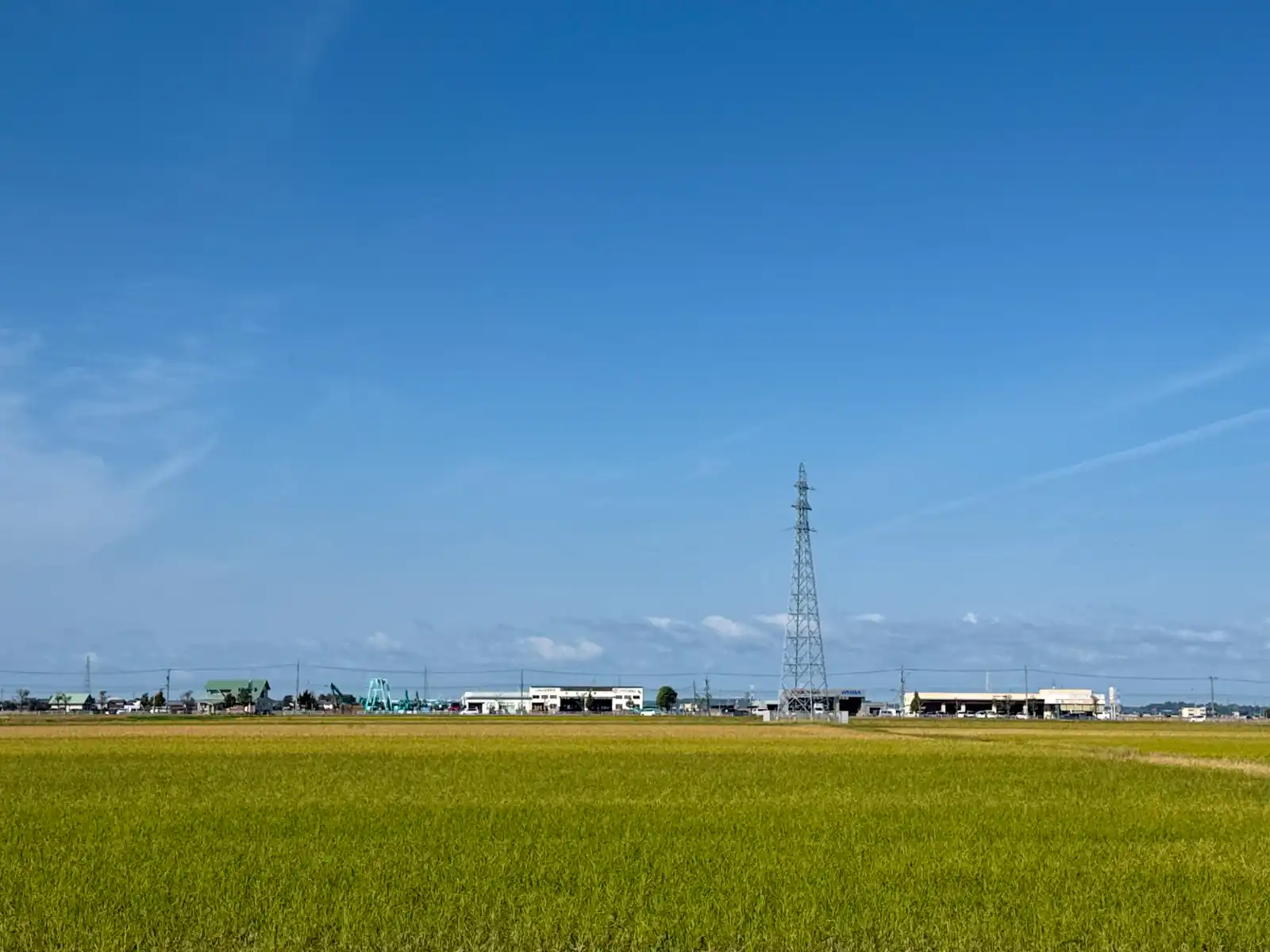
Some of the fields were still waiting to be harvested, glowing yellow and green. Fukui takes its rice quite seriously, for good reason. Koshihikari, the variety that has been Japan’s most widely planted rice for decades, was developed right here in 1956 at what is now the Fukui Agricultural Experiment Station. Its name basically means “rice shining in the land of Koshi,” Koshi being the old name for this part of Japan. So in a way, a lot of the rice people eat all over the country today has its roots in fields that look a lot like these.
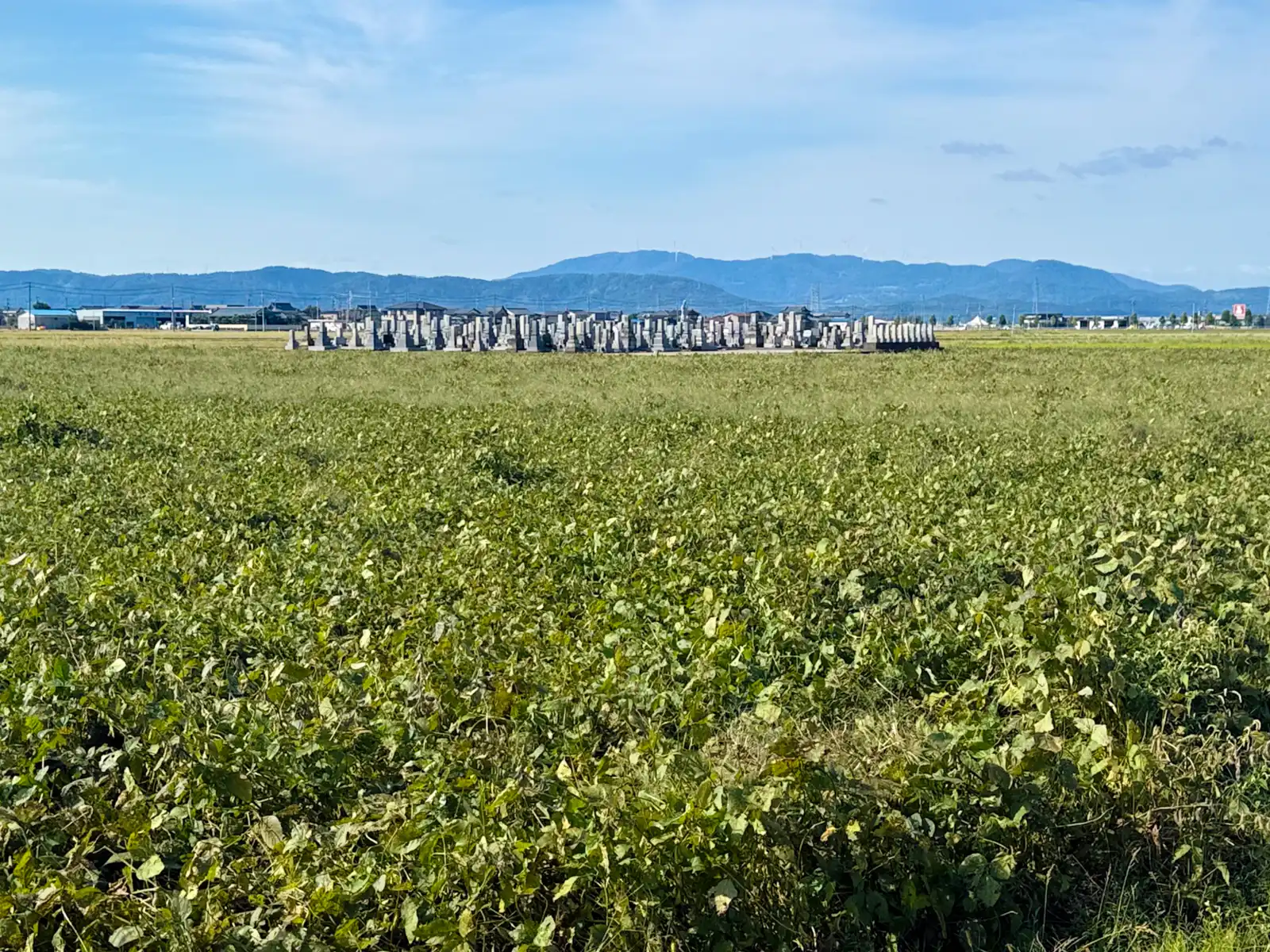
A bit further on, I passed another one of those little cemeteries sitting all by itself in the middle of the fields, much like the kyodo bochi I kept seeing back in Ishikawa. This one was surrounded by soybeans instead of rice. I still find these small little islands of gravestones strangely beautiful.
Somewhere around Harue, in Sakai City, I pulled into a 7-Eleven for a snack and, a bit embarrassing to admit, grabbed the exact same Hokuriku-only onigiri as the day before, that big one with kelp rice and tuna mayo. When something works, why change it? There were no birds patrolling over my head this time either, so I actually got to eat the whole thing in peace. In the parking lot, again.
Down the road not far from there, something on the ground caught my eye. Stuck to the asphalt at the edge of a crosswalk was a small yellow traffic safety sign with a blue cartoon dinosaur raising its arm. Big red letters said te wo agete!, which means “raise your hand!”, and a smaller line reminded kids to stop and look carefully before crossing. It was made for schoolchildren, of course, but for me it meant a lot more than that. That, ladies and gentlemen, was the first definite sign that I had entered the dinosaur kingdom.
Fukui is a funny city to approach by bike. It’s quite spread out, with houses, shops and fields blending into each other for kilometers, yet there are hardly any tall buildings except for a small cluster right in the center around the station. For a long time I really couldn’t tell how close I was. At some point I crossed the Kuzuryu River, whose name means something like “nine-headed dragon,” which sounded just about right for a place about to be overrun by giant reptiles. Little by little, those few towers in the distance started to look a bit taller.
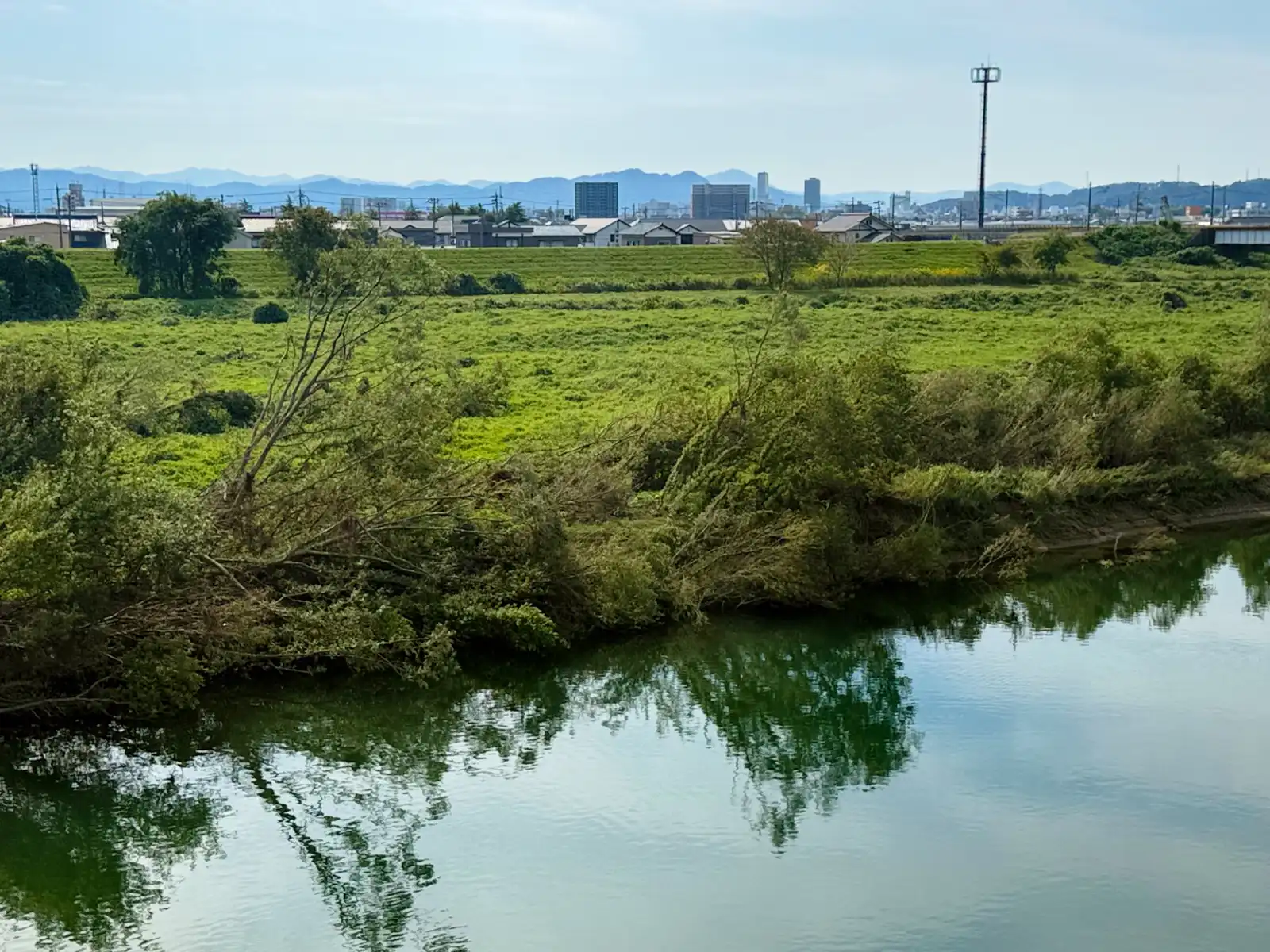
The road started to run alongside the railway tracks, and that’s when I knew the station was coming up soon. I had this odd, funny, nervous feeling in my stomach, like the one you get waiting at the arrivals gate for an old friend you haven’t seen in years.
One more traffic light, one more corner, just a few more turns of the pedals (that somehow felt longer than the whole morning), my excitement building up with every meter. Then, after seven days and hundreds of kilometers on the road, there it finally was, on my left. Fukui Station! I steered the Beast around to the west exit, to the Dinosaur Plaza in front of it, which had been my exact destination. There they were, just where I had been picturing them. I checked the time and it was almost exactly 11 a.m. If you’ve been following this series, you might remember my little tradition of arriving at my destination around noon. Well, this time I beat it by a whole hour.
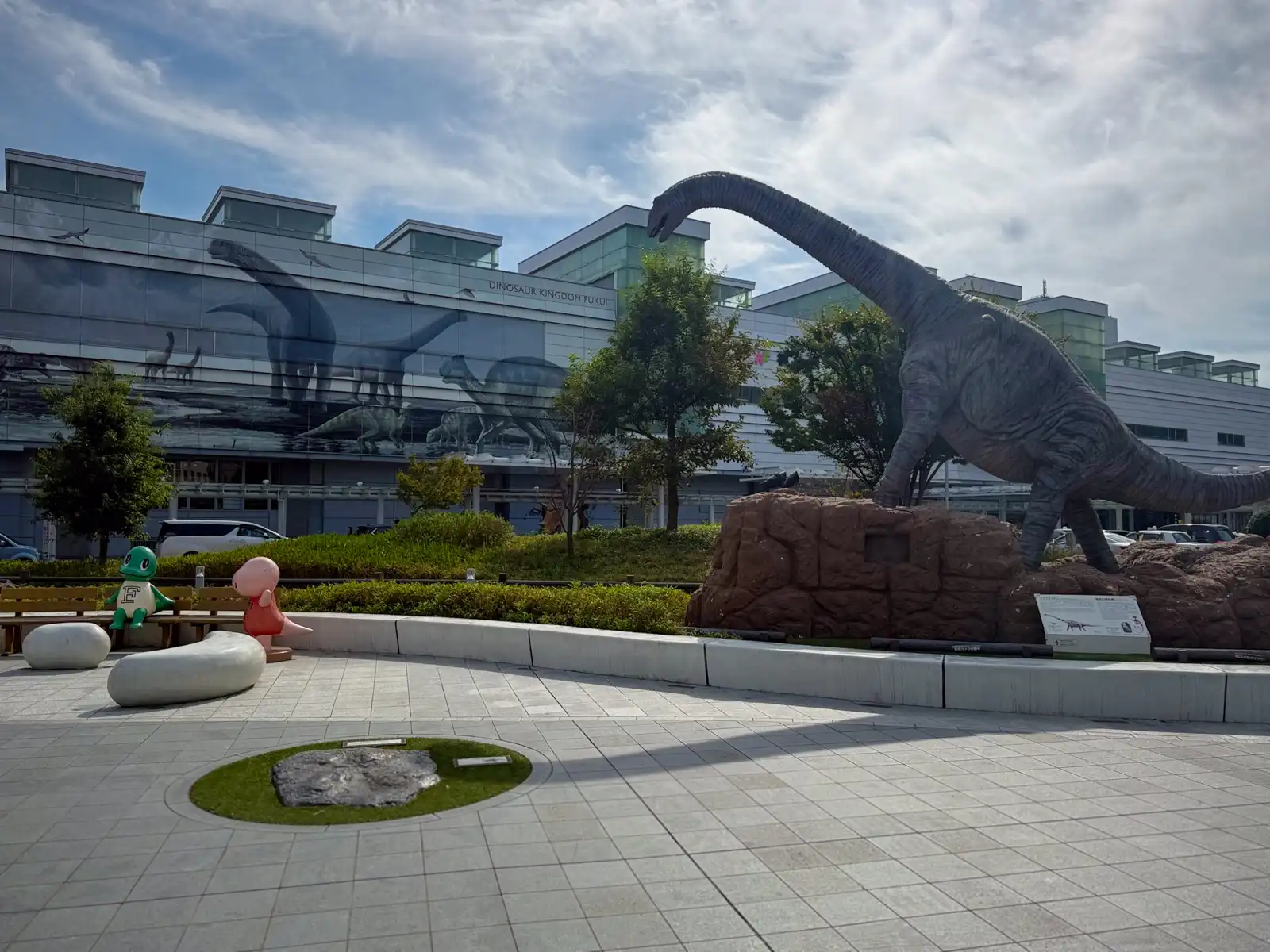
This is the Kyoryu Hiroba, or Dinosaur Plaza, which was set up in March 2015, when the Hokuriku Shinkansen first opened as far as Kanazawa. There were only a few people around when I arrived, no crowds and no tour groups. Perfect timing! The first thing you’ll notice at this plaza is the big guy with the ridiculously long neck, standing on its rock and looking down at everything. I thought it was maybe a brontosaurus or something along those lines, but it’s actually Fukuititan, a dinosaur whose fossils were dug up right here in Fukui. I wasn’t totally off, though, since both of them belong to the same big group of long-necked sauropods. Okay, all biology aside, the model is about 10 meters long and 6 meters tall, so it looks down at you in a way that makes you feel very small and unimportant, and somehow very edible, too. But fear not, Fukuititan is apparently a plant-eater.
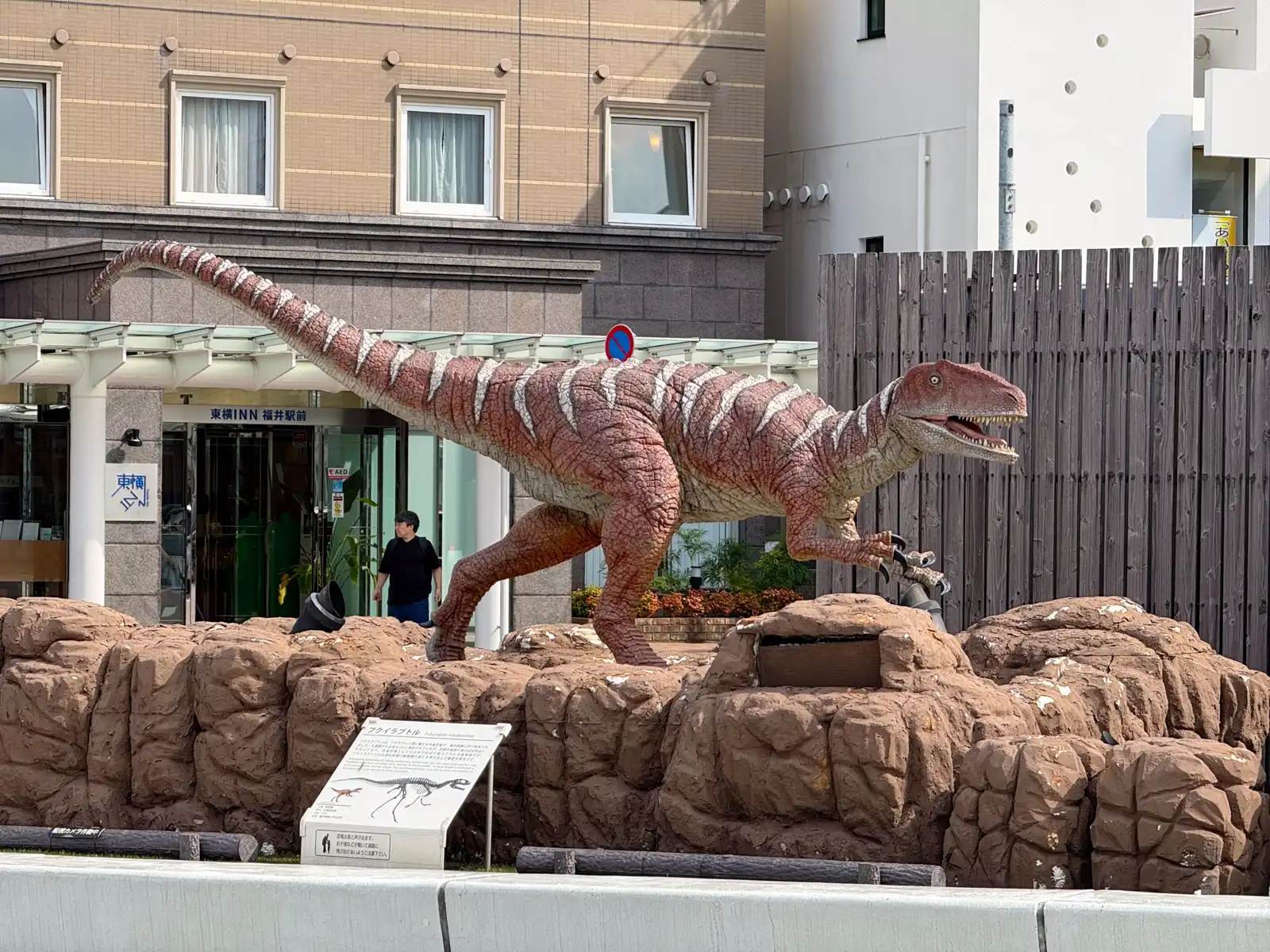
Next to it, I saw two smaller monsters facing off against each other. One is Fukuiraptor, a meat-eater a little over four meters long, and the other is Fukuisaurus, another plant-eater just slightly bigger. And man, do these things look realistic! They move their heads, open their jaws, and roar loudly enough that the sound bounces off the station building and the hotels around the plaza, so you can actually hear them from quite a distance away. Equally impressive were the subtle movements in between. They kept shifting slightly, a head tilting here, a jaw twitching there, all random enough that they looked genuinely alive. This is likely as close as you’ll ever get to a real dinosaur. All the effort (and a bunch of money) they put into making these has obviously paid off. When the plaza opened in 2015, it was reportedly the first time anywhere in the world that scientifically accurate moving dinosaurs had left a museum to stand in front of a train station.
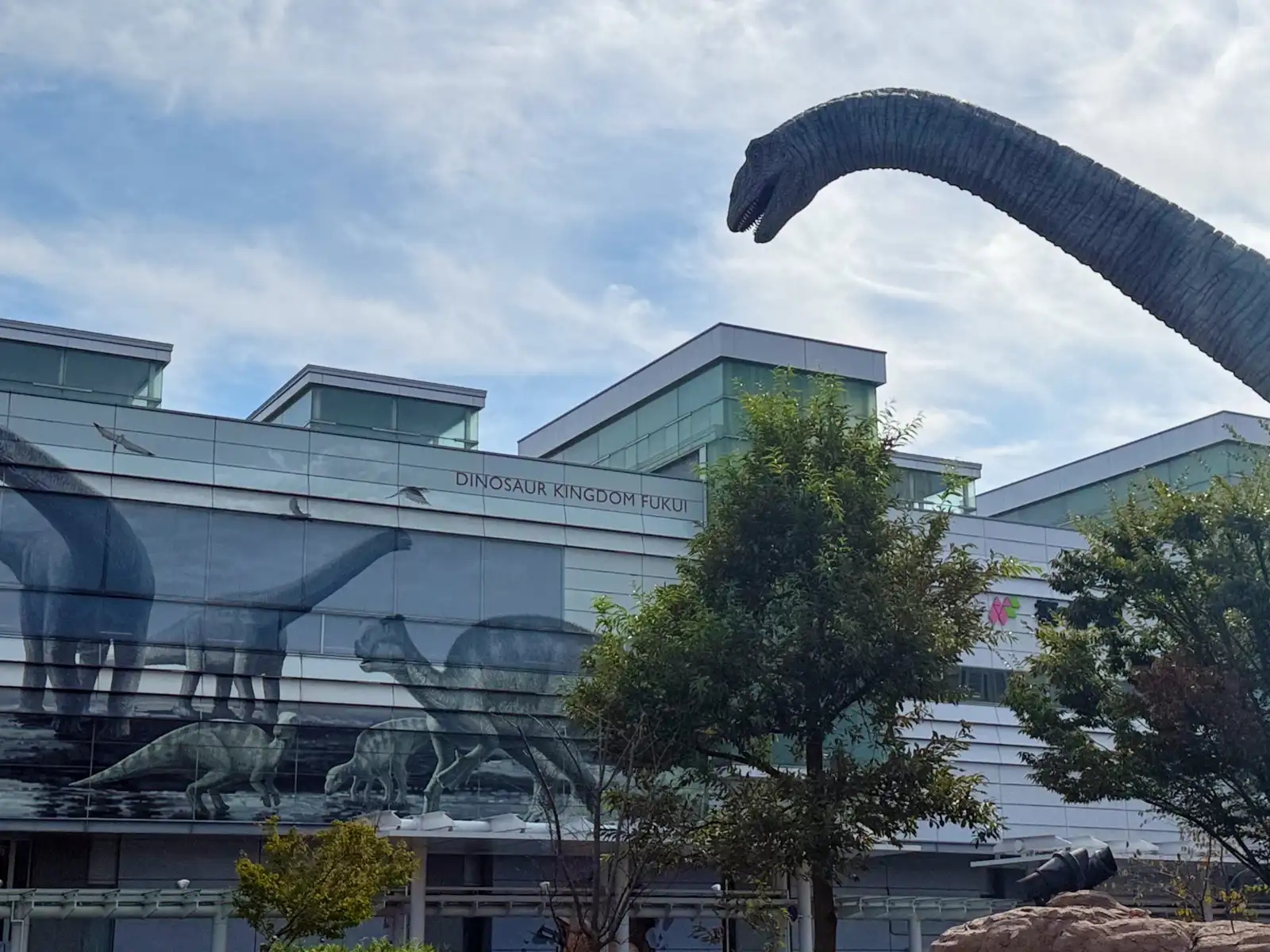
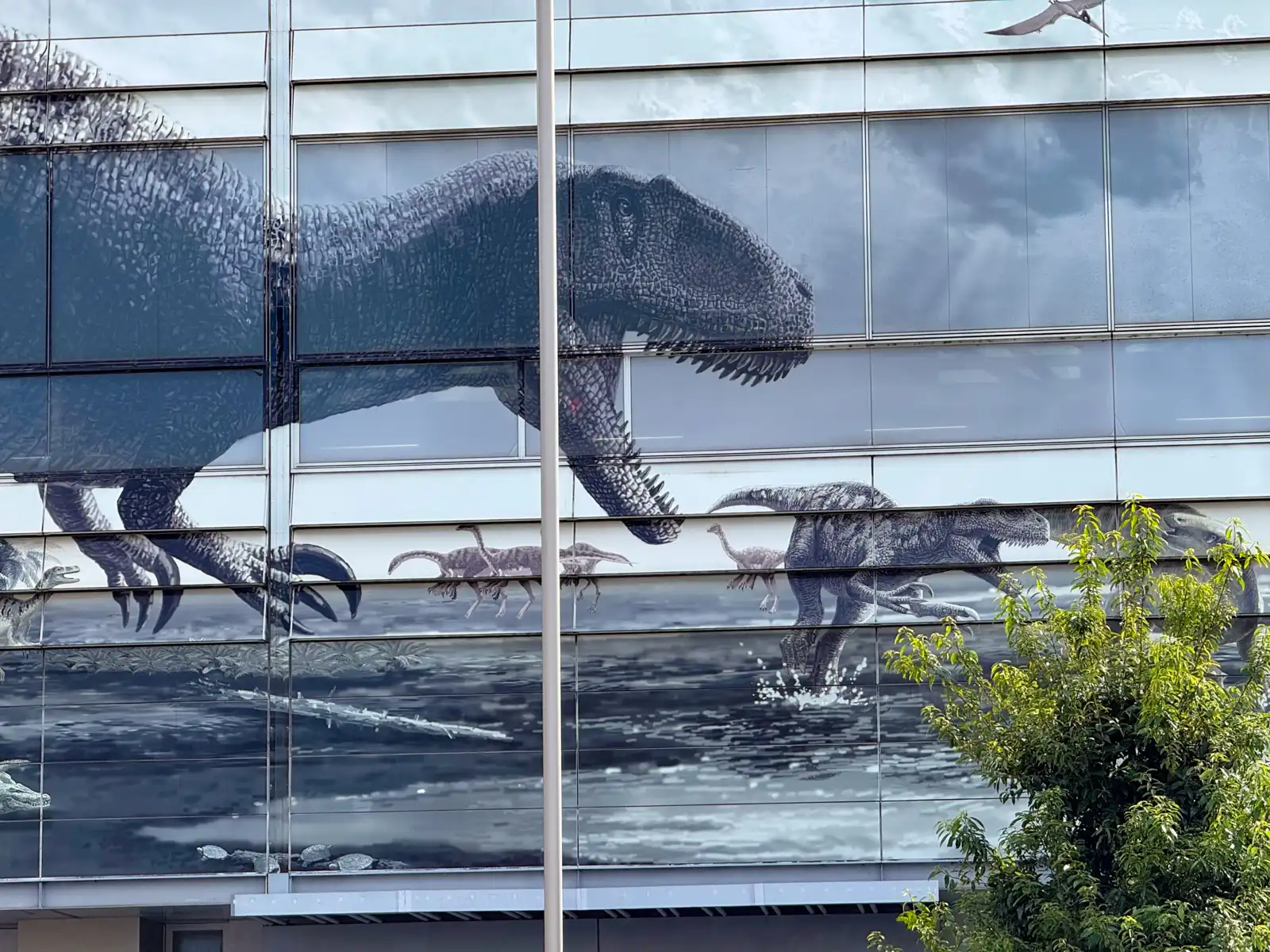
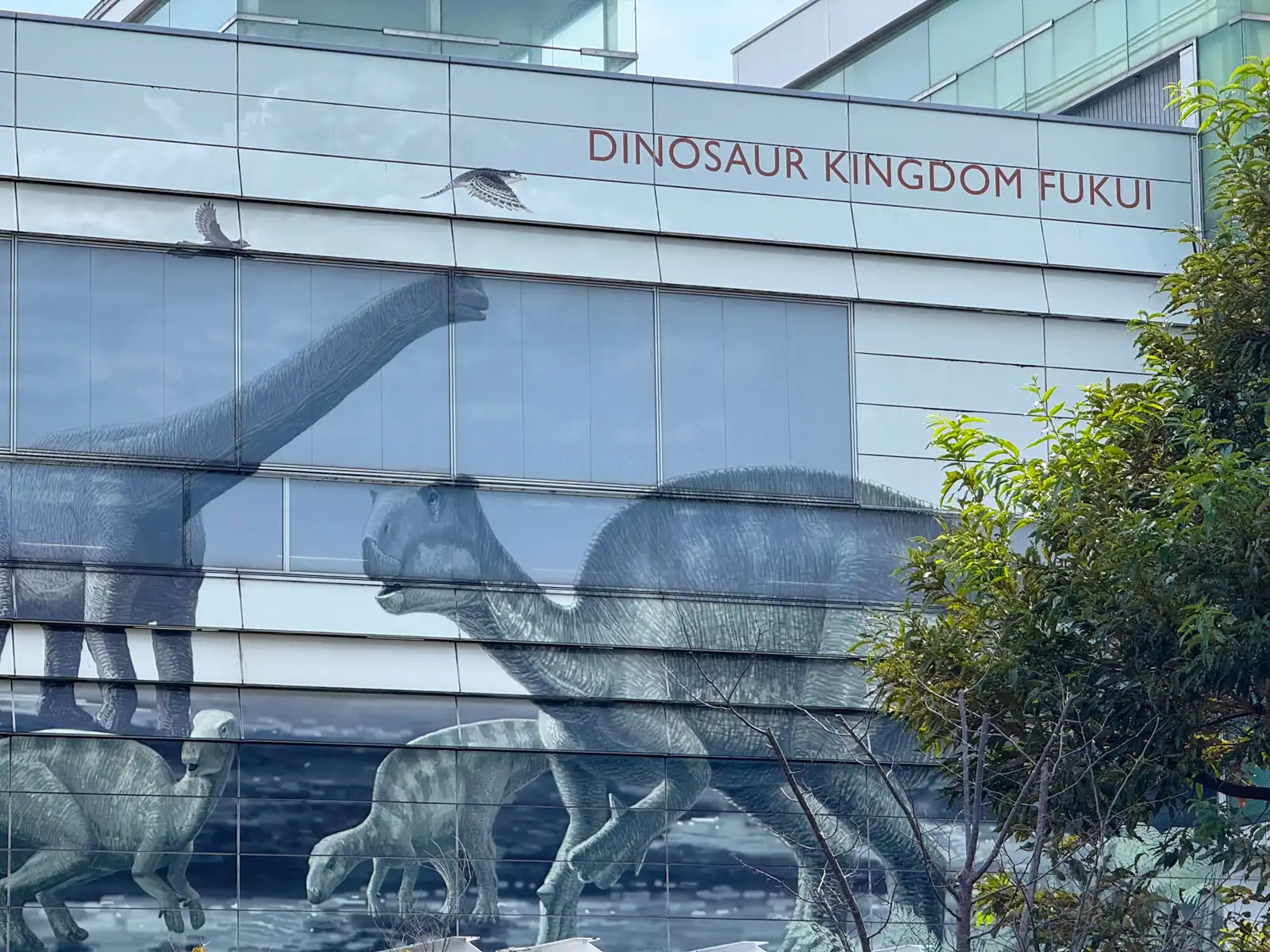
Behind them, the whole west wall of the station building is wrapped in a massive mural, around 45 meters wide and 10 meters tall. It shows ten kinds of creatures that lived around Fukui, including the three guys in the plaza and a crocodile as well. With the mural right behind it, the real Fukuititan looks like it’s posing with its painted relatives.
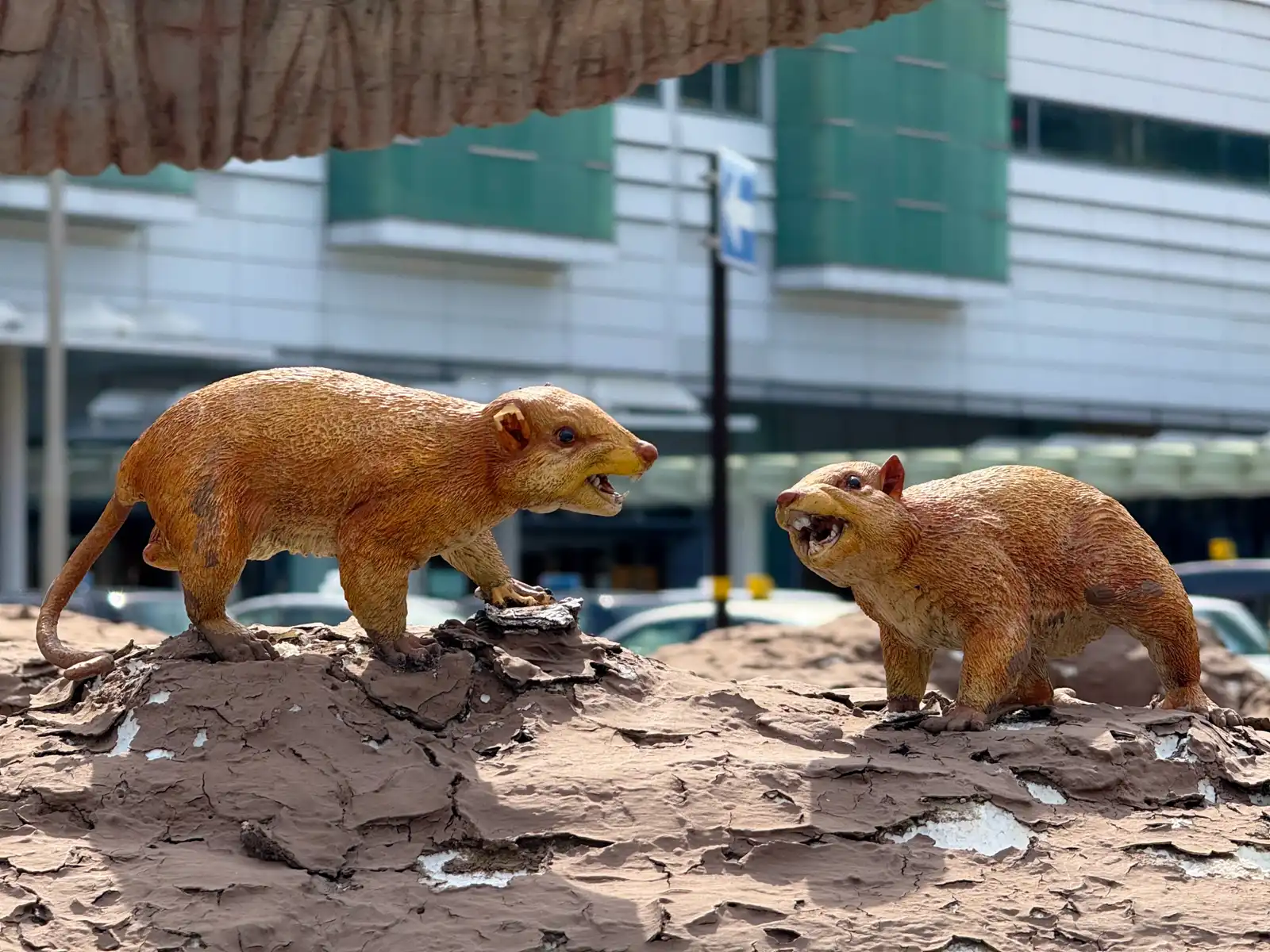
Down on the rock Fukuititan was standing on, I spotted two small furry, mouse-like creatures baring their teeth at each other. Quite unexpected, but a nice touch.
The station walls have a few more surprises too, in the form of trick art where dinosaurs look like they’re smashing their way out through the concrete. For example, a triceratops poking its horned head out of a cracked wall right next to a walkway. While I was busy snapping a photo of it, a group of salarymen walked right by like it wasn’t even there.
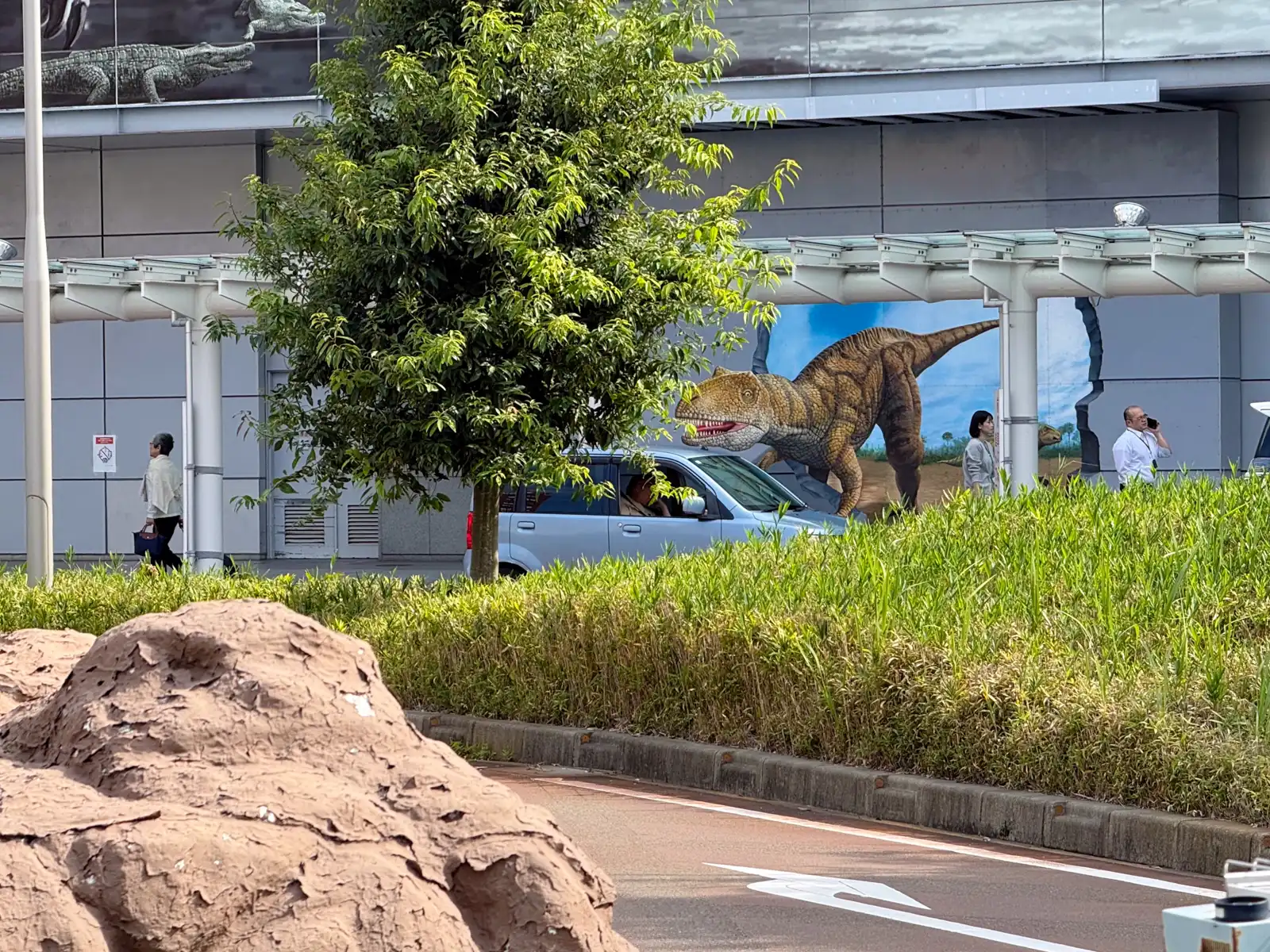
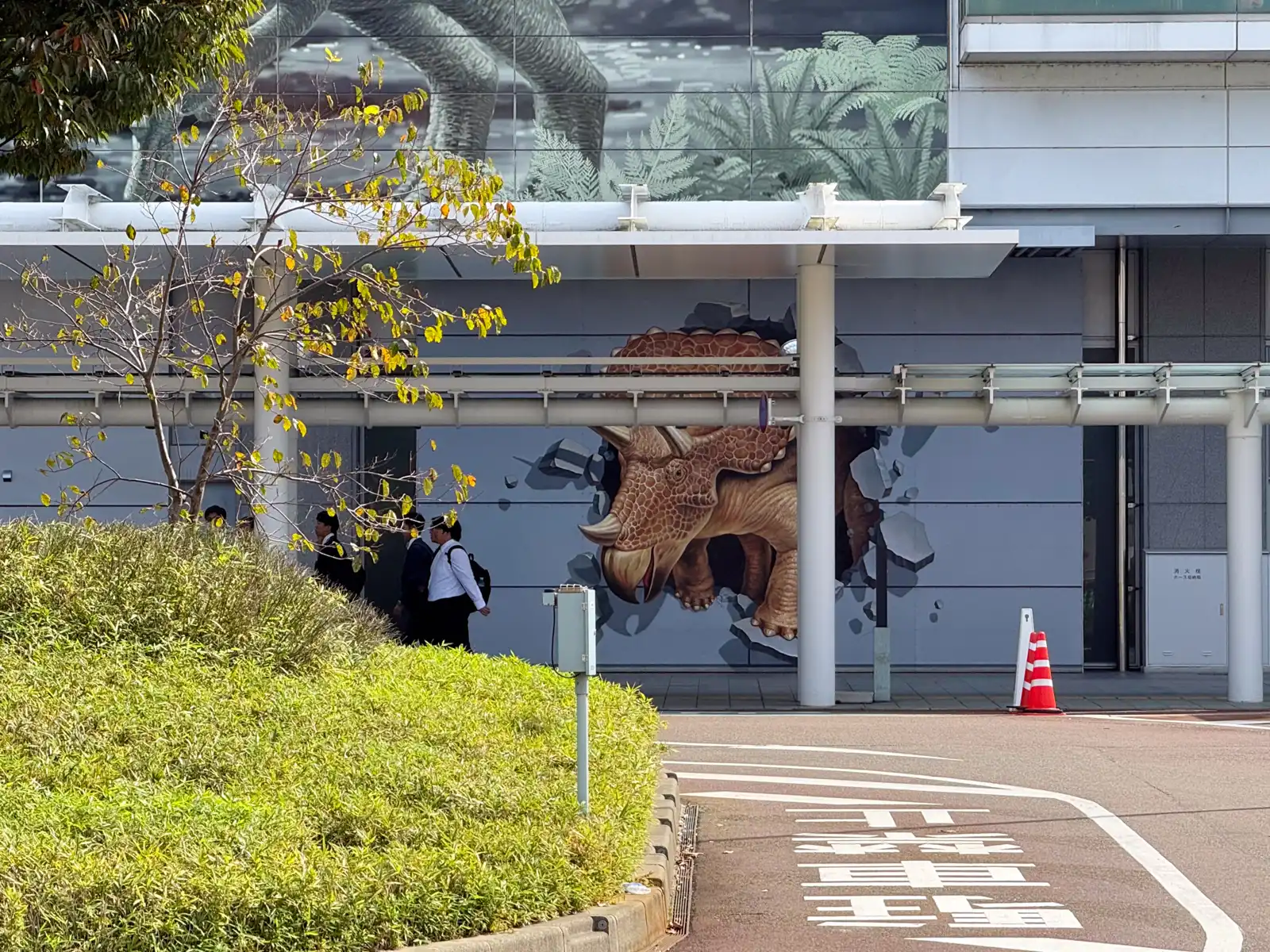
That’s actually the easiest way to tell who’s who around here. Locals are so used to these dinosaurs that they completely ignore them. They walk right past a roaring monster the same way you’d walk past a vending machine. I bet if scientists ever managed to bring real dinosaurs back to life, people in Fukui would just glance up from their phones, shrug, and keep walking to work. Visitors, on the other hand, are the ones stopping every few steps to take yet another photo, and yes, I was definitely one of them.
I parked the Beast in the public bicycle parking area under the elevated tracks, right next to the station. It’s a huge place, and at first I wasn’t sure if I had to pay somewhere, but it turned out to be totally free and open 24 hours. Finding an empty spot among all those bicycles took a little longer. I locked up and, with seven days of riding officially behind me, went to celebrate with a white peach Frappuccino at the Starbucks in the station. Not exactly a traditional Fukui treat, but, well, nothing says “mission accomplished” quite like a big pile of whipped cream. In Fukui, I’m calling it Frappuccinosaurus.
The dinosaurs don’t stop at the plaza, either. The station has a full-on dinosaur theme inside and out. Once you start noticing, you see them everywhere. Right across from the west exit stands a life-size T. rex robot, about 12 meters long, guarding the big building where the shopping mall is now called Jura Mall. On the east side, a giant wooden Fukuiraptor skeleton greets people inside the Fukui City Tourism Exchange Center, and even a manhole cover near the station shows a roaring dinosaur next to a castle and a giant red crab. It doesn’t end at the station, either. The dinosaur motif runs through the whole prefecture. It really is what Fukui is most famous for.
My hotel was on the other side of the station, just a short walk from where a triceratops was standing proudly on a big rock pedestal, with its baby looking up at it from below.
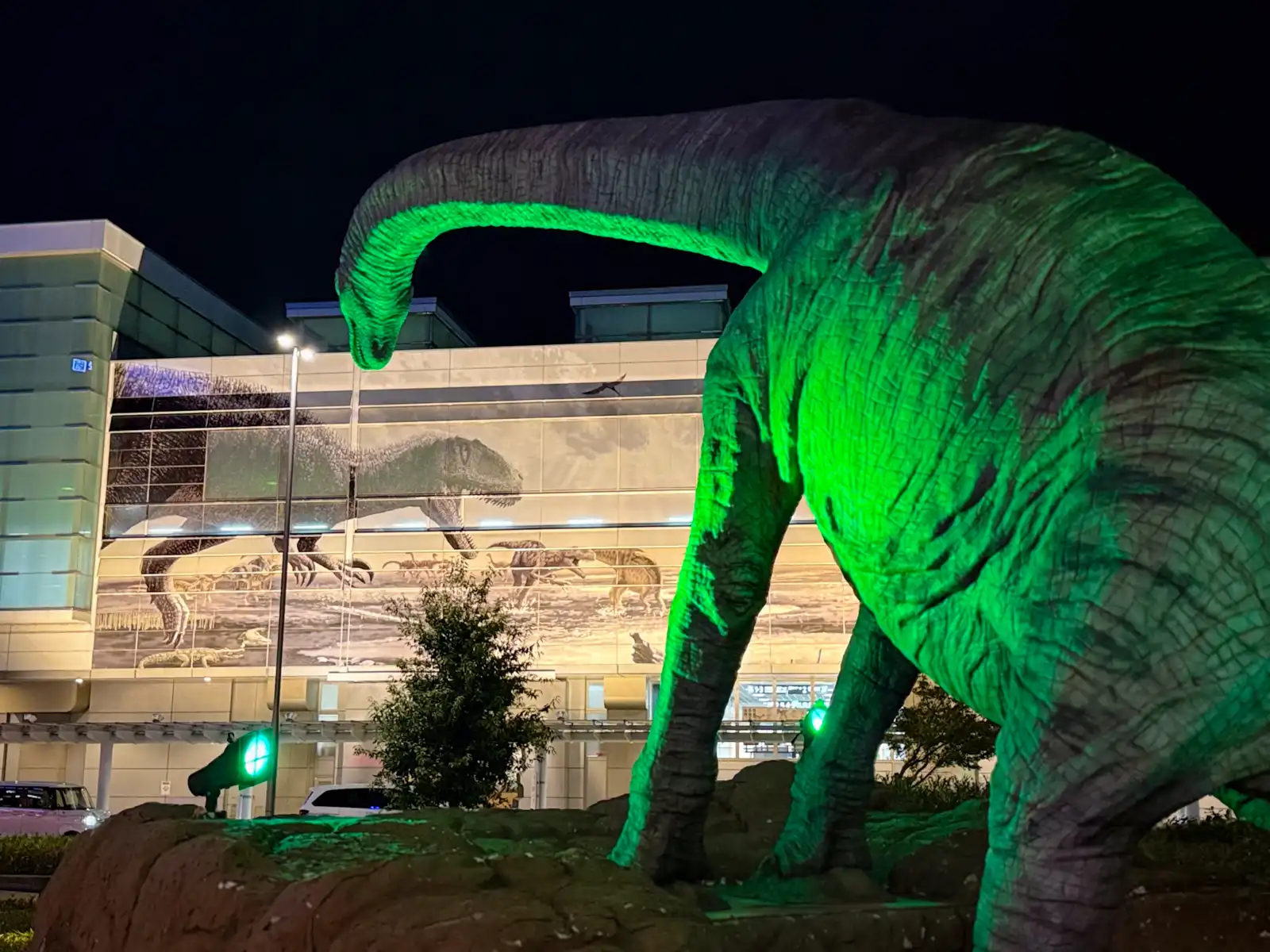
In the evening I went back out for a walk around the station. Fukuititan had changed into its night outfit, glowing bright green under the lights, like something out of a sci-fi movie. The mural behind it was lit up as well.
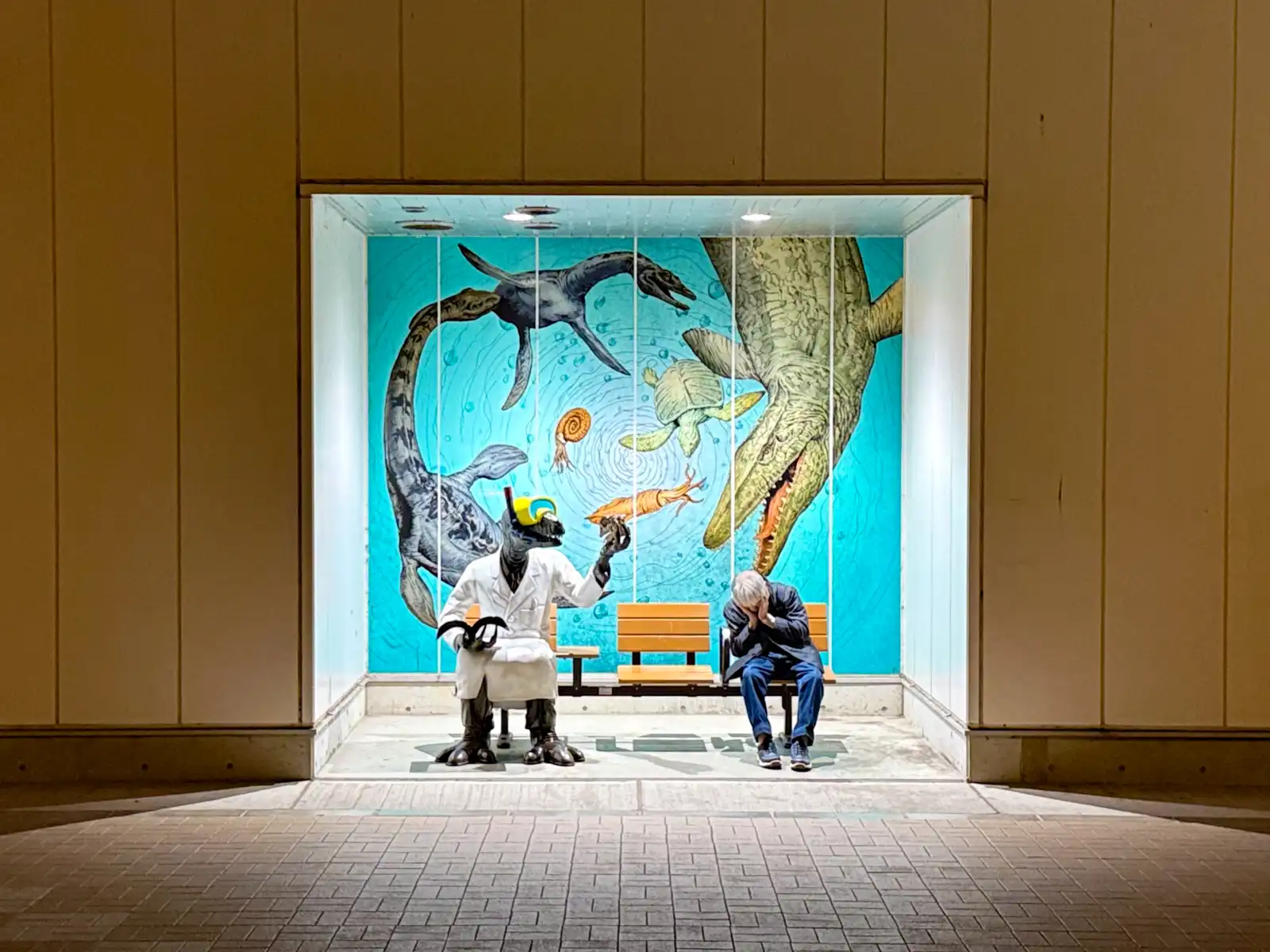
Then there are the benches. Fukui seems to really like putting dinosaurs on benches. At the Dinosaur Plaza, a few cartoon dinosaurs sit on one, waiting for someone to join them. Near the Echizen Railway station on the east side there’s a dinosaur doctor in a white lab coat, with a snorkel mask on his head, sitting in front of a mural of some ancient sea creatures. Apparently, this dinosaur scientist was originally created for the Fukui Prefectural Dinosaur Museum, but these days he shows up on benches all over the prefecture. The funny part is what happens when real people sit down next to these creatures. When I walked by that night, a man was sitting right beside the doctor, bent forward with his face in his hands, while the doctor calmly held up a dinosaur skull. It looked like the poor guy had just been shown one dinosaur too many and finally gave up. After a whole day in Fukui, I kind of understood how he felt.
I lingered around the station and the plaza for a while that night to see what else I could find. There were indeed other surprises, but I’ll save all that for a separate article about Fukui Station. Seven days earlier I had left Tokyo with this exact spot as my finish line. Now here I was, with the Beast safely tucked away under the tracks and a glowing green Fukuititan keeping watch above me. The next few days were all for Fukui itself. I already had a feeling that wherever I went, some dinosaur would probably be watching.