Tokyo to Kyoto by E-Bike, Day 6: Tarui to Omihachiman, Along the Shore of Lake Biwa
From the battlefield at Sekigahara down to the shore of Lake Biwa, and the company the day turned up along the way: a New Zealander riding to Hokkaido in sandals, a lone tree everyone stops to photograph, and an American who decided a canal town in Shiga was the center of the world.
Day 6 felt different, for two reasons. I’d passed Nagoya the day before, and Nagoya sits about halfway, so Kyoto was no longer some abstract point on the far end of the map. And I’d be spending much of the day on the shore of Lake Biwa. Both of those put me on the other side of something. Closer to the end than the start.
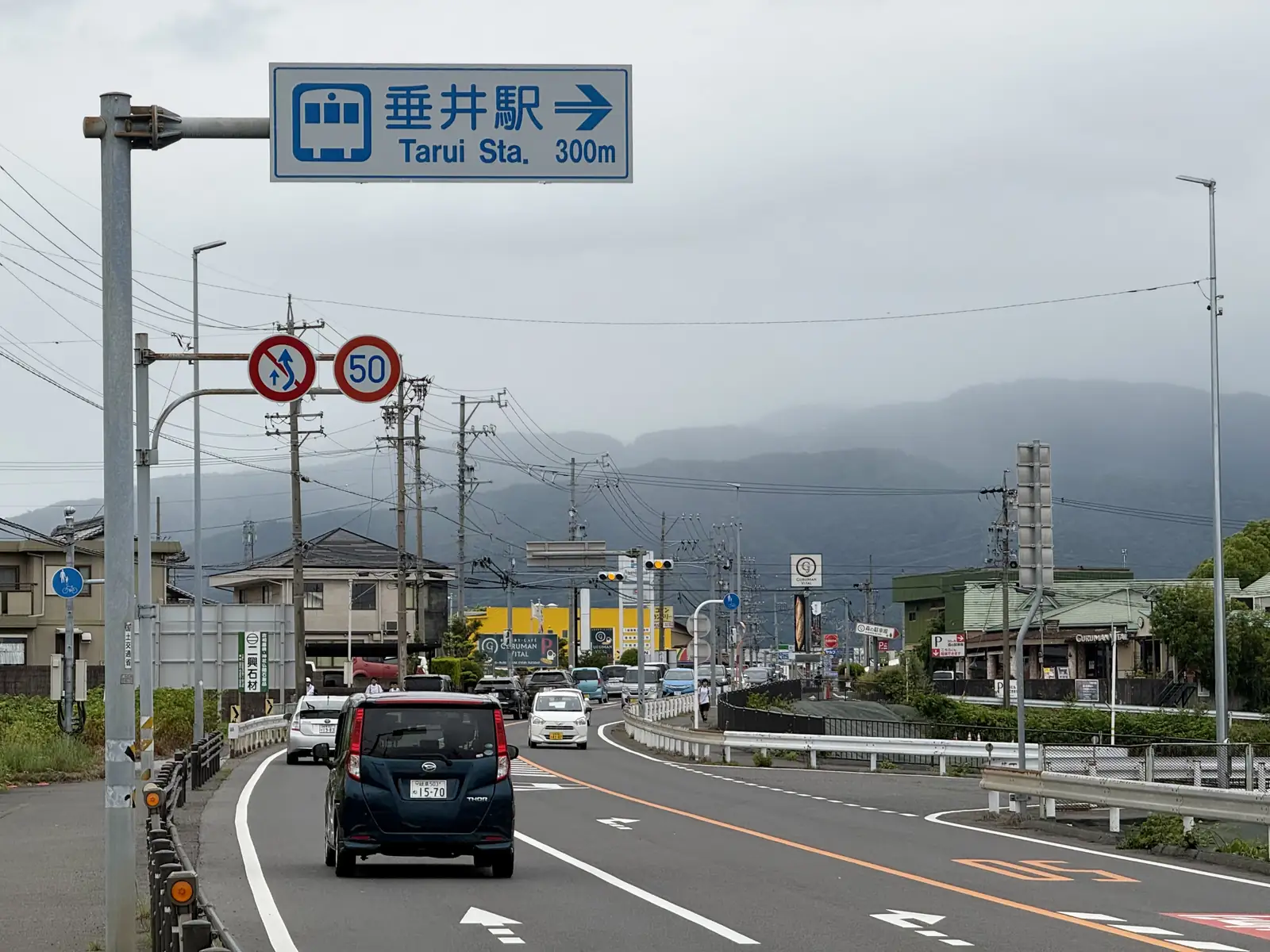
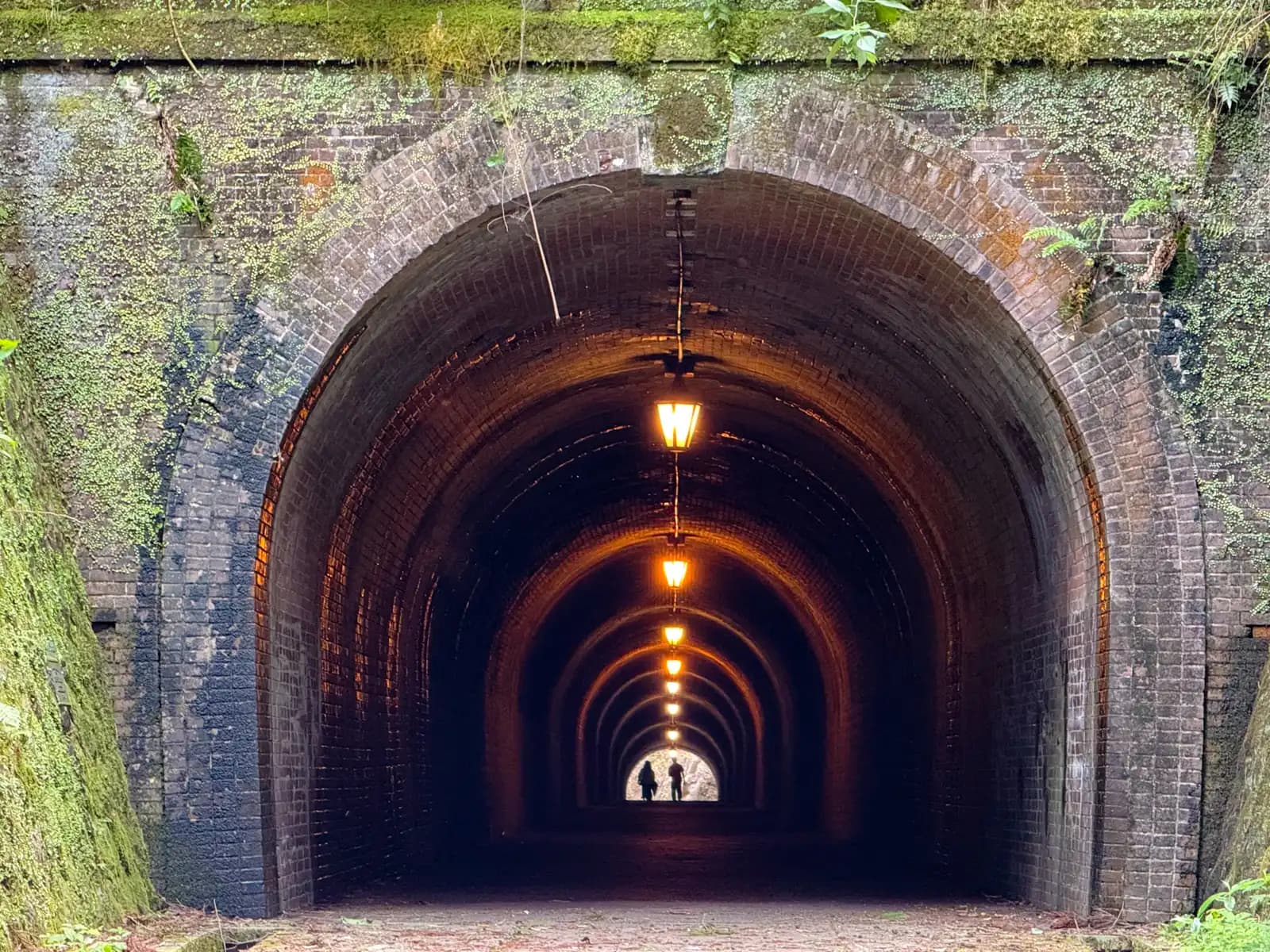
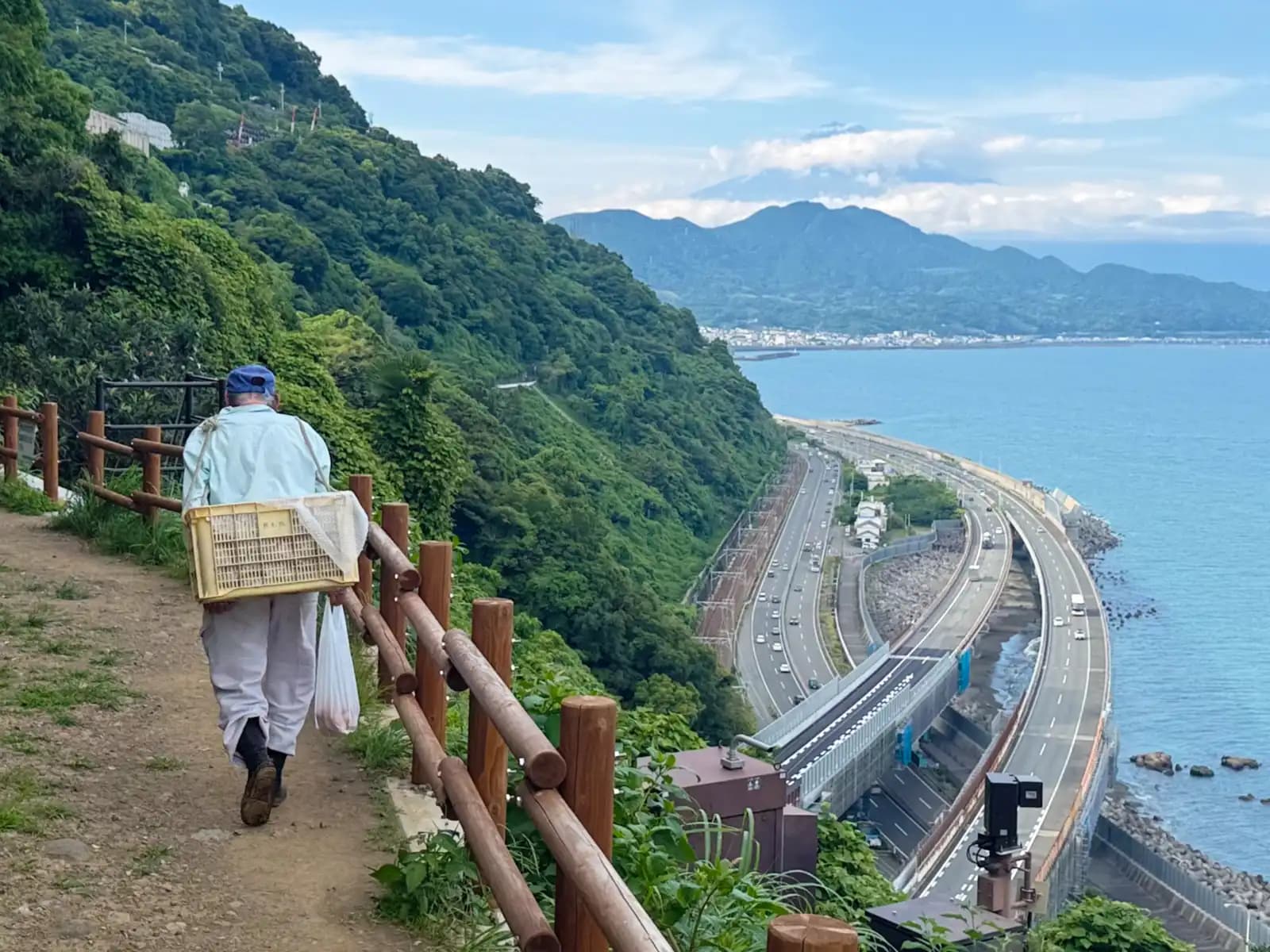
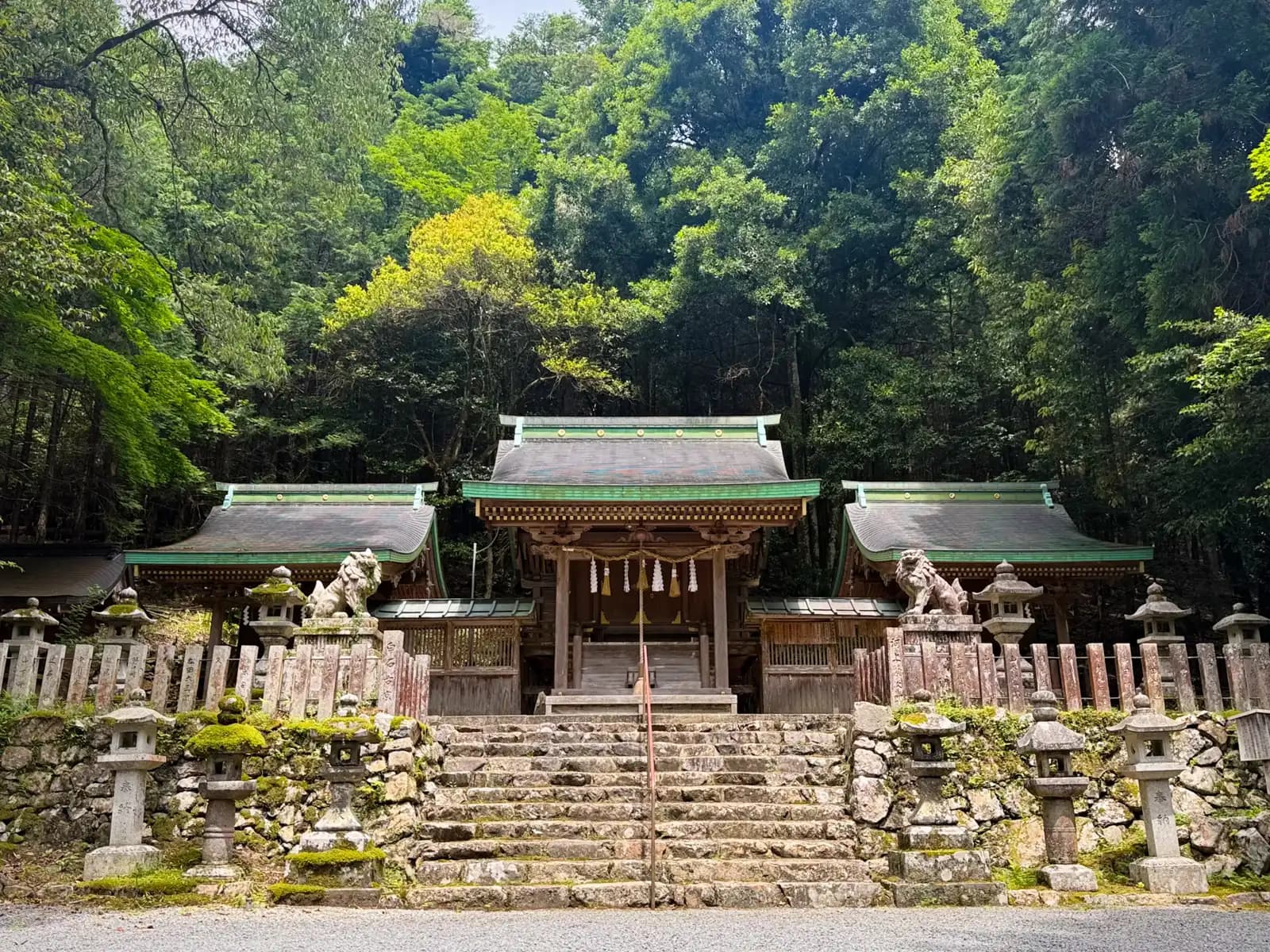
I left Tarui early. About 65 km to cover that day. Not far out of town the road tilted up and I started climbing into the pass. Partway up I passed Sekigahara.
Sekigahara carries a lot of history. On 15th day of the 9th month of Keicho 5 (or October 21, 1600, to put it simply), this ground held the Battle of Sekigahara, quite possibly the most important battle in Japanese history. Tokugawa Ieyasu’s Eastern Army against Ishida Mitsunari’s Western Army. Tokugawa won. The victory ended the Warring States (Sengoku) period and set him on the path to the shogunate that would rule Japan for more than 250 years. Decades of civil war decided in a single morning, on the slope I was now grinding up.
The whole town is built around its history. The battlefield is an open-air memorial, and you can rent a bike or walk the valley to find the old encampment sites.
After Sekigahara the road kept rolling up and down, past a string of underpasses, until I reached the edge of Maibara, already in Shiga Prefecture. Along the way I came to Samegai-juku, a row of traditional houses with a clear stream running right through it, and green on every side.
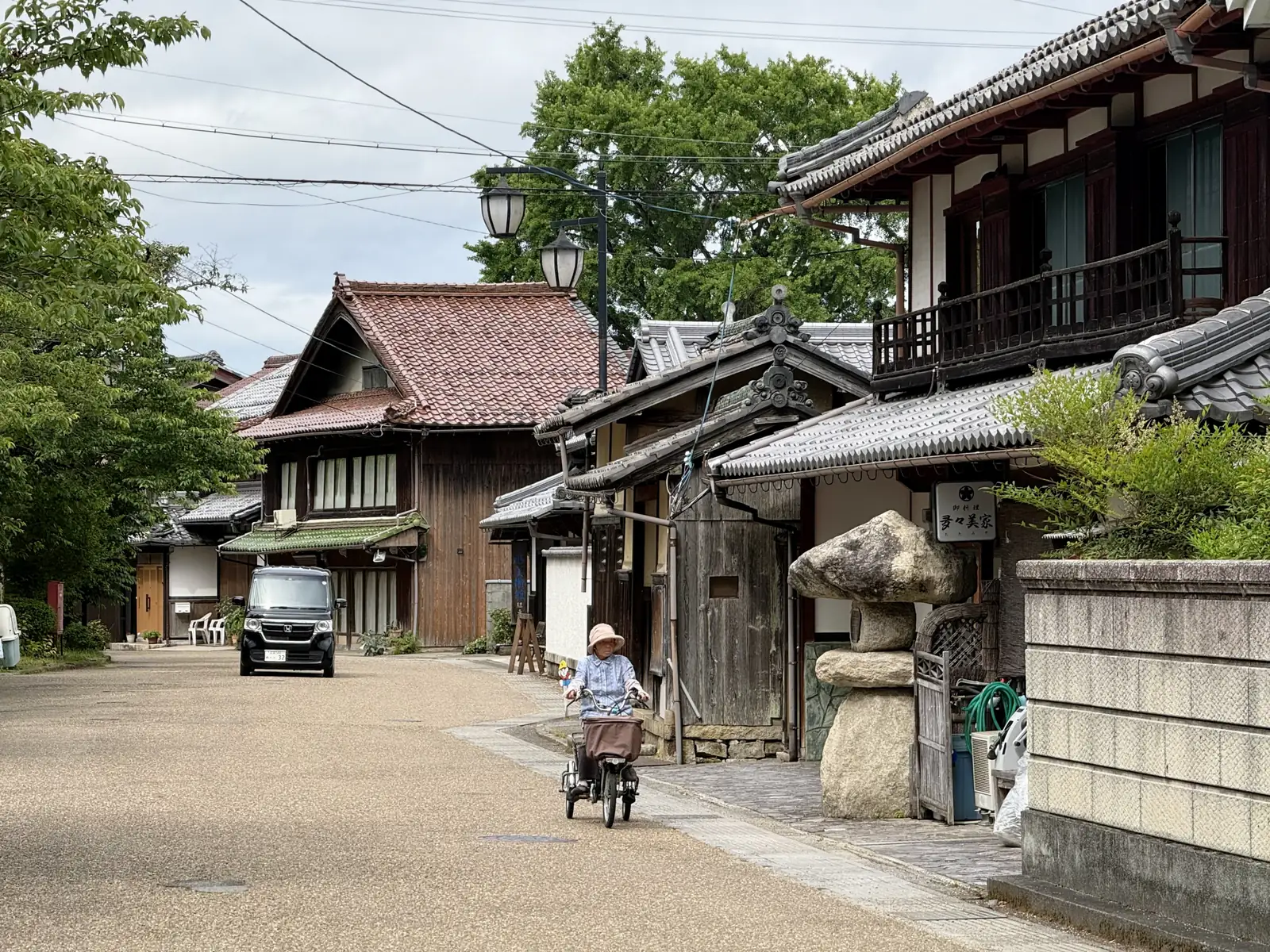
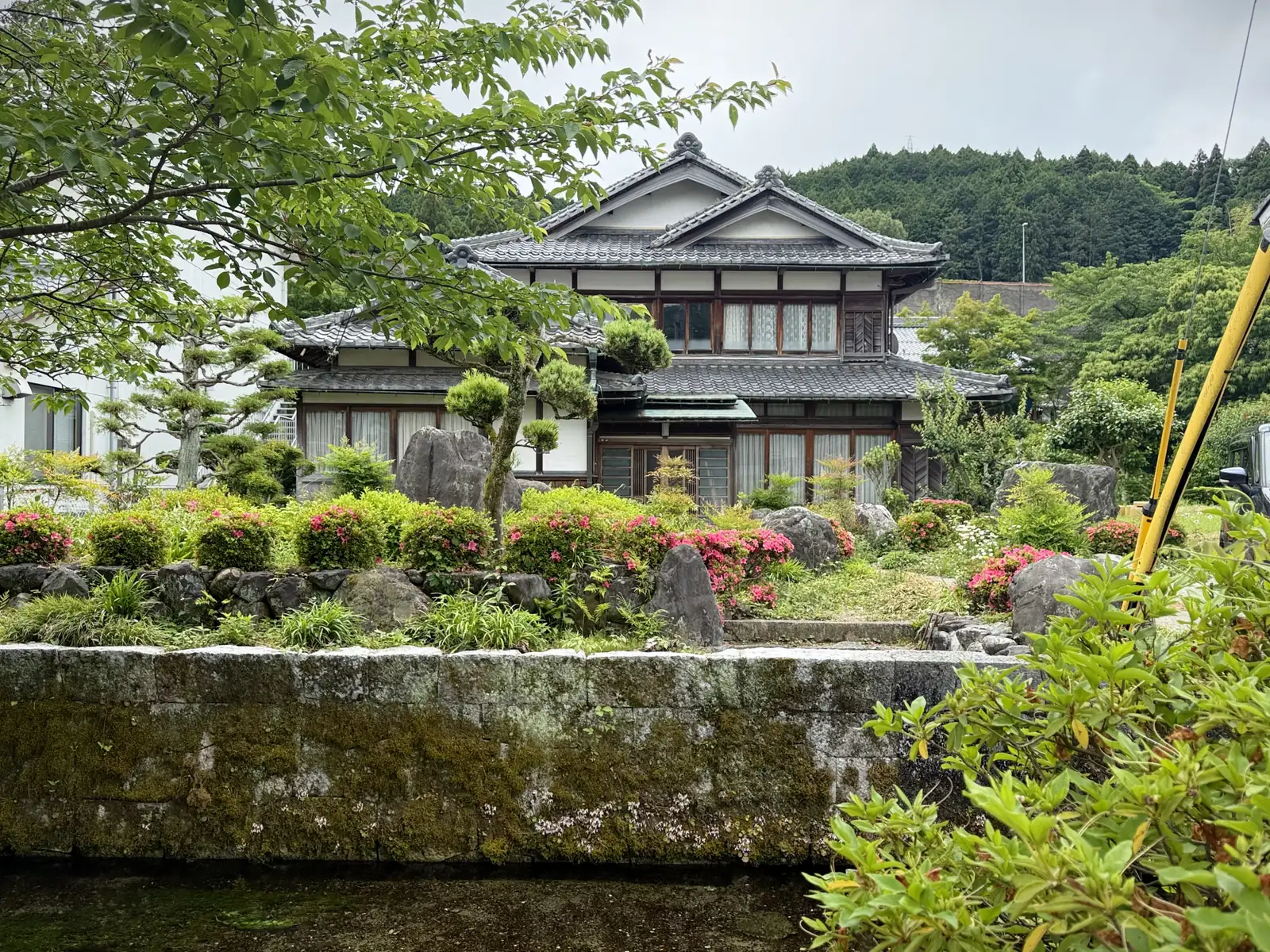
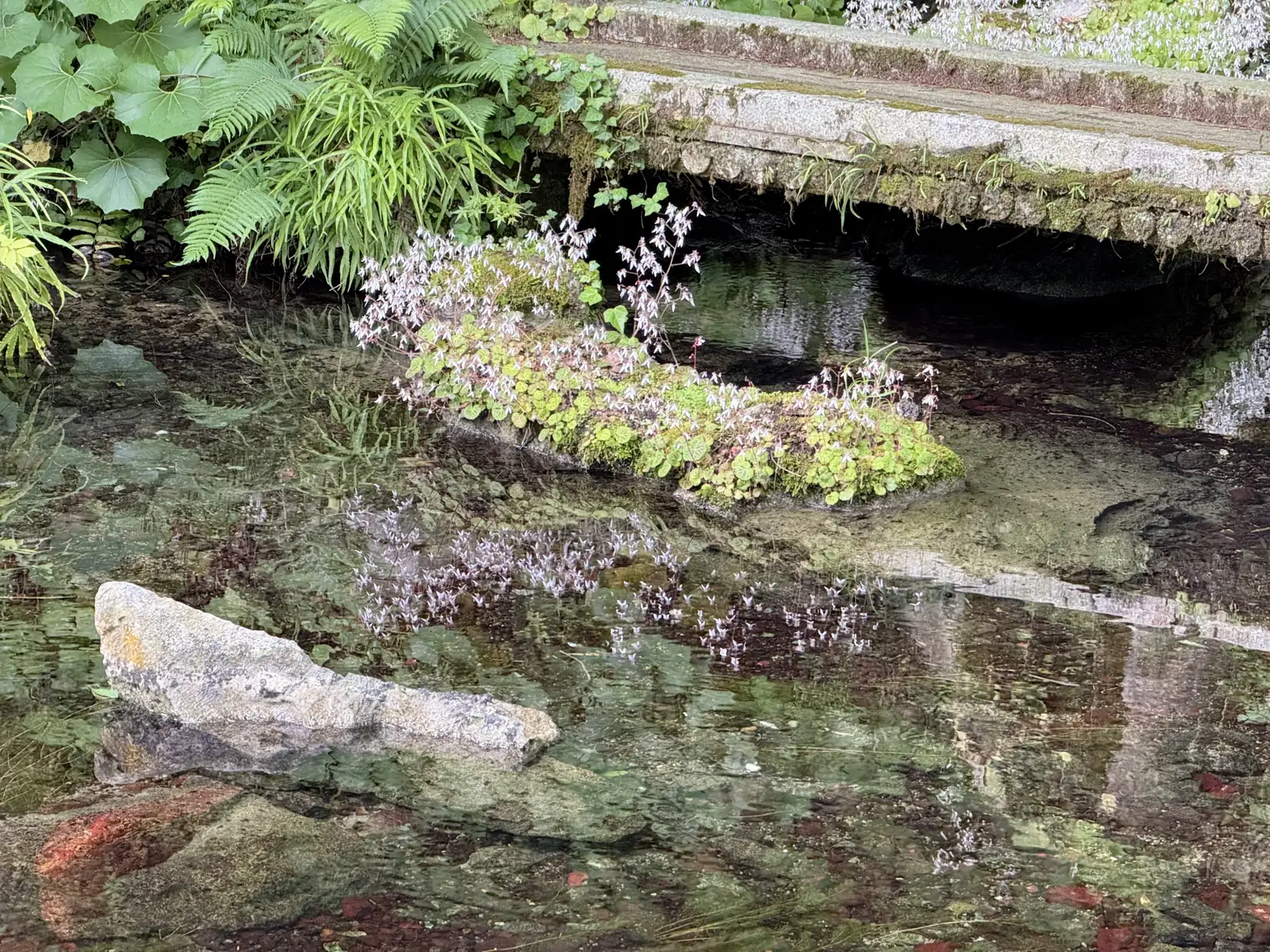
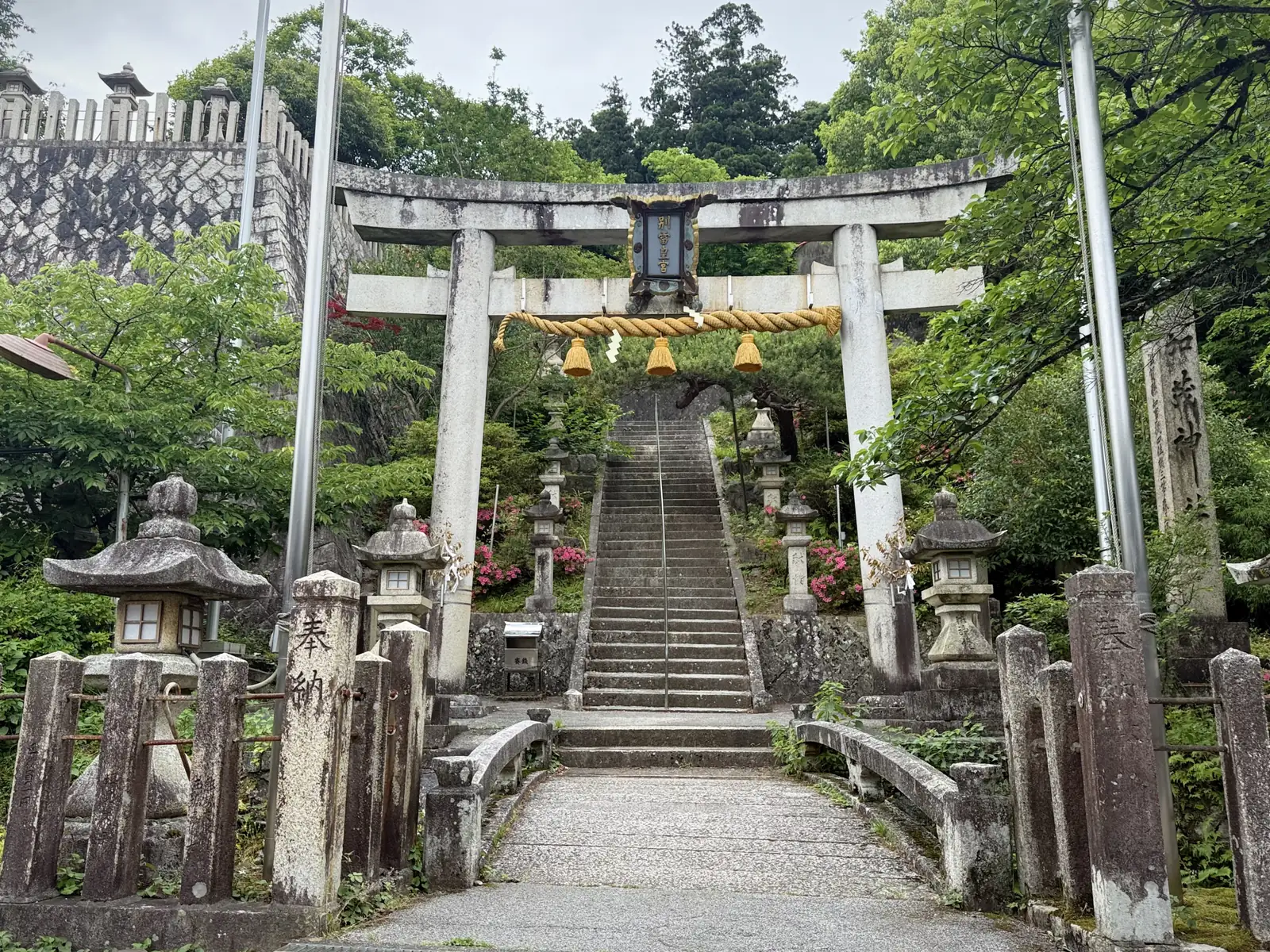
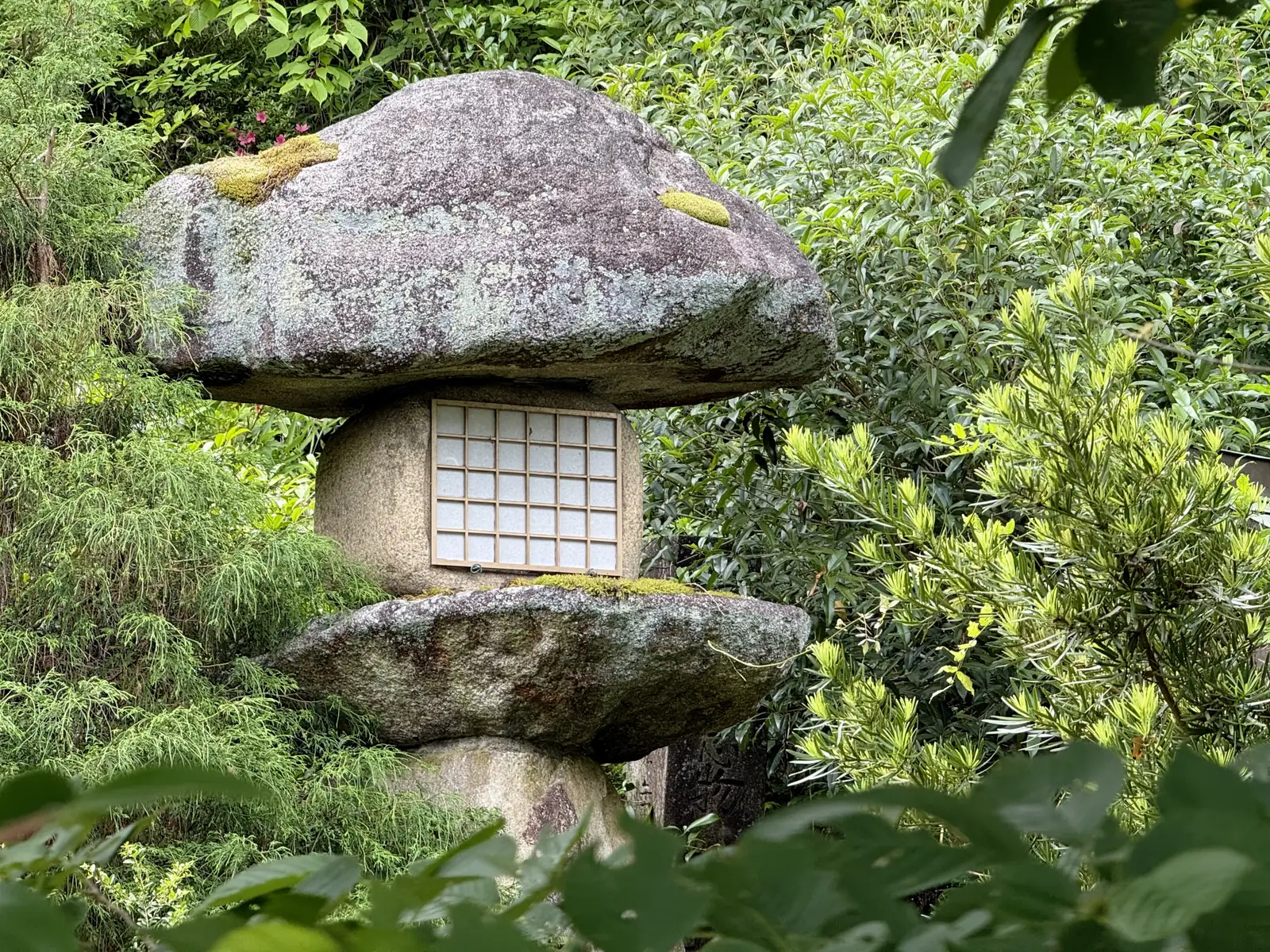
The street is the old Nakasendo itself, one of the two main routes that connected Edo and Kyoto in the Edo period, and you can ride straight down it.
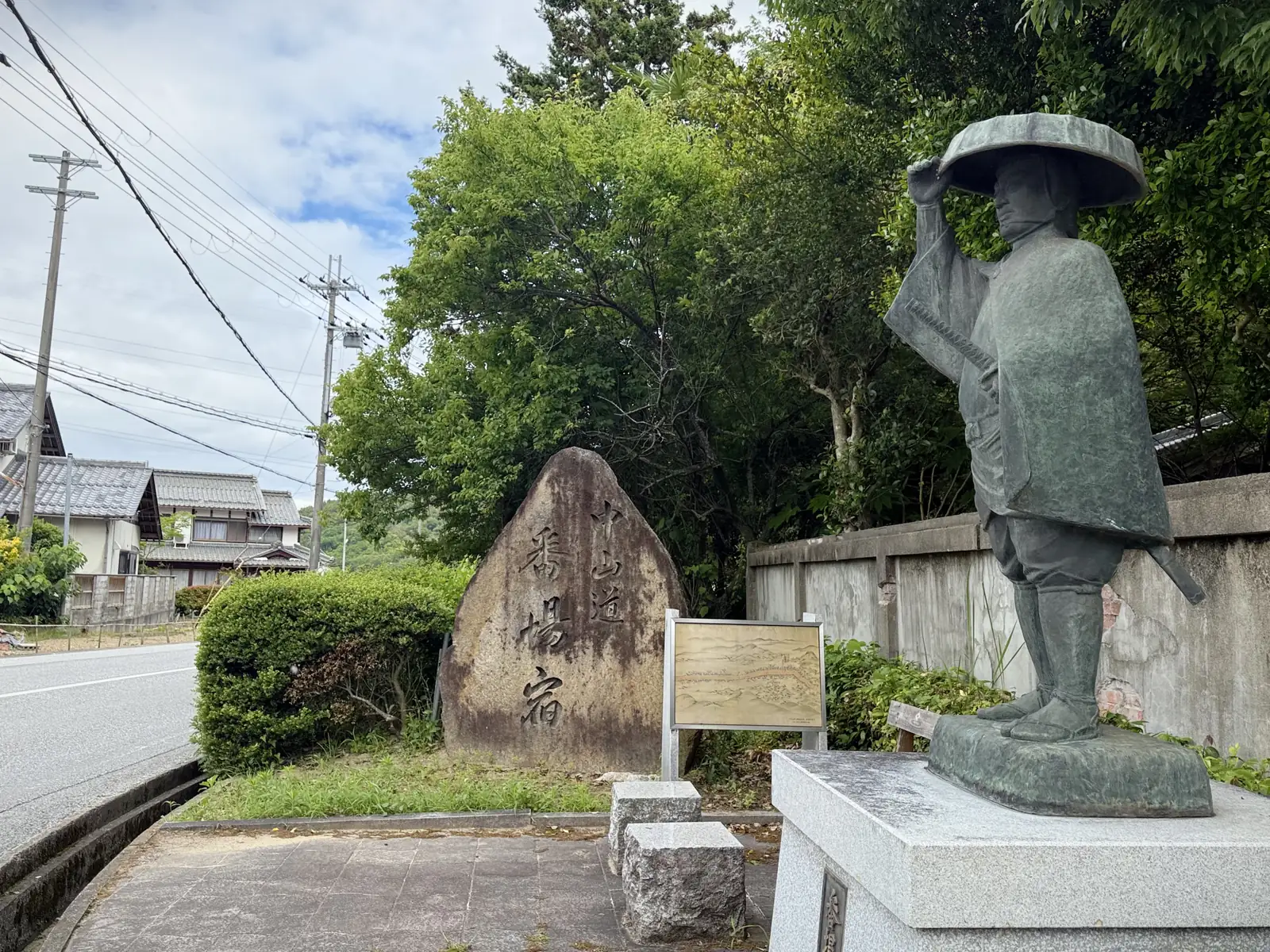
A little further on, a monument marked Banba-juku, the 62nd post station on the Nakasendo.
Past the last set of hills, around the center of Maibara, the road finally flattened and I came to the eastern shore of Lake Biwa. The timing was almost too good. The overcast broke right then, and the sun came through onto the water. It lasted maybe half an hour. Then the grey rolled back in and stayed.
The lake is huge. Japan’s largest and oldest freshwater lake, with a circumference of 235 km. Over 4 million years old, one of the oldest on Earth.
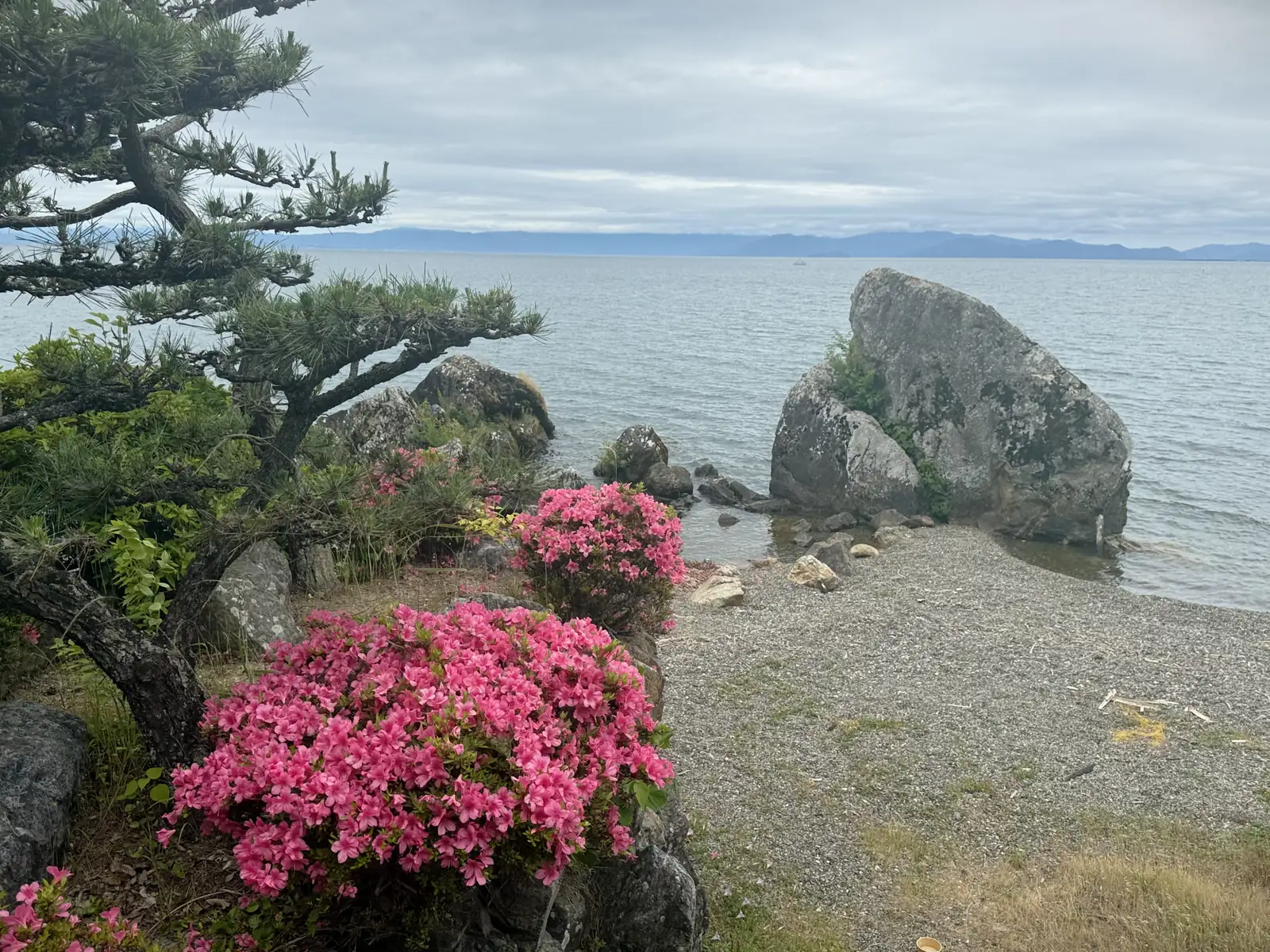
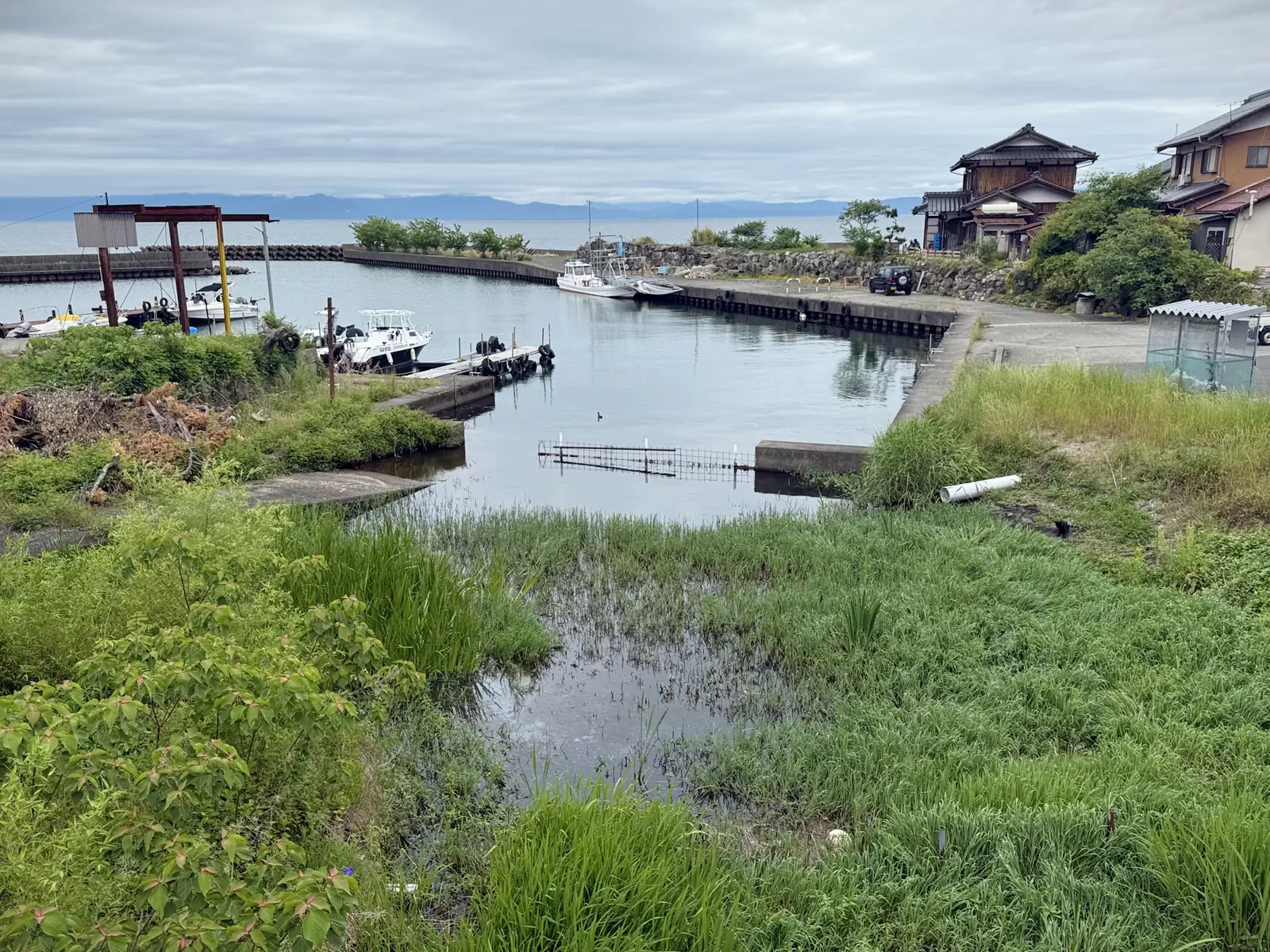
From there the route passed along the water: Biwaichi, the cycling road that runs the whole way around the lake.
Past Hikone I stopped at a place I’d looked up beforehand. It has no official name. Cyclists just call it “That Bench”, or あのベンチ in Japanese. And that’s what it is, a bench under a big tree, right at the lake’s edge. It looks like a scene out of a movie. It’s a known photo spot now, and while I was there, a few cars pulled over, some with dogs, everyone getting out to take the same shot.
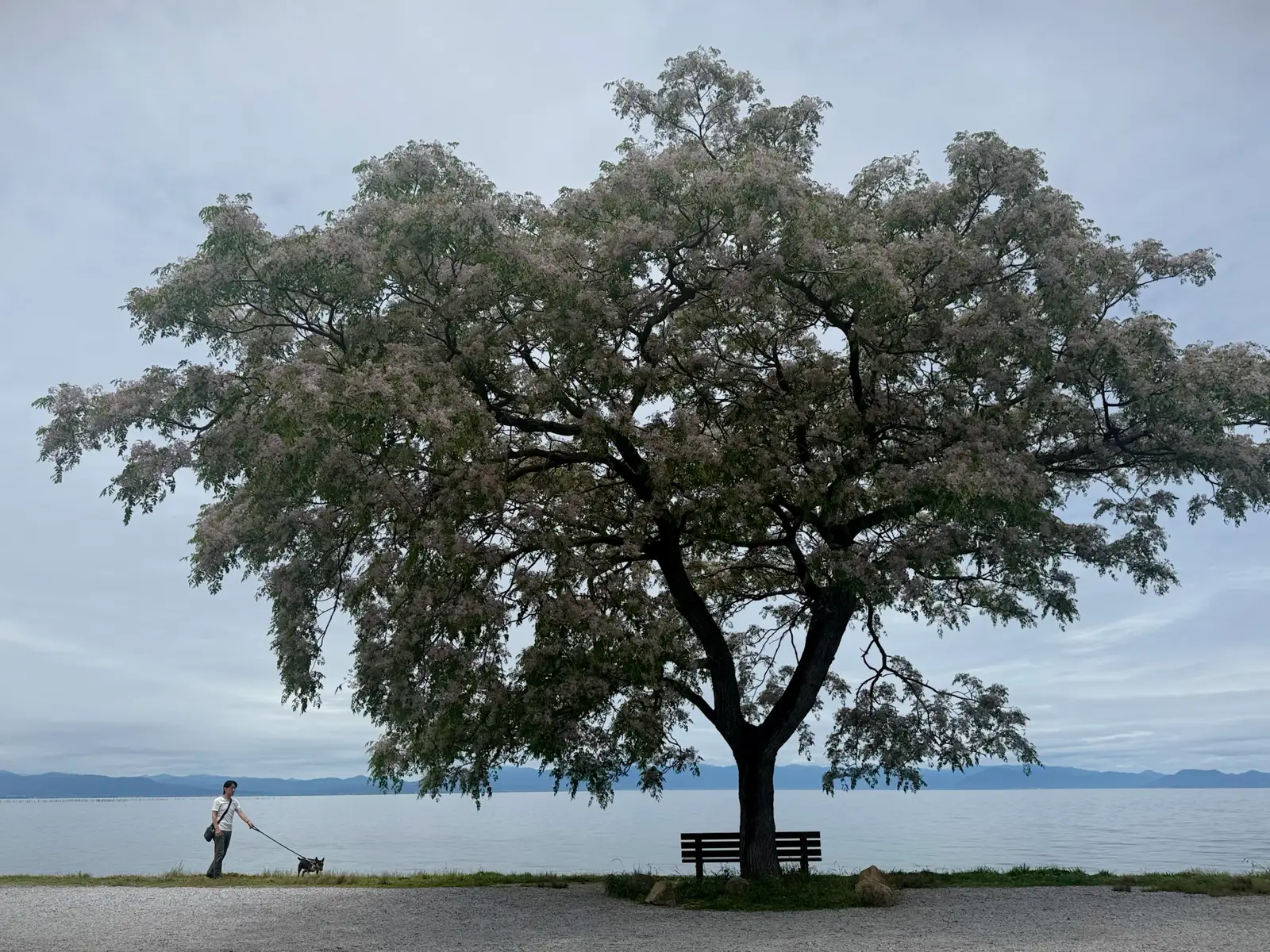
The bench was placed there around 2008. A local man built it so people could sit and look at the lake. The tree behind it is much older, and was planted by his grandfather. It’s a tall, wide tree, with good shade in summer, and from May into June it comes out in pale purple flowers.
The tree is a sendan, a chinaberry. What stands out isn’t really the tree itself, it’s where it sits: completely alone at the edge of the water. It had the room to grow wide and open, the way a tree does when there’s nothing planted near it.
I was hanging around the tree, trying to get a decent picture, when a man rolled up on a black bicycle, towing a small wagon of luggage behind it. For the moment it was just the two of us, so we got talking.
He was a New Zealander, riding alone all the way to Hokkaido. On that bike, no motor, in sandals, no socks. He told me his name was William, and the whole trip would take him about three months. He lived in New Zealand but was over in Japan with his Japanese wife and daughter; they come back every couple of years. He navigated by a printed map book, no GPS, with a tent packed in among the rest.
We talked for a while, then went our separate ways. He’d also mentioned, somewhere in there, that he’d once walked across New Zealand barefoot.
And that’s the story of That Bench.
Further on, with the lake on my right and fields mostly to my left, I spotted a black bicycle off in the grass, the wagon still attached, parked at an angle like it had half tipped over. William’s bike, I thought, though he was nowhere in sight. There was a konbini on the left, so he’d probably ducked in for something, and I rode on.
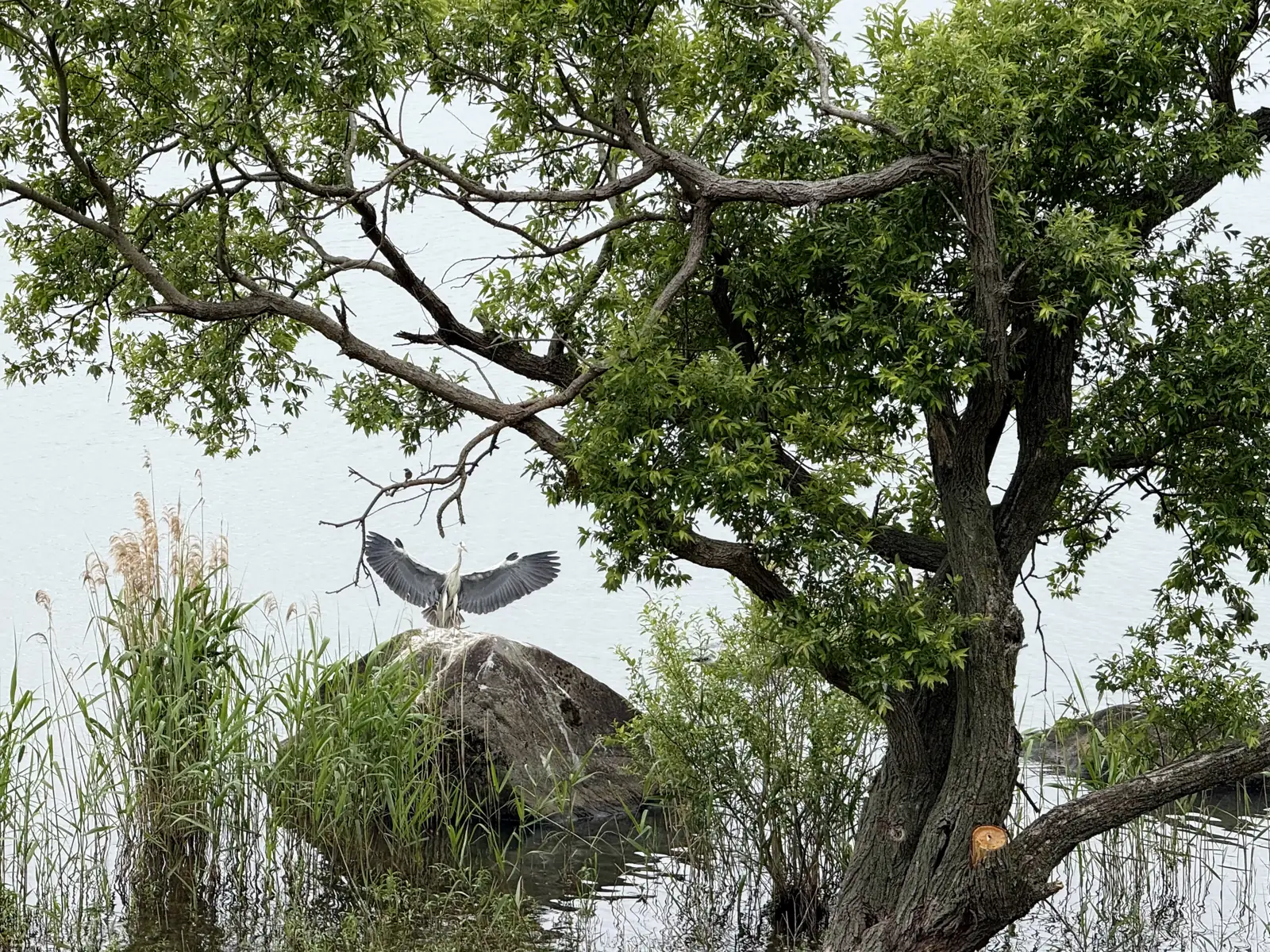
The last stretch before town wasn’t the flat lakeside I’d pictured. The road wound back and forth and climbed here and there, forest on both sides. But it held to the shore the whole way, the lake never out of sight.
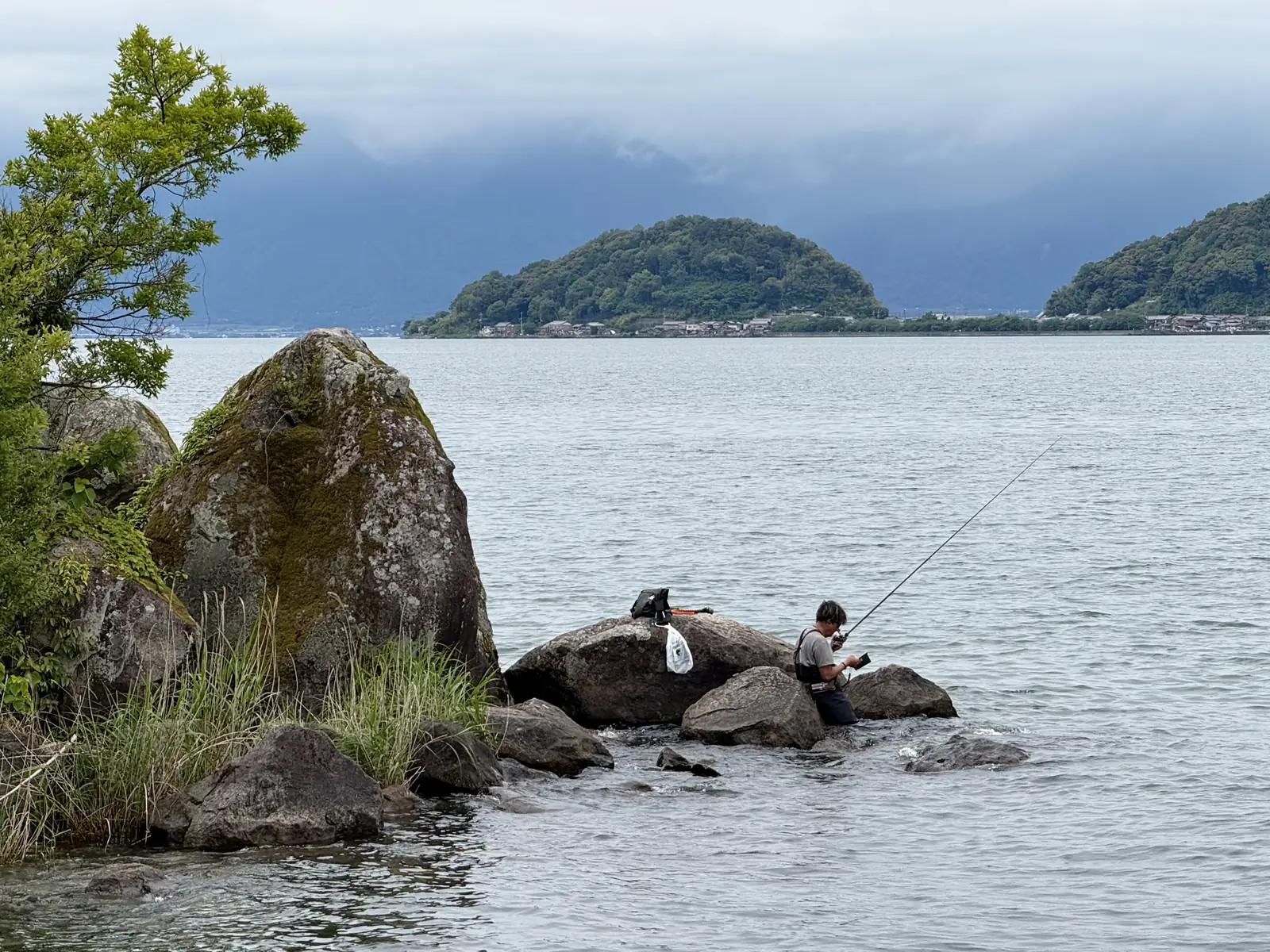
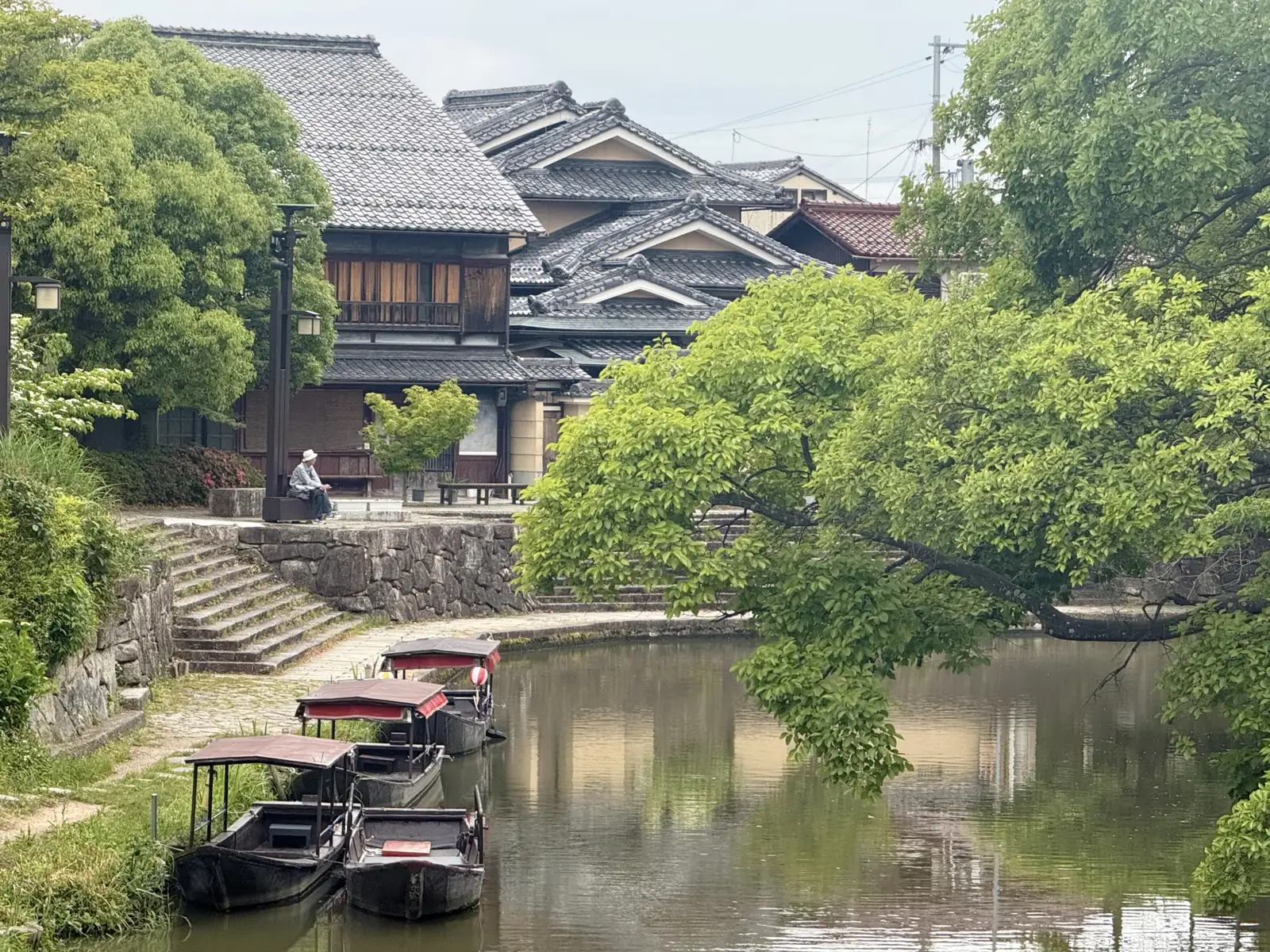
Eventually I reached Omihachiman, where I’d booked that night’s room, the last stop before the final push to Kyoto. It’s a large, spread-out city, but it’s mostly well-known for its old part: a canal lined with stone-paved streets and traditional houses, with boats you can take out along the water. I’d been here once before. I checked into my hotel near the station and, with daylight to spare, rode down to take a look before it got dark.
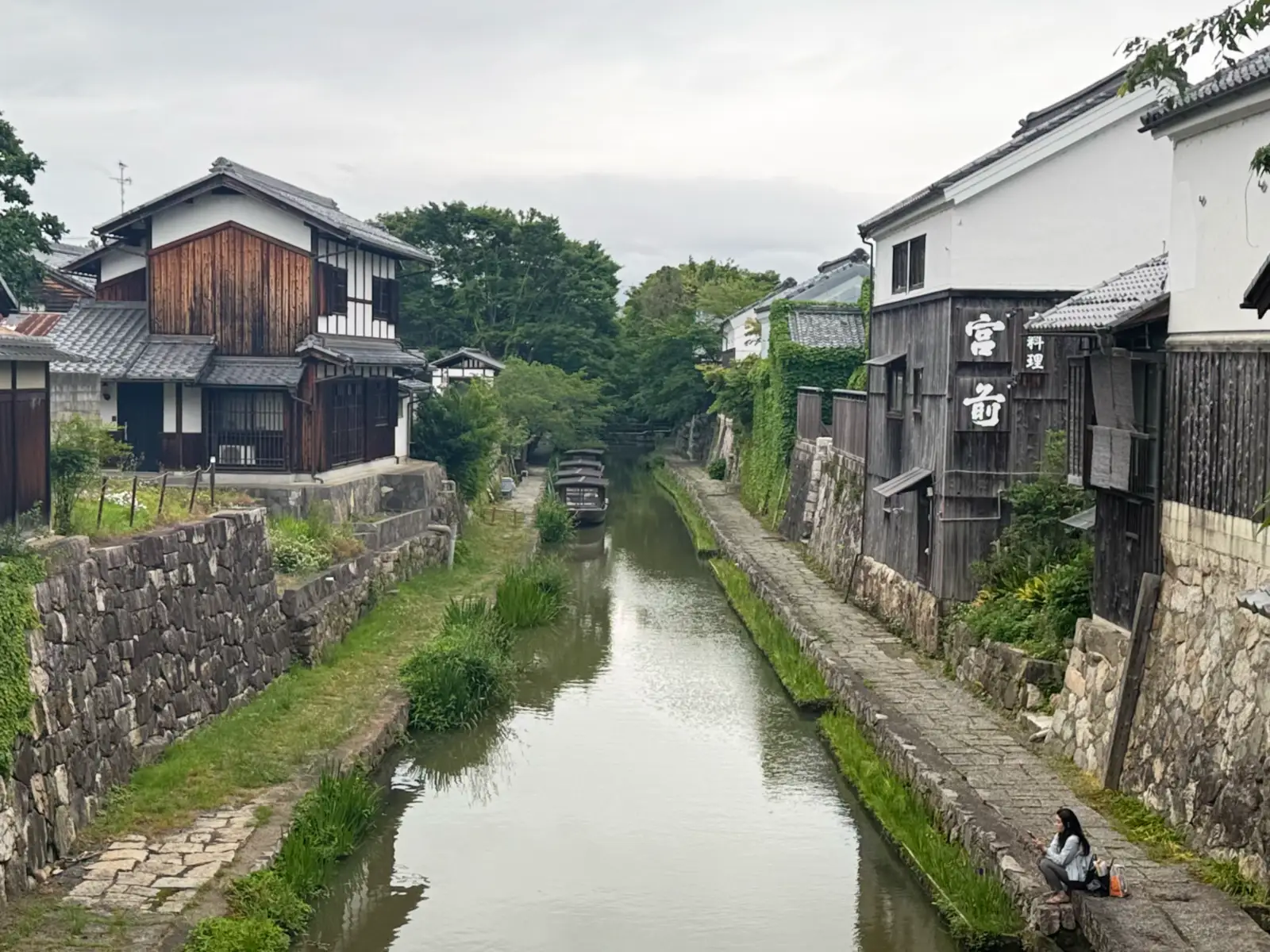
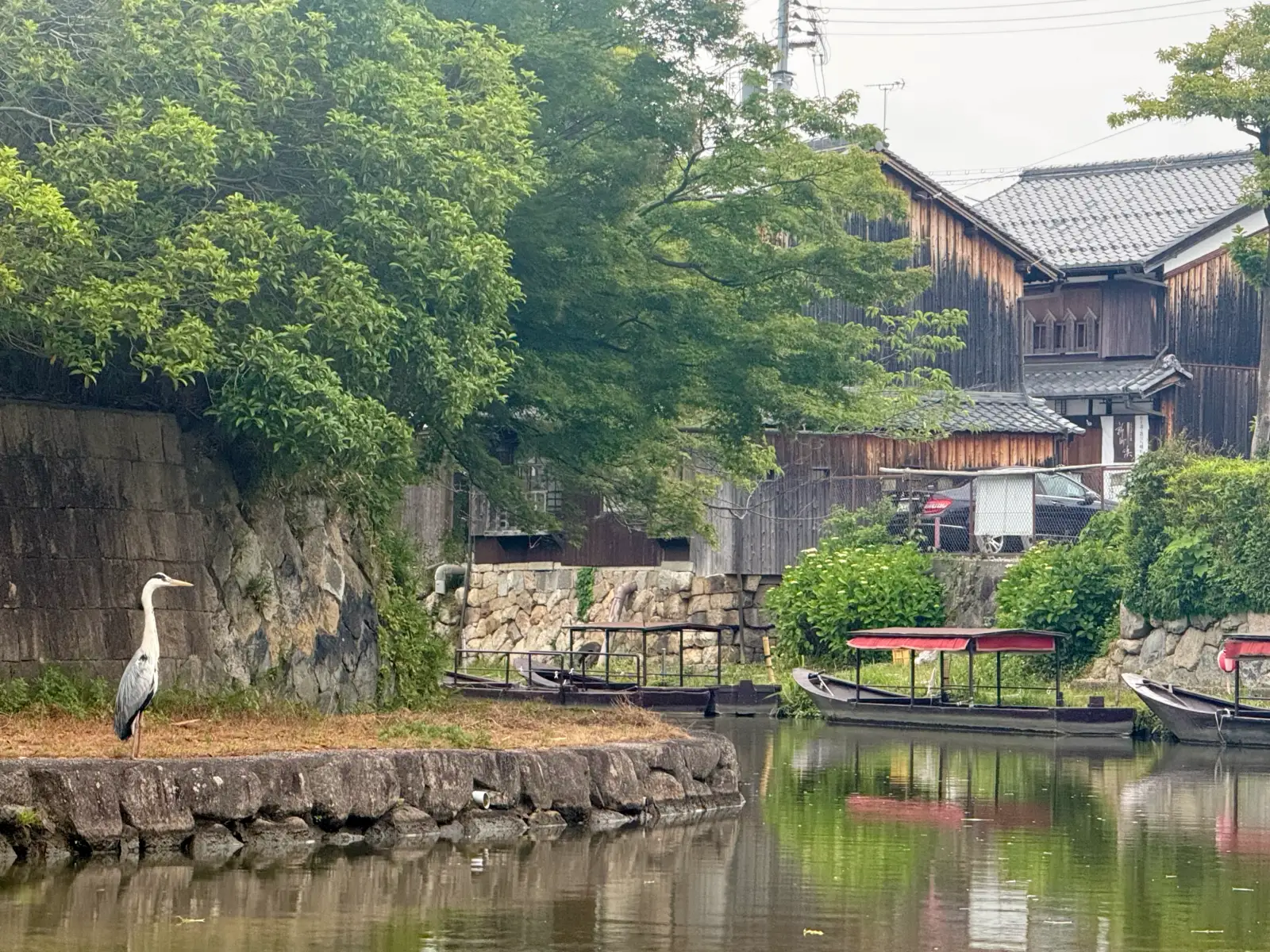
For such a picturesque spot, all that traditional architecture and a big shrine, it was nearly empty and calm. The one other time I came was in August, and there was some kind of event on, Bon-Odori maybe, which had pulled in a crowd. This time I had the place almost to myself. Long may it last.
Riding through the old streets, I came across a pair of bronze statues by chance. A girl in a kimono holding out a bouquet, and a Western man in a suit looking back at her. The plaque gave his name: William Merrell Vories. An American who came to Japan in 1905 as a missionary and got sent to Omihachiman to teach English. He never really left. He turned to architecture and designed about 1,600 buildings across the country, and several of the Western-style ones around town are his.
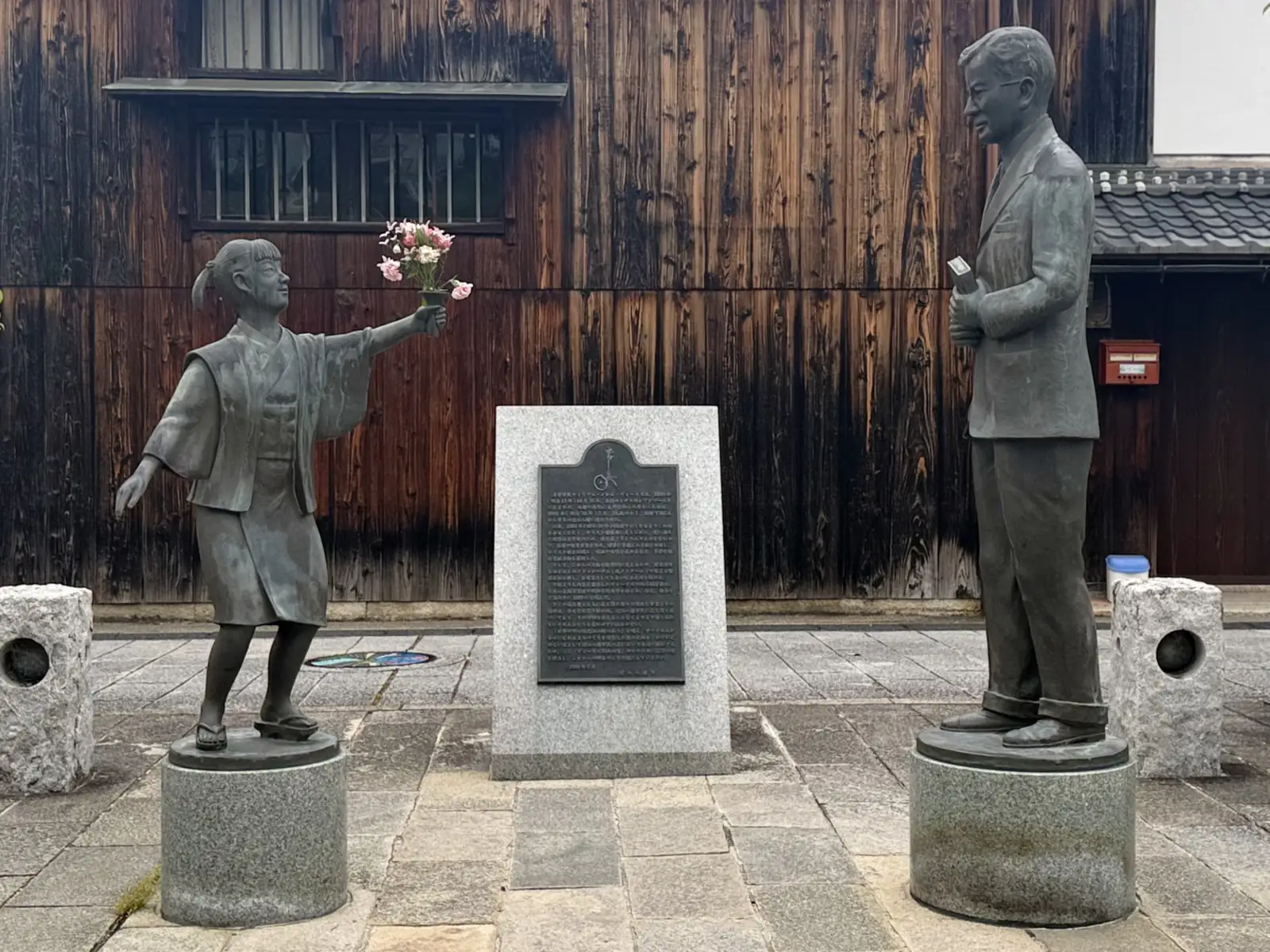
He’s also behind something you’ve probably held without knowing it. The company he founded, Omi Kyodaisha, makes Menturm, the little tin of medicated balm you’ll find in any drugstore in Japan. That business helped fund the rest of his work, and the town eventually made him its first honorary citizen. In the statue, the girl’s outstretched hand holds real flowers, kept fresh and replaced by locals, tucked into the bronze.
Next to the statues was a stone set with a city seal: a covered wagon, and the words Leavenworth, 1854, the first city of Kansas. That’s where Vories was born, and the two are sister cities now because of him. He married a Japanese woman, took her family name, and naturalized as Japanese under the name Hitotsuyanagi Mereru. He used to call Omihachiman the center of the world, and even had a personal signature for it, a circle with a dot in the middle, marking the spot. A man who came all the way from the Kansas frontier and decided this old canal town was exactly that.
The old part of town is worth exploring. Turn almost any corner and you find something you didn’t expect. The stone path along the canal is the best part, especially for an evening walk. No matter how many times you walk it, in either direction, it looks different.
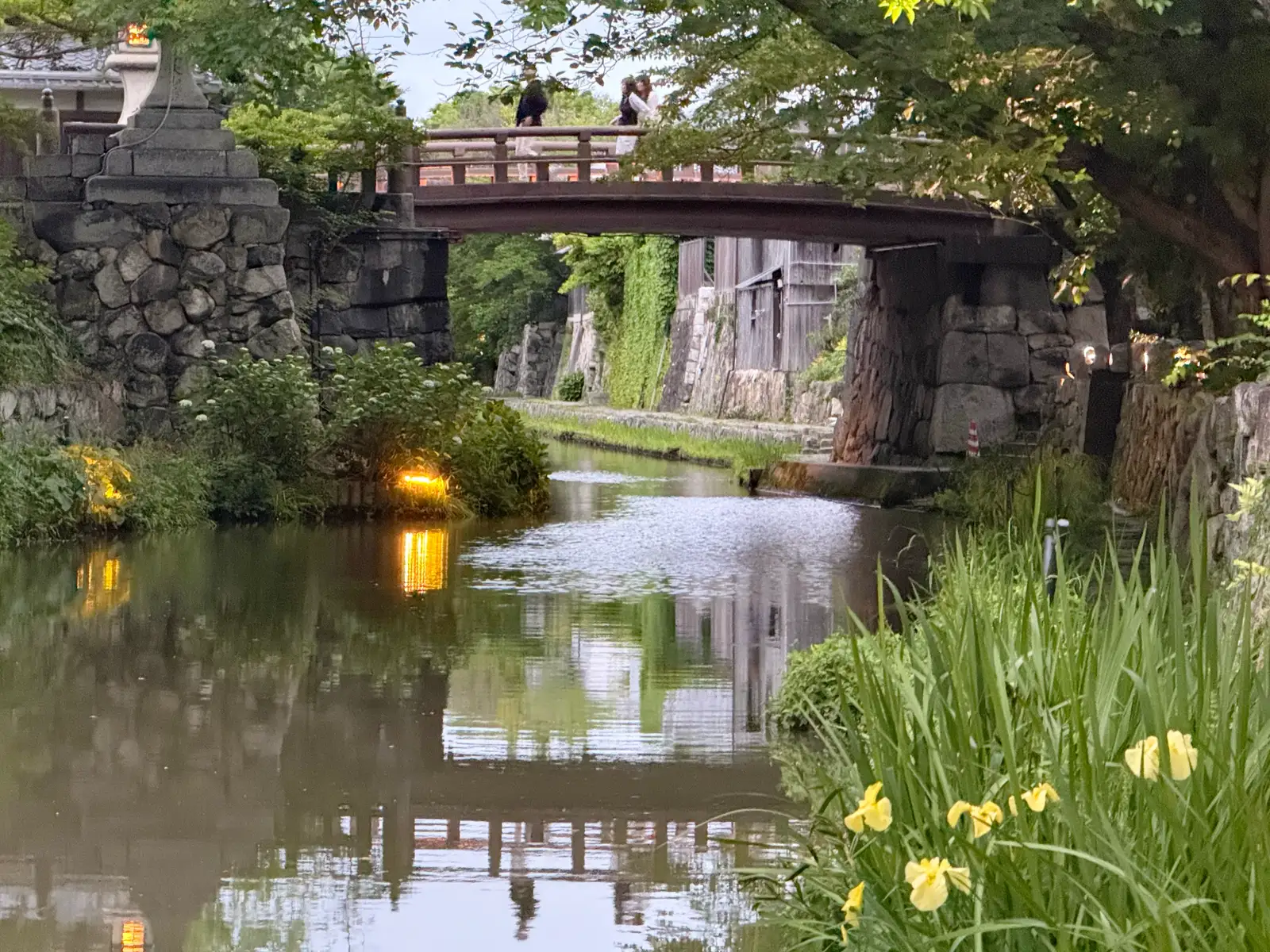
Once it got dark, the lanterns came on by themselves and lit up the canal, and the bridges were lit too. As it got darker I headed back to the hotel to get ready for the next day’s ride to Kyoto.