The Meiji Tunnel at Utsunoya, Japan’s First Toll Tunnel
There is a red-brick tunnel on the old Tokaido, lit end to end, swept clean, and open to walk through, above a village that still keeps to its own century. It is usually called Japan’s first toll tunnel. The one standing today is the second version. The first was built of wood, lit by open flame, and burned.
The Meiji Tunnel at Utsunoya is usually described as Japan’s first toll tunnel. That holds for the tunnel that opened here in 1876. It is not quite the tunnel you walk through today. The first one was built mostly of wood and lit by open oil lamps. After about twenty years a lamp set it alight and the whole thing burned and collapsed. The brick tunnel standing now is its replacement, finished in 1904.
I approached from the west, riding Route 1 back toward Tokyo on the Beast (my e-bike, if you two haven’t met yet). There is a turn off the highway that drops you into Utsunoya. The transition is quick: one minute you are on a national road with loud traffic, the next you are in a narrow, quiet hamlet with no sign of the road you were just on, and it feels like you accidentally slipped back in time.
Utsunoya sits on the old Tokaido, on the difficult stretch of pass road between the post towns of Mariko and Okabe. It was never a full post station itself, more a rest point on the climb, with teahouses for people crossing the pass. What is left is one main paved lane of old wooden houses running up the slope, with steep stairs cutting off between them. The city lists it as a protected townscape, and the pass road is a national historic site. People still live here, so it is a village first and a sight second.
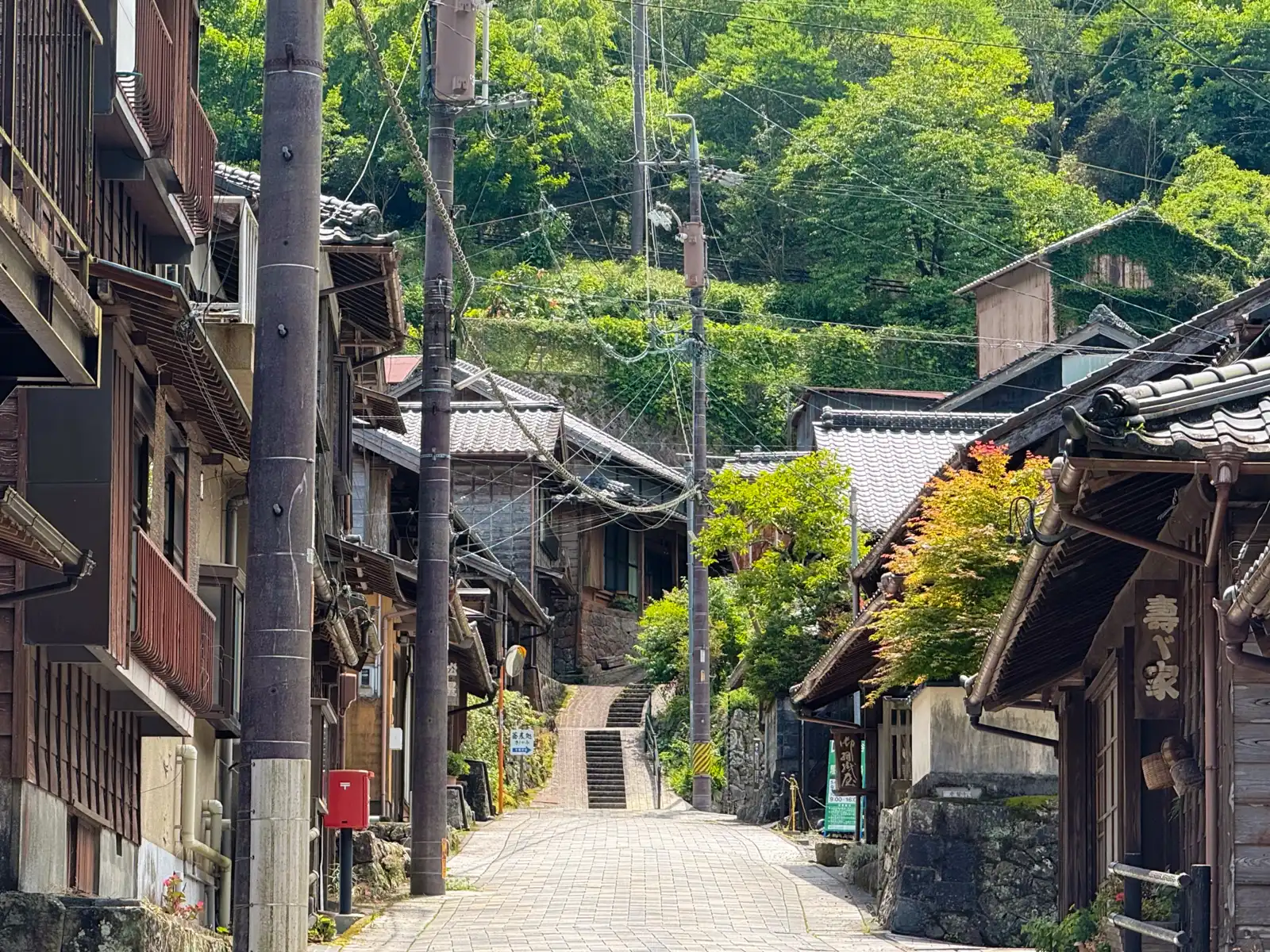
One house on the lane is known as the Ohaoriya, the Ishikawa family home. The story attached to it is that Toyotomi Hideyoshi stopped here in 1590 on his way back from the campaign against the Hōjō at Odawara and gave the family a haori, a formal jacket. Tokugawa Ieyasu is said to have called later and left a tea bowl. It is the kind of local claim that is hard to check, but the house and the name have carried it a long time.
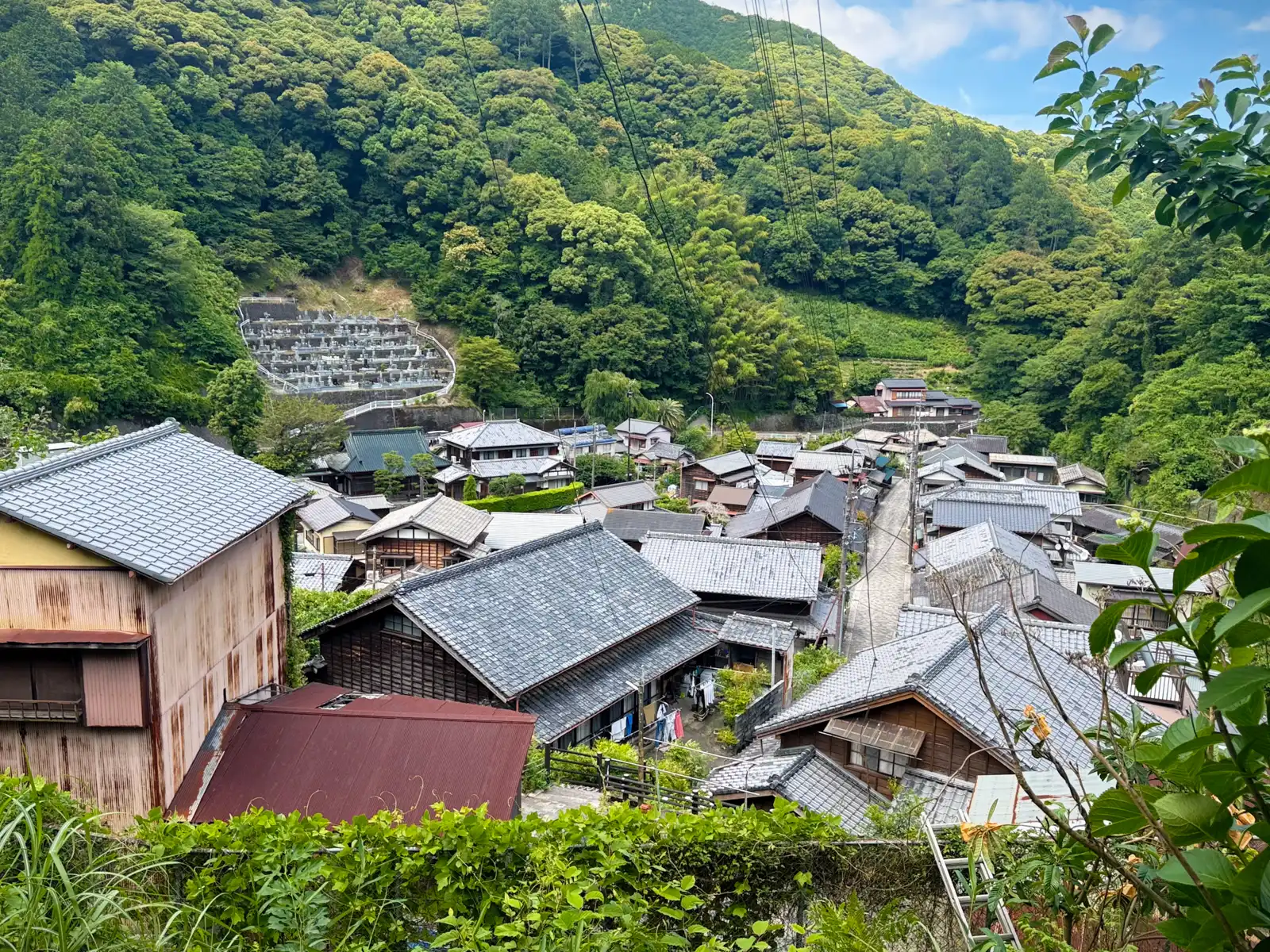
The road up from the village to the tunnel is short but steep, doubling back on itself as it climbs. From partway up you can look back down over the roofs of Utsunoya, packed into the narrow valley.
The last stretch up is the steepest, and then the road opens onto a flat clearing at the top of the pass. The tunnel is here, but the first thing in front of you is the rest area, with a signboard and map of the whole pass. There is also a scale model of the area sitting out in the open (weathering every storm the real pass gets!)
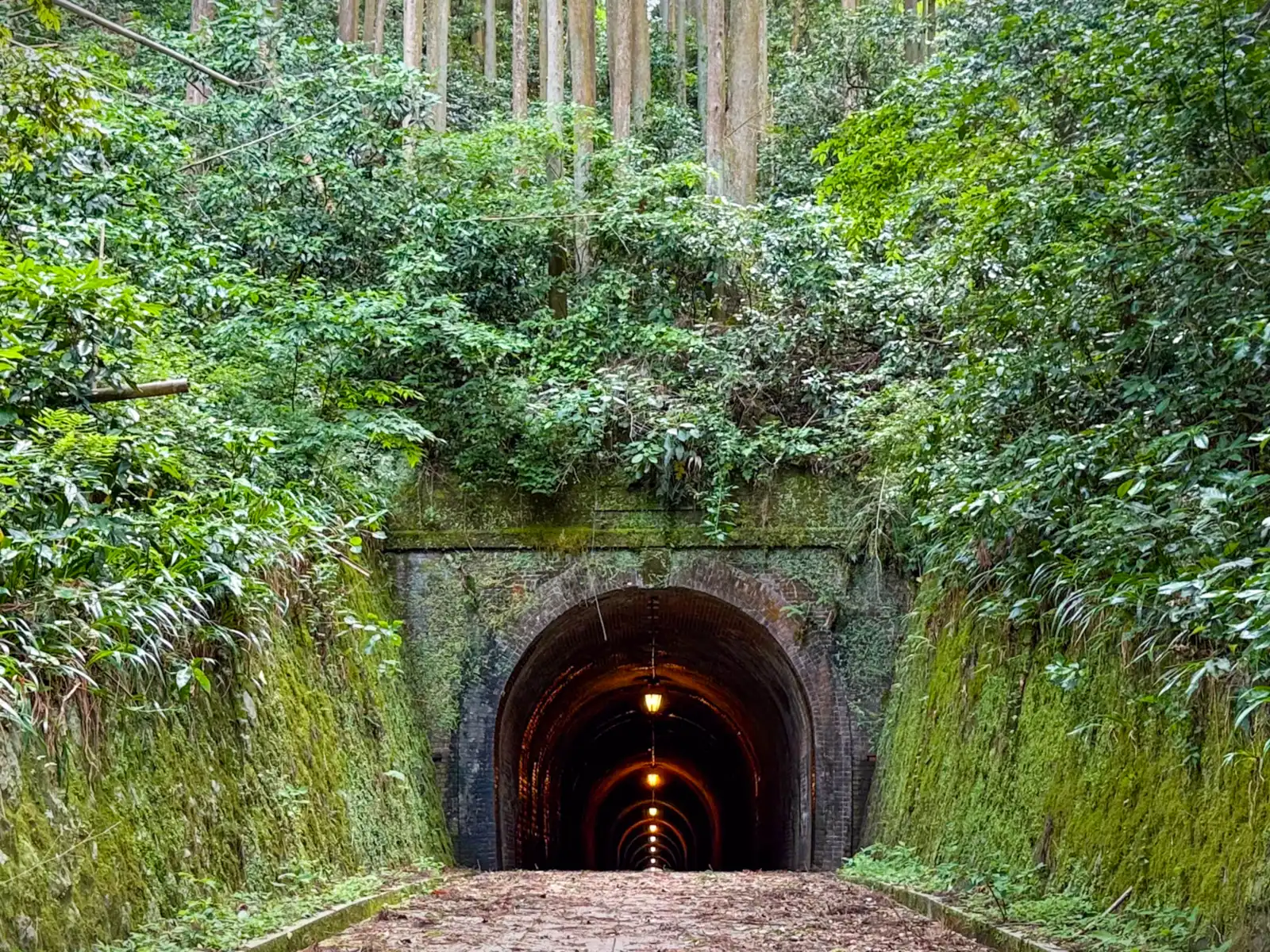
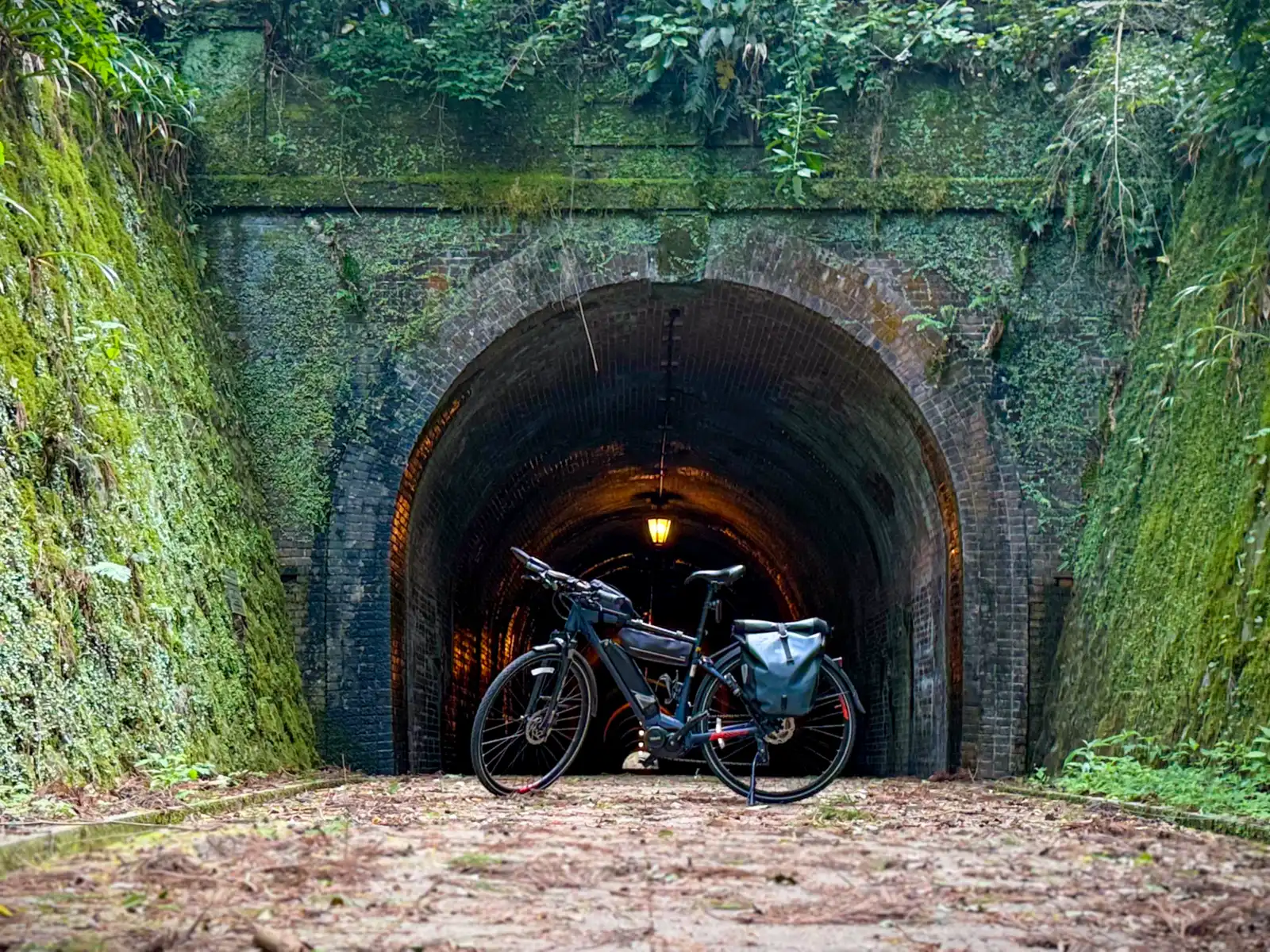
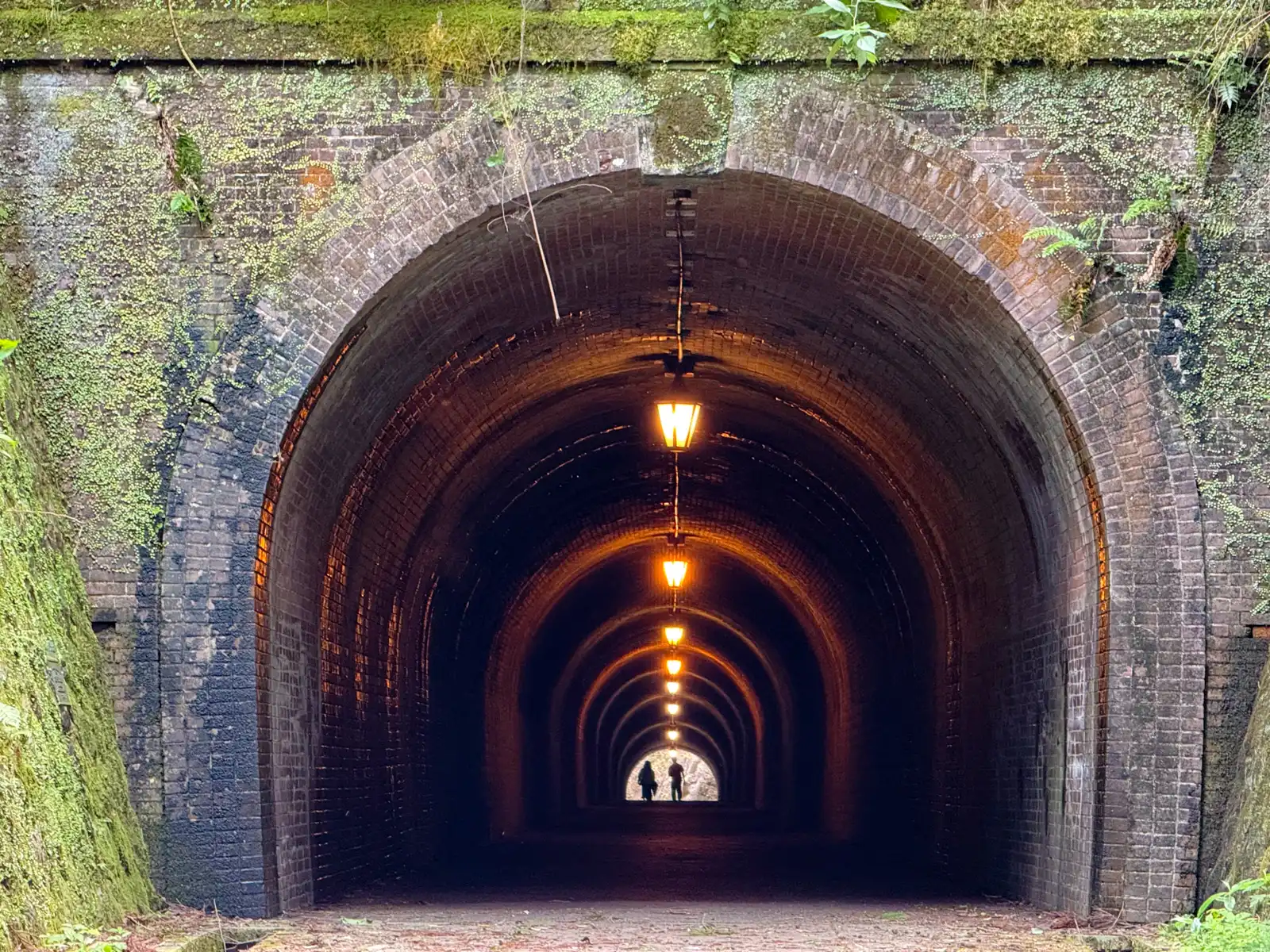
People come here to see the tunnel, and one look tells you why. It looks almost like a film set. A red-brick portal set into the green of the hillside, the arch and the walls fully in brick, with a line of warm lamps running back into the dark. The inside is clean and well kept, though damp has darkened the brick in patches. The brickwork stands out under the lights. At just over 200 meters the tunnel is short enough that you can see the far opening from where you stand. I walked to the other side and back. There were a few other people there, but it never felt crowded, and I doubt it often is.
The pass above was a genuine obstacle, and that is what the tunnel was for. The old Tokaido crossed Utsunoya on foot, over a climb that was known as one of the hard points on the road east. By the 1870s, with a bridge over the Abe River nearby and more traffic moving through, the case for going under the pass instead of over it was strong.
The work was local and privately funded, which is the part that makes it a first of its kind. Seven men from the area, led by one Sugiyama Kiheiji, organized the project and covered most of the cost, which came to more than 24,800 yen. Meiji money is hard to convert with any confidence, but that was a large sum, very roughly on the order of a hundred million yen today. Digging started in 1874 and the tunnel opened in 1876. It was cut by hand, and the labor over the roughly two years of work came to around 150,000 worker-days (the total of everyone’s days on the job rather than a count of individual people).
Crews dug in from both ends, the Okabe side and the Shizuoka side, and met in the middle, or nearly. The two bores came together a little off, and the tunnel kept a slight but permanent dog-leg at the join. The Shizuoka portal, about twenty meters of it, was built of blue stone. The rest was a timber frame of squared beams set in an A-shape. That bend and that timber made the inside dark, so it was hung with oil lamps, by some accounts around fifty of them, to light the way through. Travelers paid to use it: six rin on foot (a rin was a thousandth of a yen), and a little more for a packhorse, a palanquin, a rickshaw, or a loaded cart.
The wood and the open flames were a bad pairing, though. In 1896 one of the lamps started a fire. The timber frame burned, the tunnel caved in, and it was closed. For a while the pass had no working tunnel at all.
The replacement took years to finish and reused part of what survived. This time the Shizuoka side was straightened out, which shortened it from the original 223 meters to about 203, and the whole thing was lined in red brick from the portals through the interior. It opened in 1904 and is the tunnel you walk through today. The lamps inside now are electric but kept in the old kantera style, which is why the place still reads as late Meiji rather than as a modern underpass.
In 1997 it was placed on the national register of tangible cultural properties, under the formal name Meiji Utsunoya Tunnel. By the usual account it was the first tunnel still in regular use to be registered that way. It is pedestrian-only now, which is part of why it has stayed in such good shape.
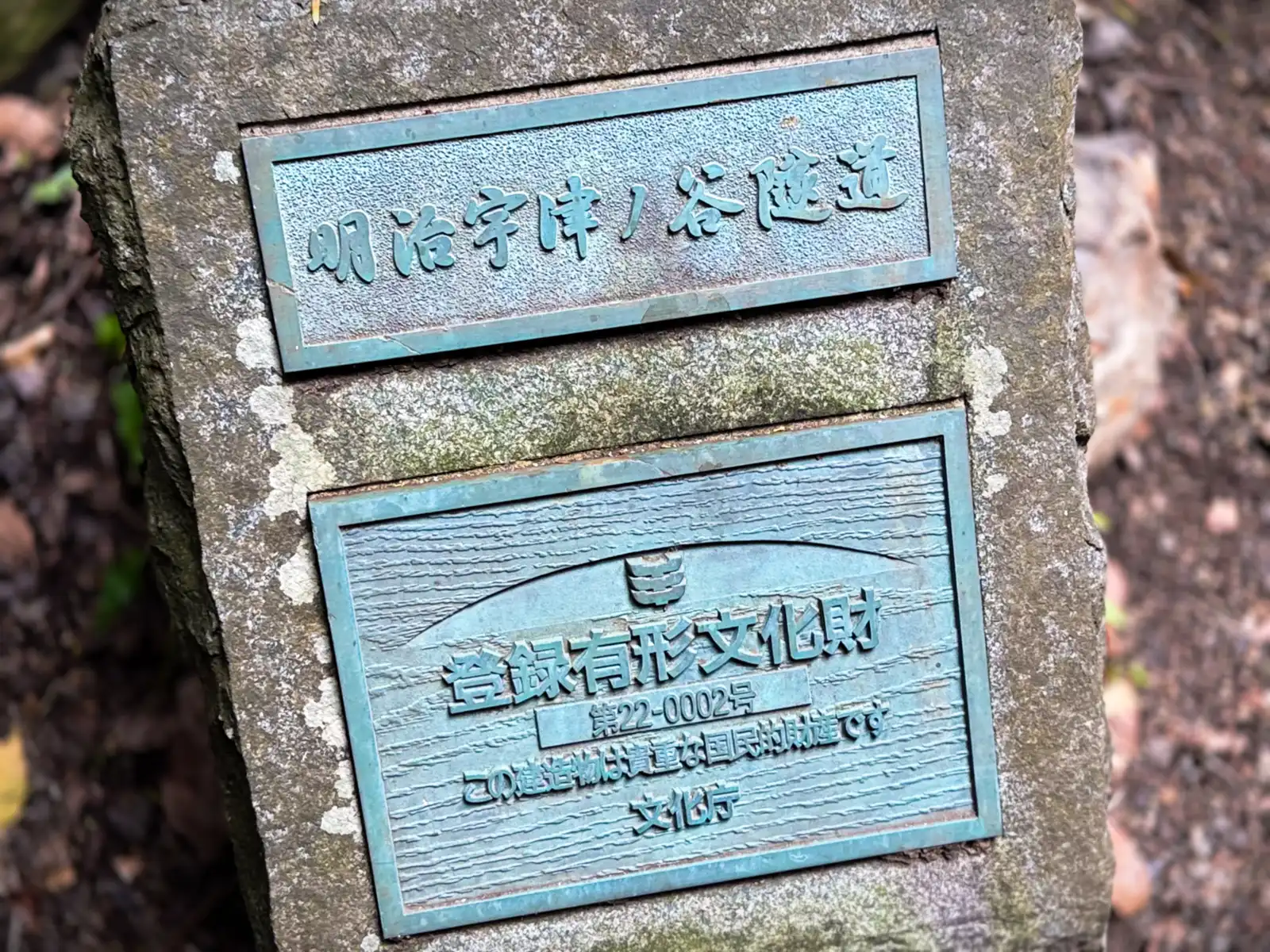
Interestingly, the Meiji tunnel is not the only one here. Utsunoya ended up with a tunnel from each of four eras, cut side by side through the same pass as roads kept being rebuilt: the Meiji brick one, then a Taishō tunnel, a Shōwa one, and a Heisei one, the last carrying Route 1 today. Signs here sometimes call it a tunnel museum, and standing at the rest area you can more or less see the point.
Long before any of this, the way over Utsunoya was a footpath called the Tsuta no Hosomichi, the narrow ivy road. It turns up in the Tales of Ise, the Heian-period collection linked to the poet Ariwara no Narihira, in the passage where the traveler heads east and finds the road over Mount Utsu dark and thin and overgrown. That mention is a large part of why the place-name was known at all in classical poetry.
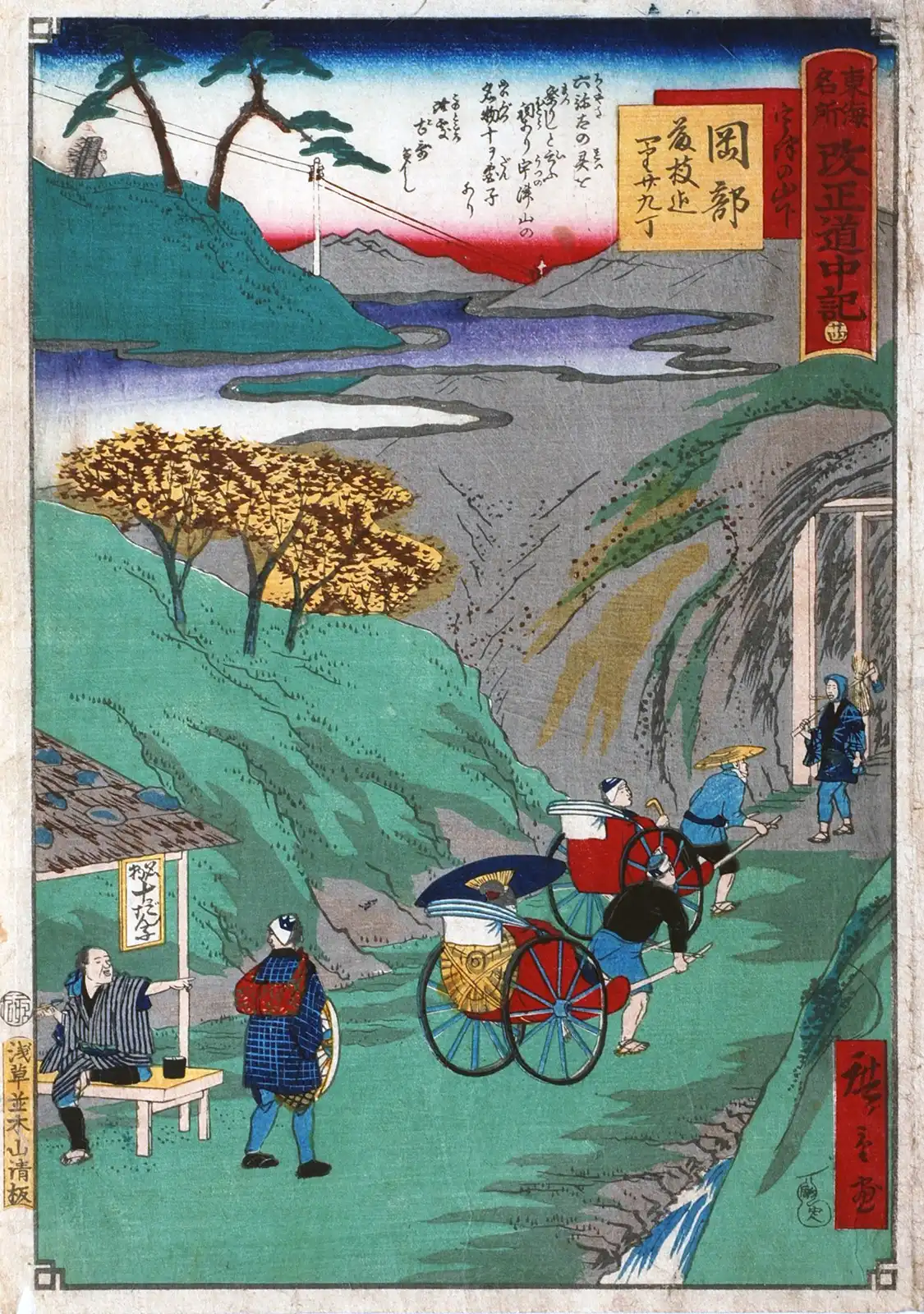
The pass also carries a legend, and it is a strange one. The story goes that a man-eating demon once haunted Utsunoya and preyed on travelers, until Narihira prayed for help and the local Jizō took the job on. Disguised as a traveling monk, the Jizō is said to have flattered the demon into shrinking down small enough to sit on his palm, then broken it into ten pieces. From that comes tō-dango, small dumplings strung together like prayer beads, still sold as a charm at Keiryū-ji temple at the foot of the pass on the 23rd and 24th of August. The custom is old, with records going back close to 500 years. Whatever you make of the demon, the dumplings are real.
That is the pass in one spot: a poem, a demon, a hand-dug tunnel that burned, and the brick one that took its place.