Golden Gai, the Last Wooden Corner of Shinjuku
Six alleys, something like 280 bars, all of it squeezed into a patch of Shinjuku about the size of a football field. Golden Gai started out as a postwar black market and turned into the place where Tokyo’s writers and filmmakers argued until sunrise. I walked around just after the typhoon settled down, which turned out to be pretty good timing.
I didn’t really plan the visit; it was more of a spur-of-the-moment thing. A typhoon had been crawling over Tokyo for most of the day, and by the evening it was finally moving off, leaving behind a light drizzle that doesn’t really bother anyone but keeps the streets wet and shiny. That’s actually the ideal condition for photographing a place like Golden Gai, so I headed out to Shinjuku before the pavement had a chance to dry.
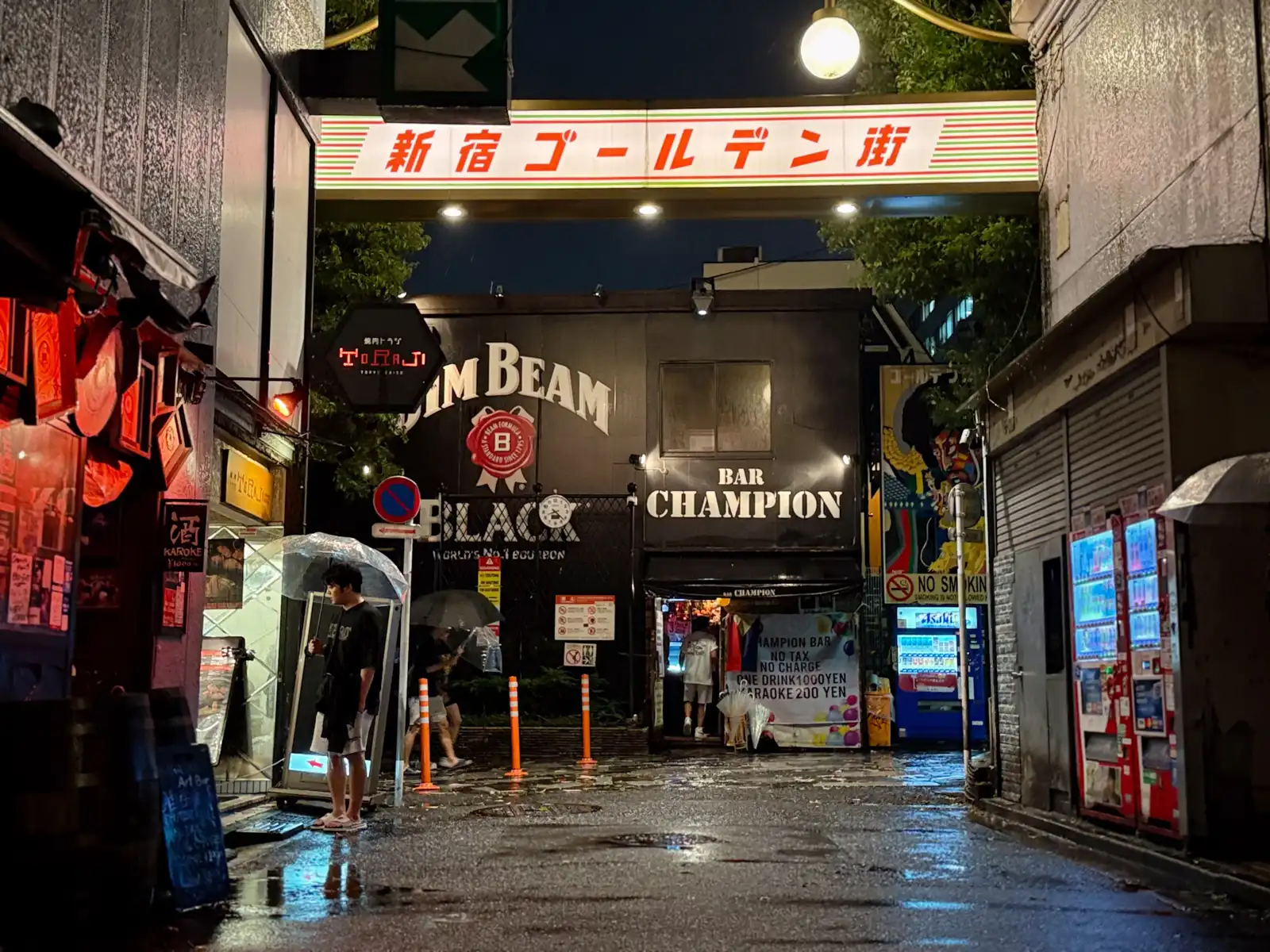
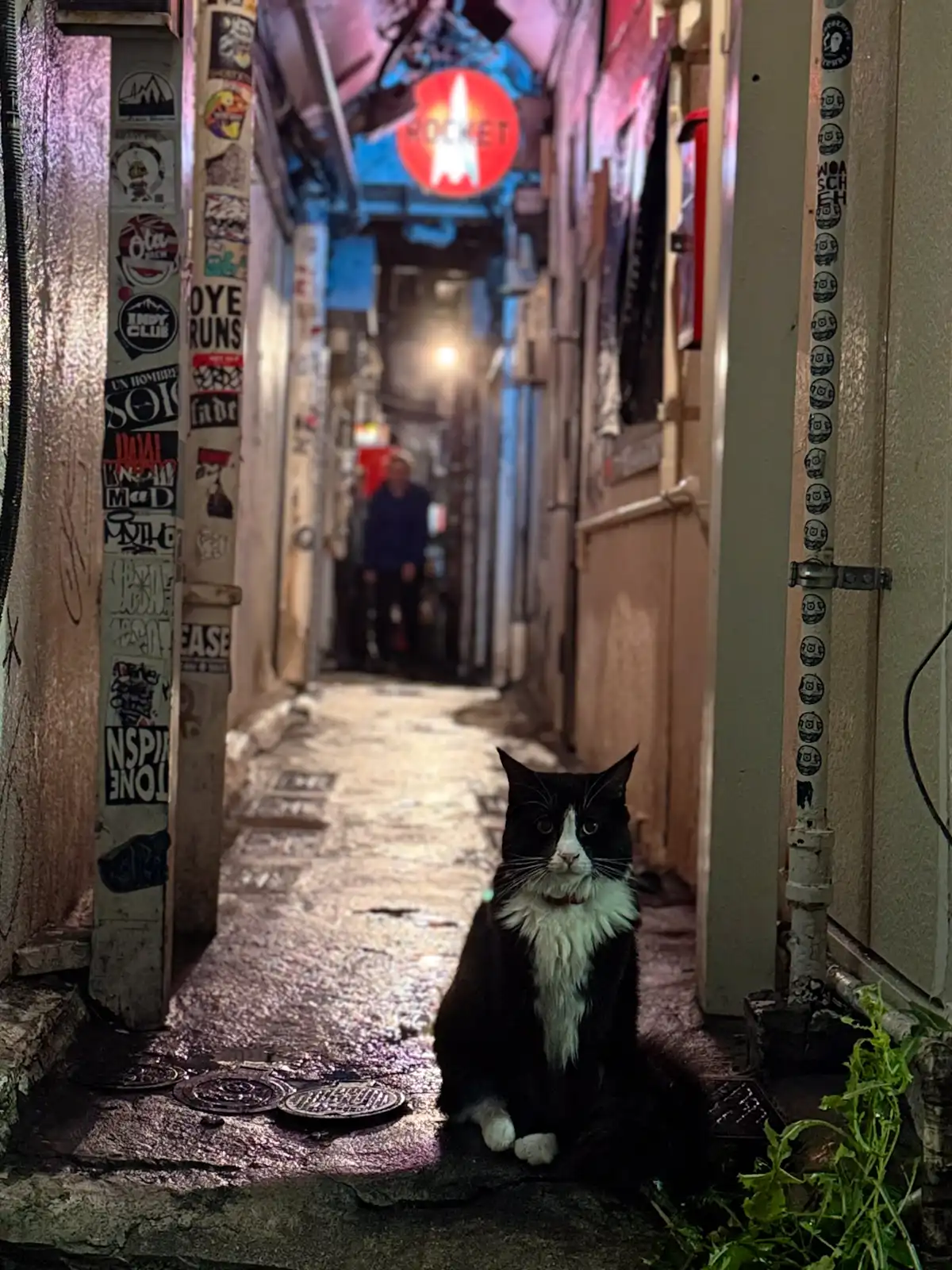
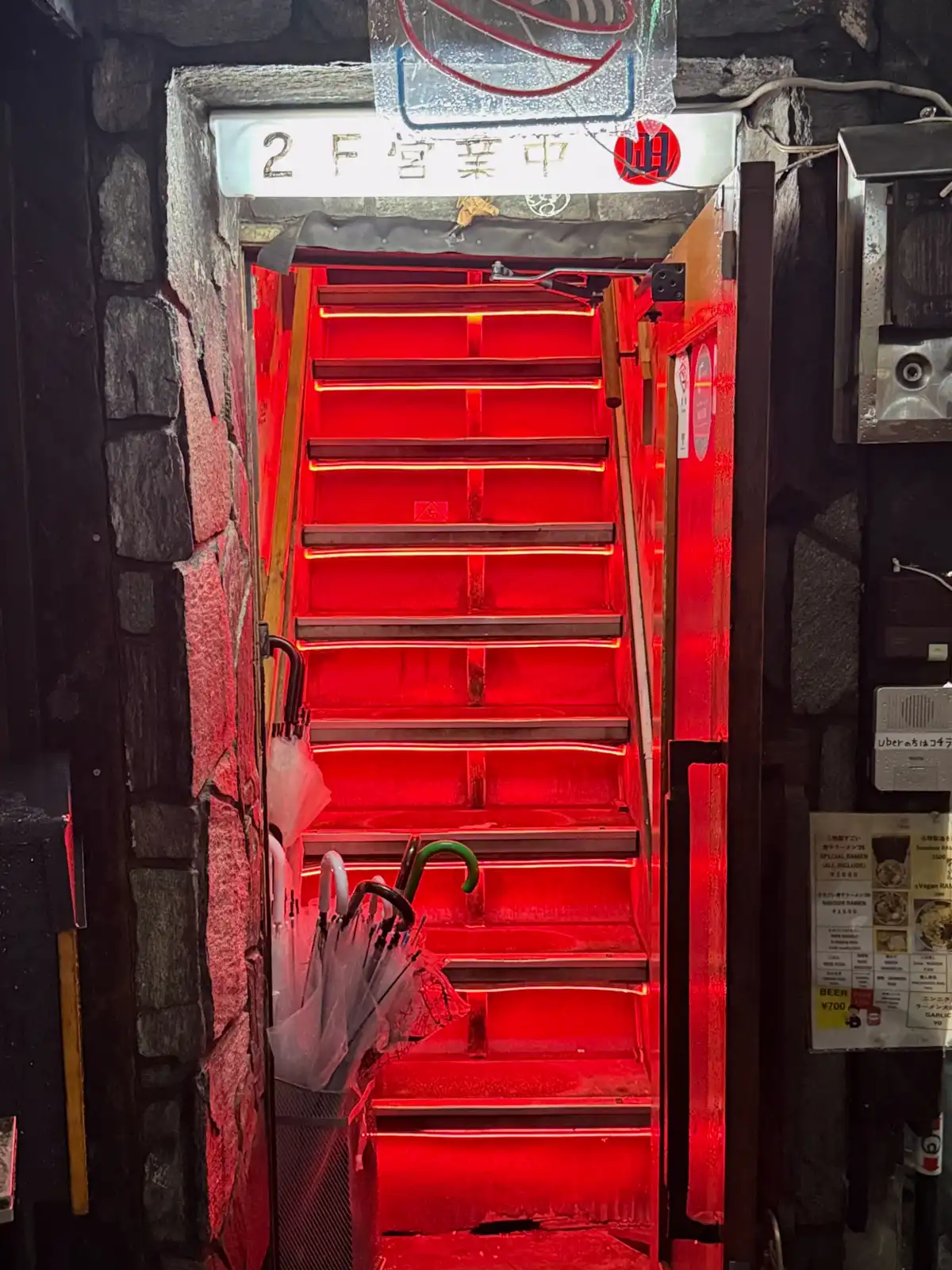
If you don’t know it, Golden Gai is a small block of tiny wooden bars on the eastern edge of Kabukicho, a few minutes on foot from the east exit of Shinjuku Station. Small is the key word here. The whole area covers roughly 7,000 square meters, and inside that you’ll find six narrow alleys running east to west, one lane crossing them, and somewhere around 280 bars, most of them with a single counter and maybe five to eight stools. The buildings are two stories, sometimes three, wooden, and packed together so tightly that in most places two people can barely pass each other in the lane. Shinjuku is already one of the densest places in the country, and Golden Gai is pretty much at the top of that density chart. It really is its own little world in there.
I expected the rain to keep people away, but no. There were quite a lot of visitors wandering the lanes, and I’d say about ninety percent of them were tourists from overseas, which is more or less how it’s been for the past decade or so. Golden Gai was showcased in the Michelin Green Guide back in 2009, and the number of Western visitors apparently went up sharply after that, to the point where the alleys now fill up with foreign visitors night after night. The bar owners have adapted, for the most part, but they have also put up a lot of signs. Signs asking you not to shout. Signs asking you not to drink in the street. Signs asking you not to photograph the inside of the bars, which many of the owners are fairly firm about, and you can understand why when the entire bar is the size of a walk-in closet and everyone inside is about a meter from the lens. I kept my camera pointed at the alleys and left the interiors alone.
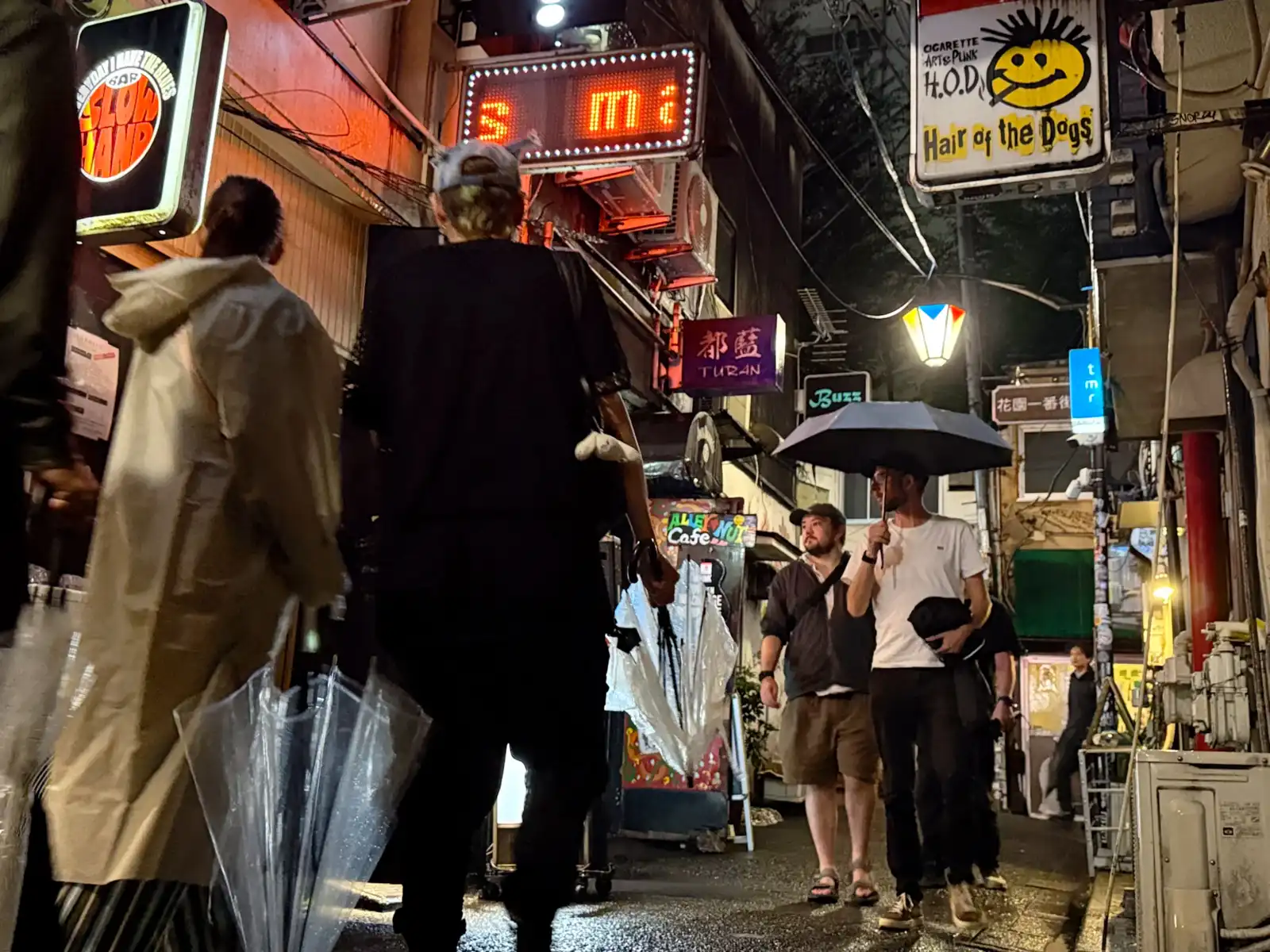
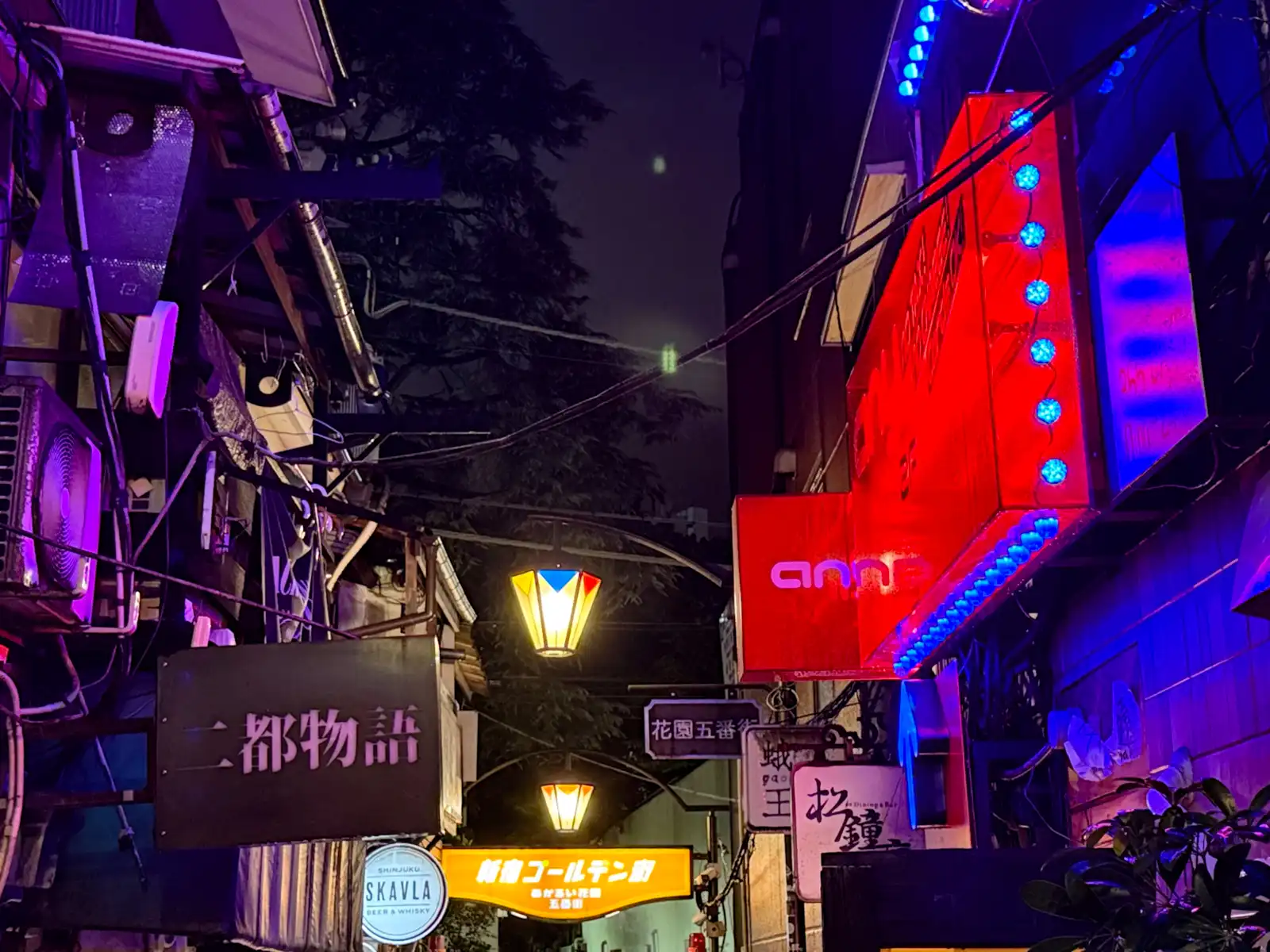
What might surprise you is how clean the place is. Given how dense and old and wooden it all is, you’d expect it to be a bit grubby, but it isn’t. Somebody sweeps, somebody takes the bottles out. The paint is peeling here and there, and the wiring overhead is a bit of a spaghetti situation, but the ground is clean and nothing smells. No rats either! I couldn’t stop taking photos in there, because every time you turn a corner or look up, there’s some new sign or lantern or stack of crates you didn’t notice on the way in.
Why does Golden Gai exist? It all comes down to what happened to Shinjuku right after the Second World War. The area around the station was flattened in the air raids, and like most of Tokyo it filled up with black markets almost immediately. The biggest one sat right at the east exit of the station, and when the Occupation authorities ordered the black markets shut down in 1949, the city gave the stallholders until the following year to move, and pointed them at this patch of weedy, mostly empty ground next to Hanazono Shrine, which at the time was a fairly remote corner of the district, well away from the crowds around the station.
Being out of the way had its uses. Through the 1950s most of the little buildings were officially eateries, though food was not really the main business, and the upstairs rooms saw a lot more traffic than the menus would suggest. The neighborhood picked up the kind of reputation that made respectable people take the long way around. A new law in 1958 brought all of that to an end, the upstairs went quiet, and the ground floors became the bars that are still standing today. It was around then that people started calling the place Golden Gai.
That’s when the interesting part of the story begins. Through the 1960s and 1970s, Golden Gai became the after-hours home of Tokyo’s writers, editors, film directors, actors and whoever else was awake at three in the morning with something to argue about. Mostly that meant literature and politics, and often loudly enough to end in a fight. Some of the bars were known as literary bars, and the area picked up the nickname of the cultured people’s town. Shinjuku in general was the center of the counterculture at the time, with student protests around the station and avant-garde theater on the grounds of Hanazono Shrine next door. The writer Tanaka Komimasa, who was a regular, described it in 1978 as a place with a mood all its own, and definitely not somewhere ordinary office workers went for a drink. The list of regulars from those years includes the manga artist Akatsuka Fujio, the painter Okamoto Taro, and the directors Oshima Nagisa and Wakamatsu Koji. When the writers Nakagami Kenji and Saki Ryuzo picked up the Akutagawa and Naoki prizes in the same season in 1976, the newspapers noted that both of them drank here, which did the district’s reputation no harm at all. You will also read that Akira Kurosawa was a regular. I couldn’t find that one in any of the Japanese sources, so I’d file it with the Blade Runner story below.
The 1980s nearly finished it off. Land prices in Tokyo went completely mad during the bubble, and a block of old wooden two-story bars sitting five minutes from the busiest station in the world was an obvious target for developers. The tactics were not always polite. There’s a well-documented pattern from that era of land sharks pressuring holdouts on behalf of developers, and after a suspicious fire in 1986 the bar owners formed an association to protect the district. Their first job, before any protesting, was to go to the Legal Affairs Bureau and work out who actually owned each lot, one by one, because nobody was quite sure. The woman who headed the group had her own bar hit by suspicious fires more than once, and the story goes that after one of them she lined up chairs in the burnt-out shell, served whatever beer had survived in the fridge, and the neighboring bars sent over food until it turned into a party. In the end they managed to hold on long enough for the bubble to burst, and once it did, the developers lost interest and moved on to easier targets.
The 1990s were quiet in a bad way, with a lot of shuttered doors, and one owner who opened her bar just before 2000 recalled the alley around the Akarui Hanazono Sanban-gai sign being pitch black at night, which is a bit ironic for a street whose name means bright flower garden. Part of the reason the developers never came back was that the ownership situation in Golden Gai is legally complicated enough that nobody could buy it up piece by piece. So the empty bars just sat there, and from the early 2000s a new generation of owners started moving in and opening places of their own. That’s more or less the Golden Gai you see today. There was one more scare in April 2016, when a fire in one of the old two-story buildings spread to its neighbors and burned about 300 square meters across three of them. Everyone on social media immediately suspected developers again, but the person arrested was a 66-year-old homeless man caught on camera breaking into the building just before it started. He denied lighting it and was convicted of arson anyway the following year, and the bars were rebuilt.
If you’ve read anything about Golden Gai, you’ve probably come across the claim that it inspired the look of the cult movie Blade Runner. You’ll read it on a lot of websites and hear it from a lot of tour guides, so I went looking for where that comes from, and the short version is that nobody can find a quote from Ridley Scott or anyone on his design team saying so. What Scott himself has said, more than once, is that the film’s city came out of New York on a bad day and the old crowded streets of Hong Kong, where he had shot commercials and had wanted to film the movie before the budget said no. Syd Mead, the designer who drew most of the film’s look, did visit Japan in 1961 and mentioned the jumbled signs of Ginza as something that stuck with him, but he also pointed out that his next trip to Japan was in 1983, after the film was already out, and was a little irritated by people saying he’d copied Tokyo.
The most likely explanation for the legend is that Scott came back a few years later to shoot Black Rain, and he did want to film that one in Kabukicho, right next door. But instead, Osaka gave the permit, so Dotonbori got the neon and Shinjuku got the rumor. Somewhere along the way two Ridley Scott films with Japanese connections got blended into one story, and that story got attached to the most Blade Runner-looking block in the area. To be fair to the legend, if you walk through Golden Gai on a wet night with the lanterns on and the wiring dripping overhead, you’ll see why people believe it. It really does look like something straight out of the movie, even if that’s not where the movie got its look from.
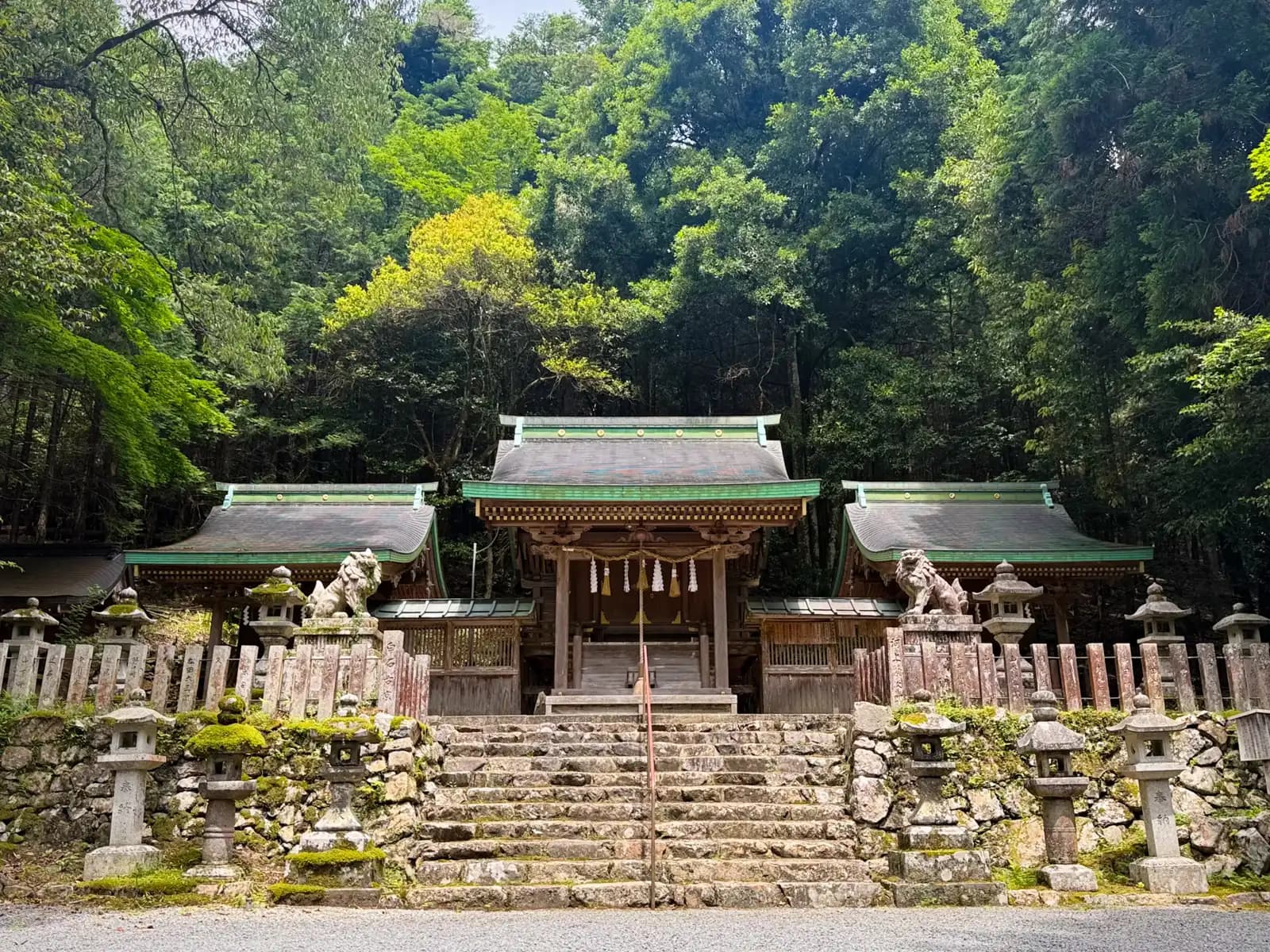
Right beside Golden Gai, across a narrow street, is the aforementioned Hanazono Shrine. The contrast is about as sharp as it gets. One minute you’re shuffling sideways past strangers in a lane a meter wide, and the next you’re standing in a wide gravel courtyard with nobody around, and the noise of Kabukicho drops away to almost nothing. It’s the guardian shrine of Shinjuku, dedicated to Inari. It has been on this spot since the Edo period, having been moved here from a site a couple of hundred meters to the south near where Isetan, the department store, stands now. The records put its existence back to at least 1590, which makes it one of the oldest things in the whole district by a wide margin, though the current buildings are postwar reconstructions.
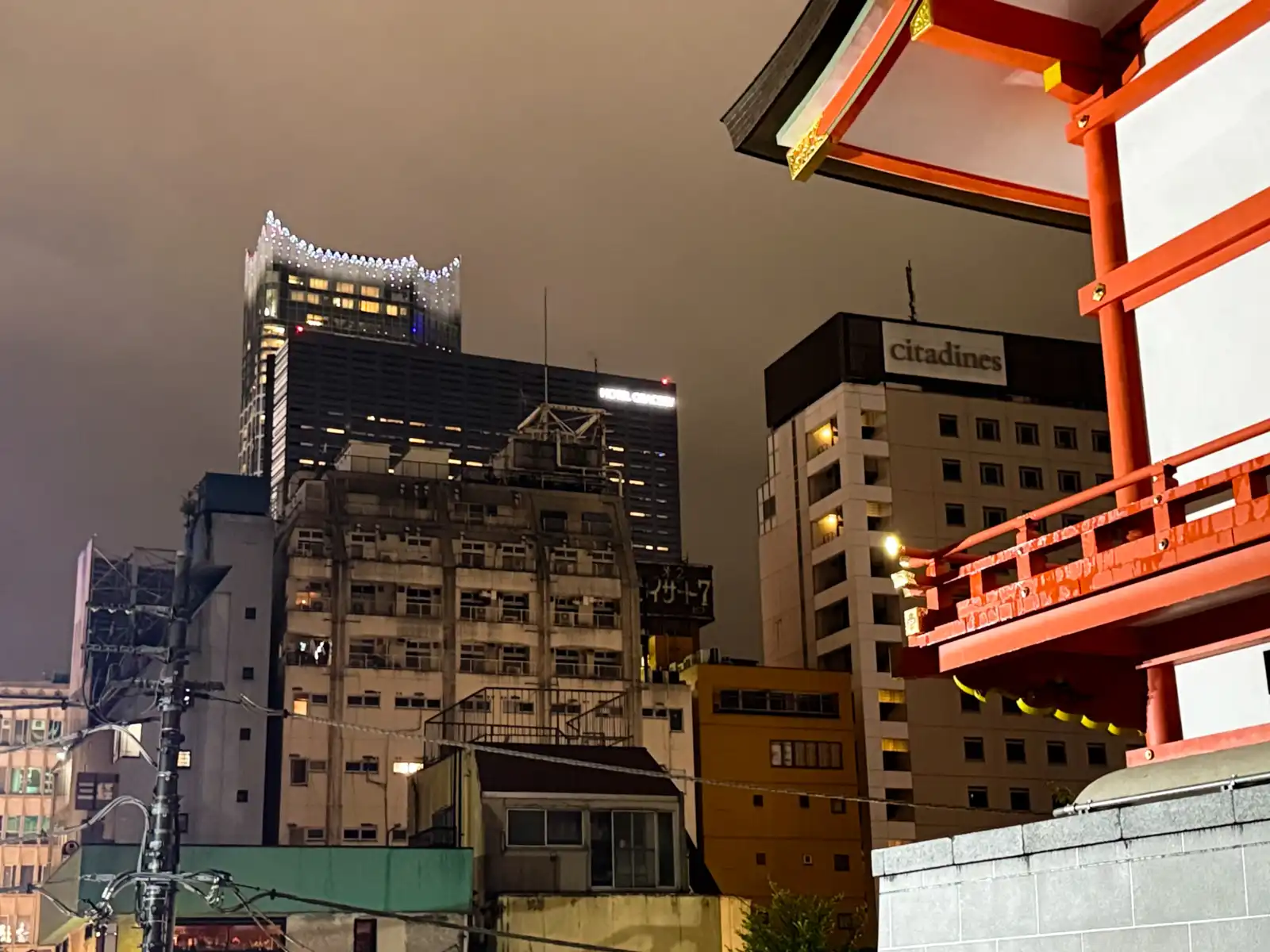
The shrine and the bars have more to do with each other than it might look. When Golden Gai was the hangout of the 1960s counterculture, the playwright Kara Juro set up his red tent theater on the shrine grounds and staged his plays there. Kara died in 2024, but his troupe still puts the tent up in the shrine grounds most springs, and did it again in 2025. So for a while the shrine was where the plays happened, and the alley next door was where everyone went afterward to argue about them. On a rainy weeknight in September, though, it was just quiet, with a couple of people paying their respects and the lanterns swaying a bit in what was left of the wind. I spent a few minutes there before going back into the maze for another round of photos.
If you want to go yourself, Golden Gai is five to ten minutes on foot from the east exit of Shinjuku Station, tucked in behind Kabukicho on the Hanazono Shrine side. The bars mostly open in the evening and run late. Many of them charge a seating fee, which is usually posted on the door. Some are regulars-only and will say so, and some are happy to have visitors. The difference is usually obvious from the sign at the entrance. Read the signs, keep your voice down, ask before photographing anything indoors, and you’ll be fine. And don’t be afraid to go there in the rain.
I took far more photos in there than could fit in this article, so if you want to see the rest, I’ve put them all in the gallery here.