Tokyo to Kyoto by E-Bike, Day 3: Shizuoka to Toyohashi, the Long Ride Down the Pacific Coast
After Day 2’s climbs, the road finally leveled out and ran along the Pacific coast. A beach that could have been Okinawa, a small Statue of Liberty in a parking lot, rows of wind turbines up close, and a tsunami seawall that locked me out of the shoreline and sent me inland on detour after detour. Somewhere in all of it, my bike finally earned a name.
If Day 2 was all hills, Day 3 was flat. Flat, but long. I rode about 150km that day, and the bike handled it without breaking a sweat.
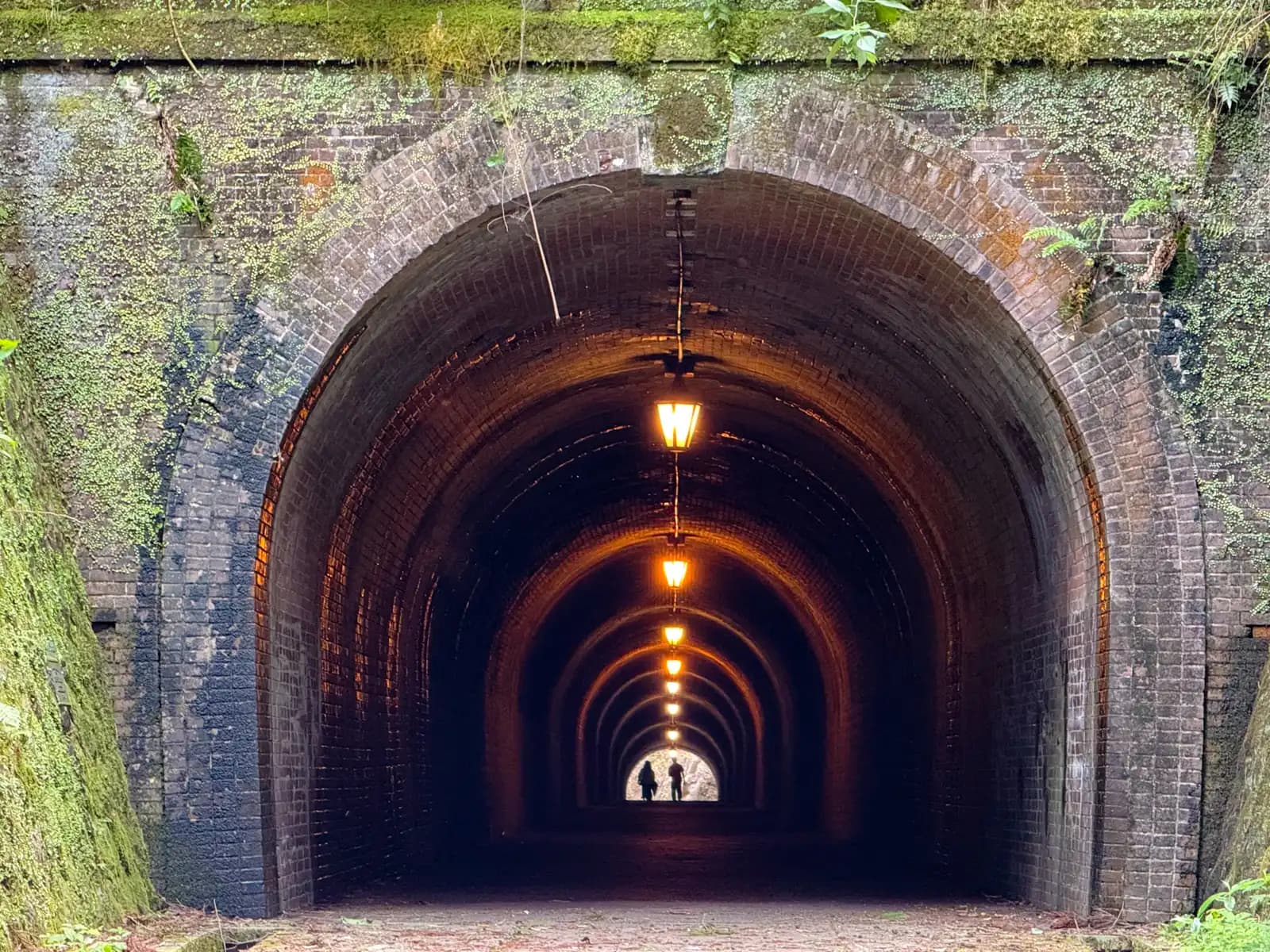
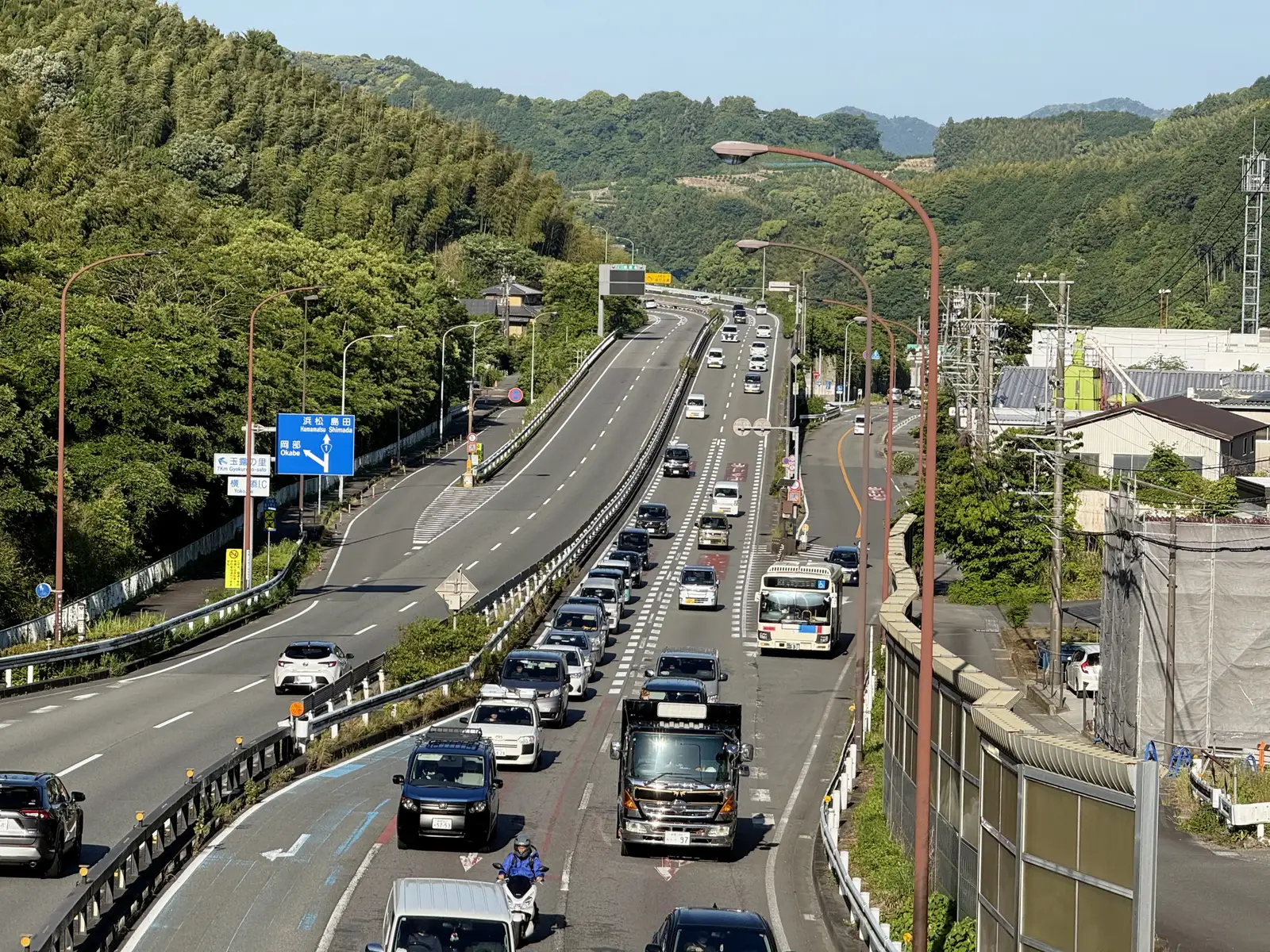
I started from Shizuoka city early in the morning. Just past the outskirts, the road took me through a few kilometers of hills, climbing up to Utsunoya Pass, the old crossing between Shizuoka and Fujieda. This was a hard stretch of the Tokaido for centuries, the kind of place travelers dreaded on foot. These days it’s just a busy National Route 1. What’s strange about Utsunoya is that it has four tunnels side by side, one each from the Meiji, Taisho, Showa, and Heisei eras, including a brick one from 1876 that was Japan’s first toll tunnel. Once the hills ended I dropped into Fujieda, and from there the road leveled out.
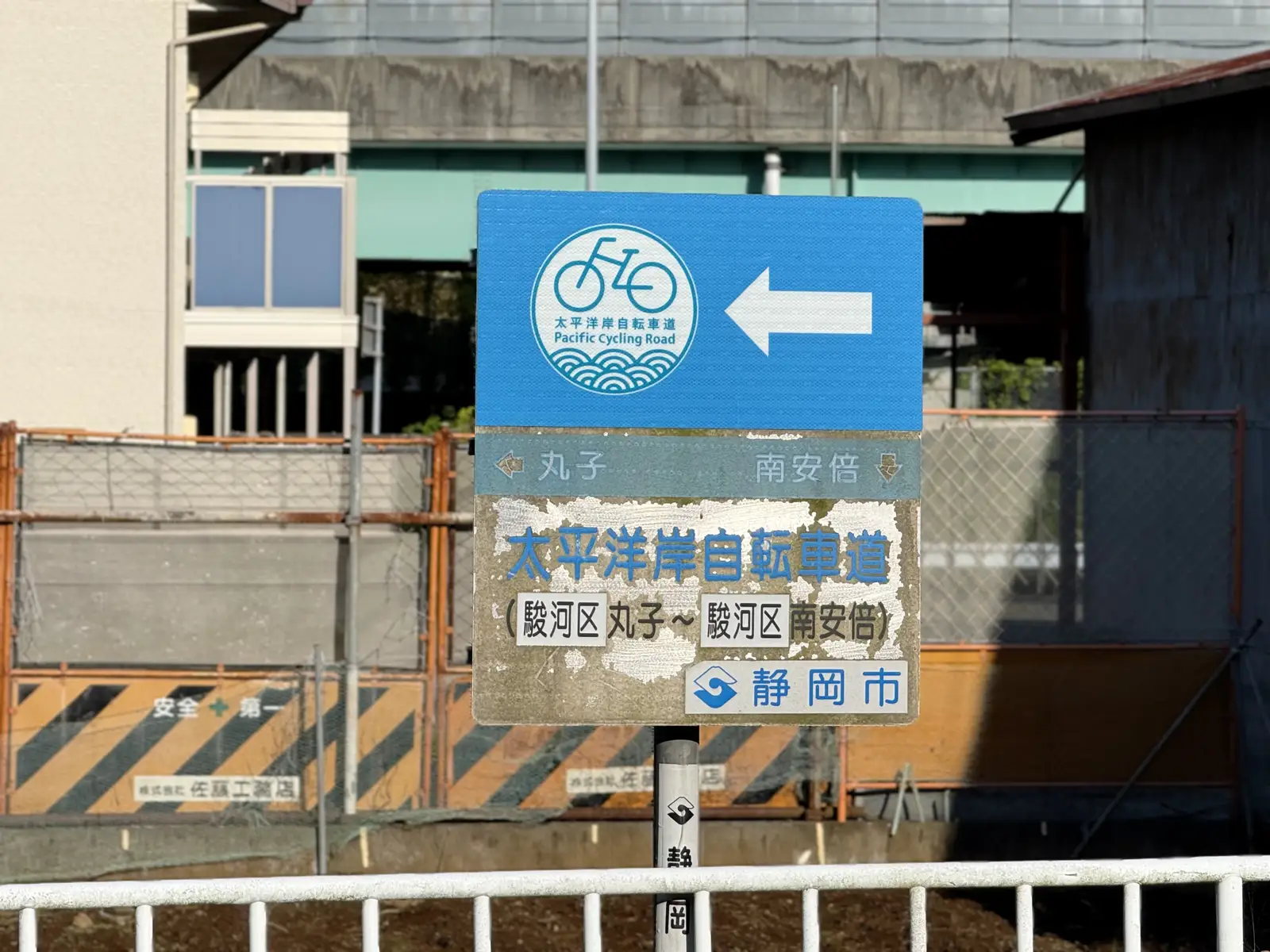
Somewhere along the way, I started noticing signs for the Pacific Cycling Road, which I’d never heard of before. Apparently, it’s the longest cycling route in Japan: about 1,400km, running all the way from Choshi in Chiba down to Wakayama. Not that it’s a dedicated path the whole way. Some stretches are, but a lot of it just runs along the regular road, and you only know you’re on it because the blue signs keep showing up. I followed it for most of the day.
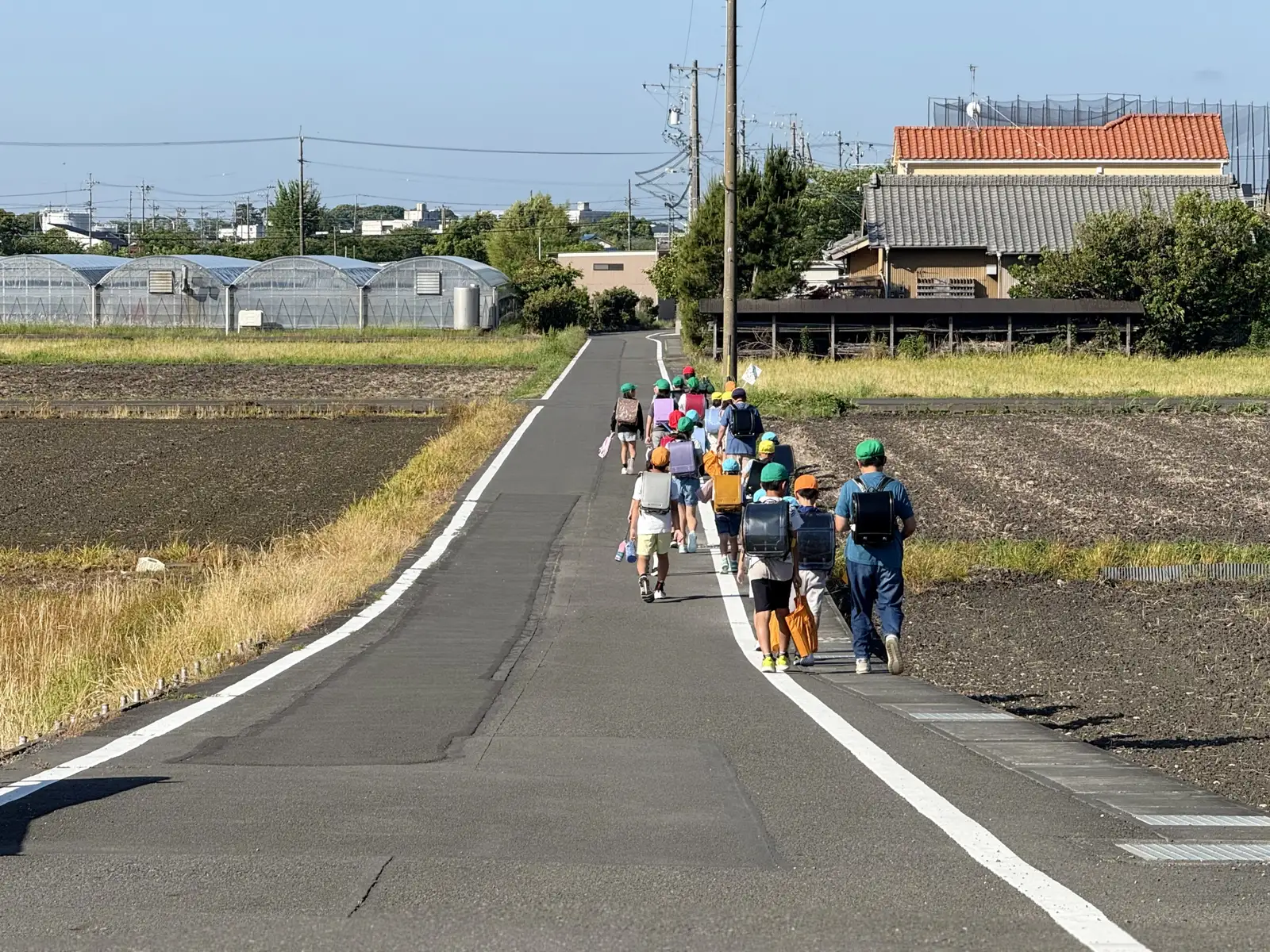
The road ran through kilometers of fields, and out there I passed a group of elementary school children walking to school. It’s a common sight in the countryside. Kids from the same neighborhood meet up and walk in together as a group, with their hard leather backpacks and matching caps, one taller kid setting the pace. That one is the leader, usually the oldest, a fifth or sixth grader, keeping the smaller ones moving and in line. There’s even a name for it: shudan toko, or group commuting.
There was something about how small they looked against all those open fields, and the quiet, ordinary safety of it, a morning that has probably looked the same out here for a very long time.
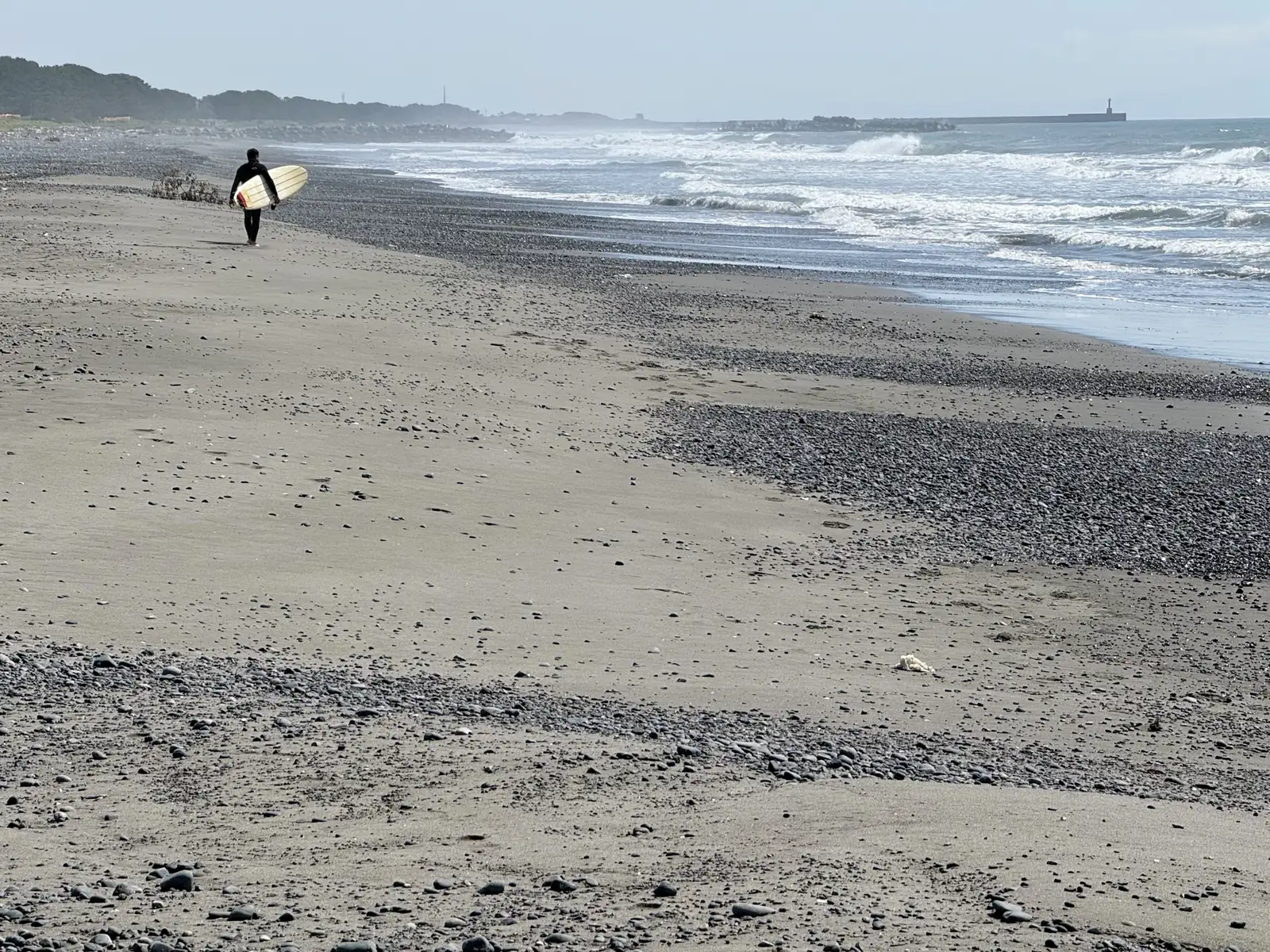
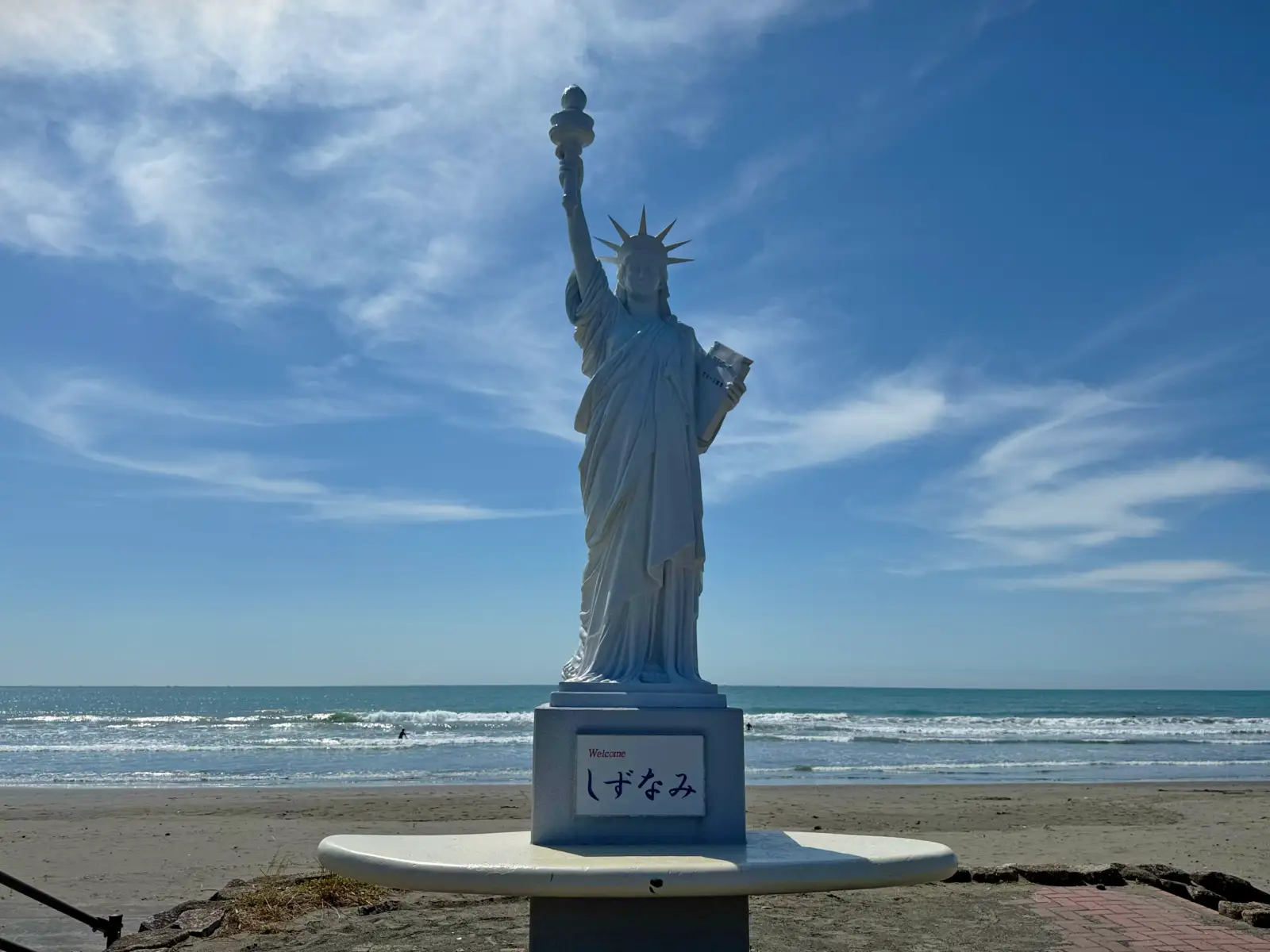
The fields eventually gave way to the coast. The sky was almost completely clear. I stopped at Shizunami Beach, a long stretch of sand with almost nobody on it, just a few surfers. And then, for reasons unknown, a small replica of the Statue of Liberty, standing prominently in the beach parking lot.
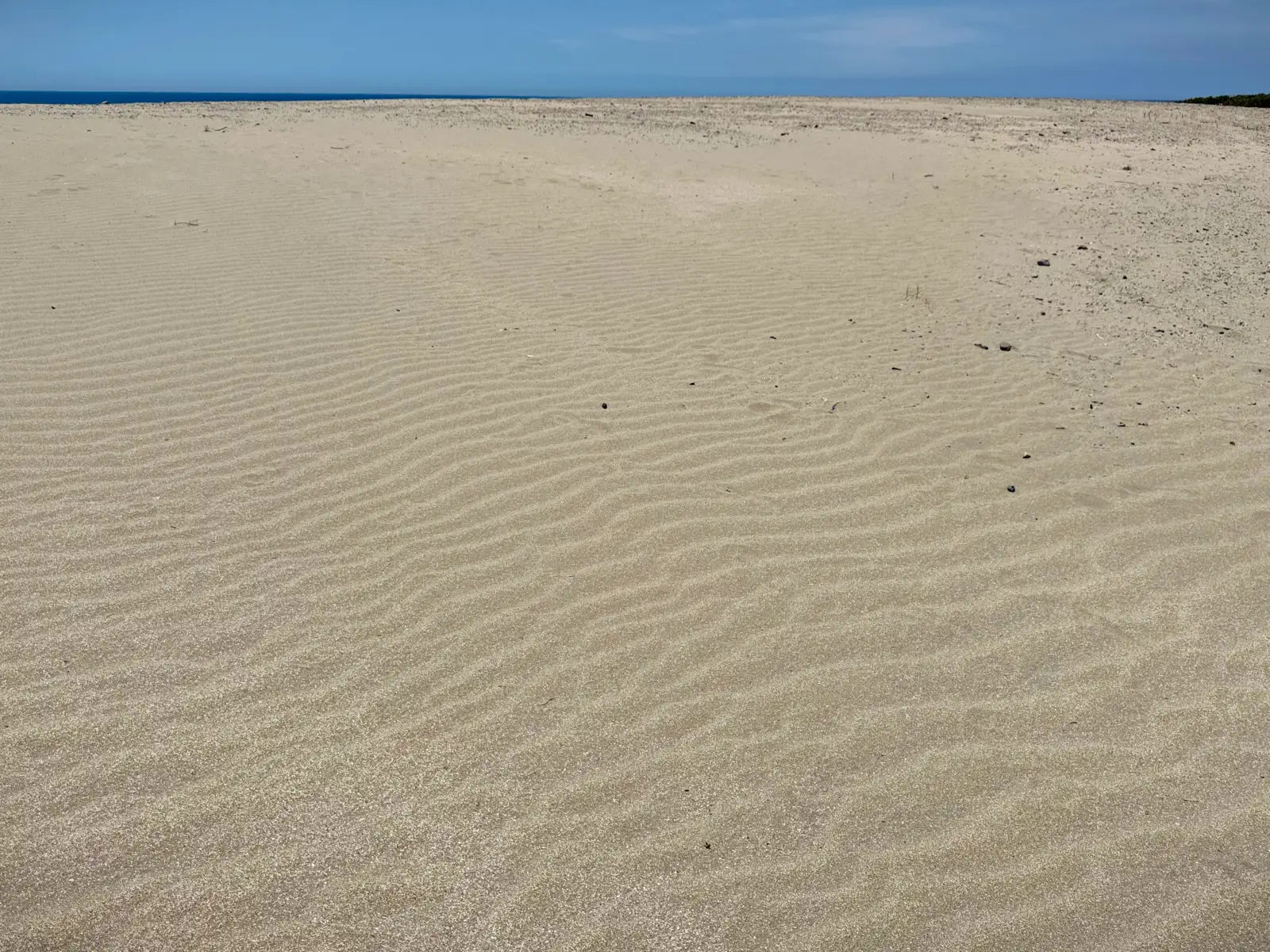
Afterwards, after stopping at a small shopping mall in Omaezaki for lunch, I passed an interesting spot. A sign for “Hamaoka Sand Dunes,” and I had to stop. I knew about the dunes in Tottori (which are much bigger, though I haven’t been there, yet). The Hamaoka ones run right along the coast, so you climb the sand expecting more sand, and instead the ocean opens up in front of you.
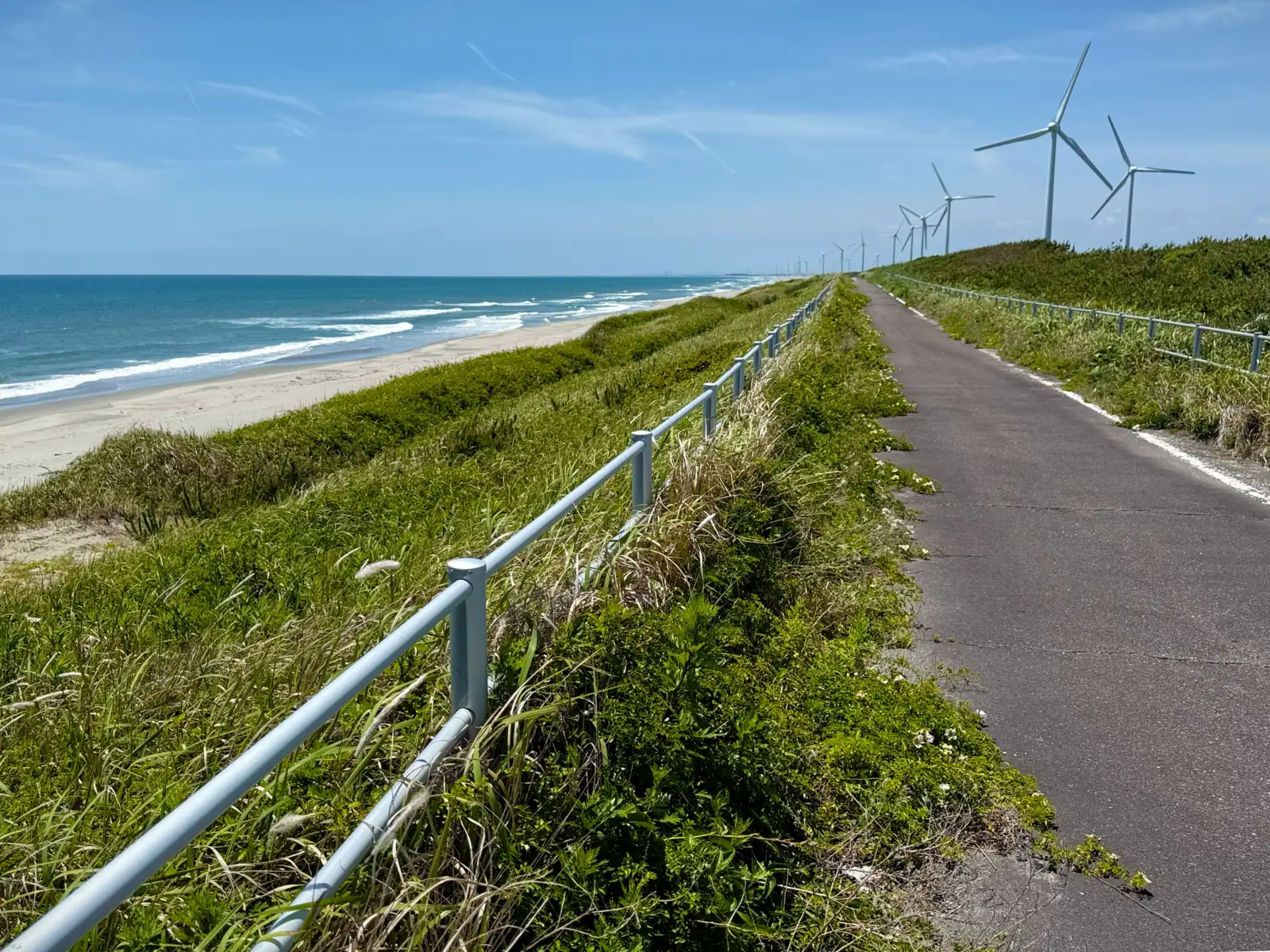
The road took me past the Hamaoka Nuclear Power Plant, sitting behind its seawall. It’s been offline since 2011, shut down after Fukushima because it sits right on top of one of the fault lines. A few kilometers on, the coast switched to a different kind of power: rows and rows of wind turbines, the road running right alongside them. One idle nuclear plant, then a whole field of turbines spinning away.
It was the first time I’d been this close to wind turbines, and from below they’re massive, far bigger than they look from a distance. Standing under one, you feel like an ant. One was still under construction, no blades attached yet. The sound surprised me too. Not too loud, just a low steady rush, like deep wind. The turbines were all on my right. On my left was the beach: pale sand, low scrubby plants, the blue water past them. Something about that side reminded me of the tropical beaches in Okinawa.
The big delay that day was the seawall. I’d planned the whole route following the Pacific Cycling Road along the coast, and it would have been fine, except almost the entire coast was closed off for construction. It’s part of a huge project, the Fujinokuni Forest Seawall, a 14-meter wall of raised earth with pine forest planted along the top, built to hold back tsunamis. For me it meant no coast, and instead a long series of detours through the fields inland, some ending at dead ends I had to backtrack out of. It cost me a lot of time and extra kilometers. The strange part was how far the construction ran. Every time I thought I’d finally gotten past it, there was more, kilometers of it. That turned out to be the real surprise of the day. Not the seawall itself, but how long it went on. Still, hard to be too annoyed at a wall built to keep the sea out.
The roads through there ran long and dead straight, past factory after factory, whole industrial complexes. It was sunny and hot, and I spent most of the stretch hunting for vending machines. It felt like I was stopping for a drink every kilometer. On ground that flat, any little downhill felt like a prize. I used sunscreen, but I still came away with a decent sunburn.
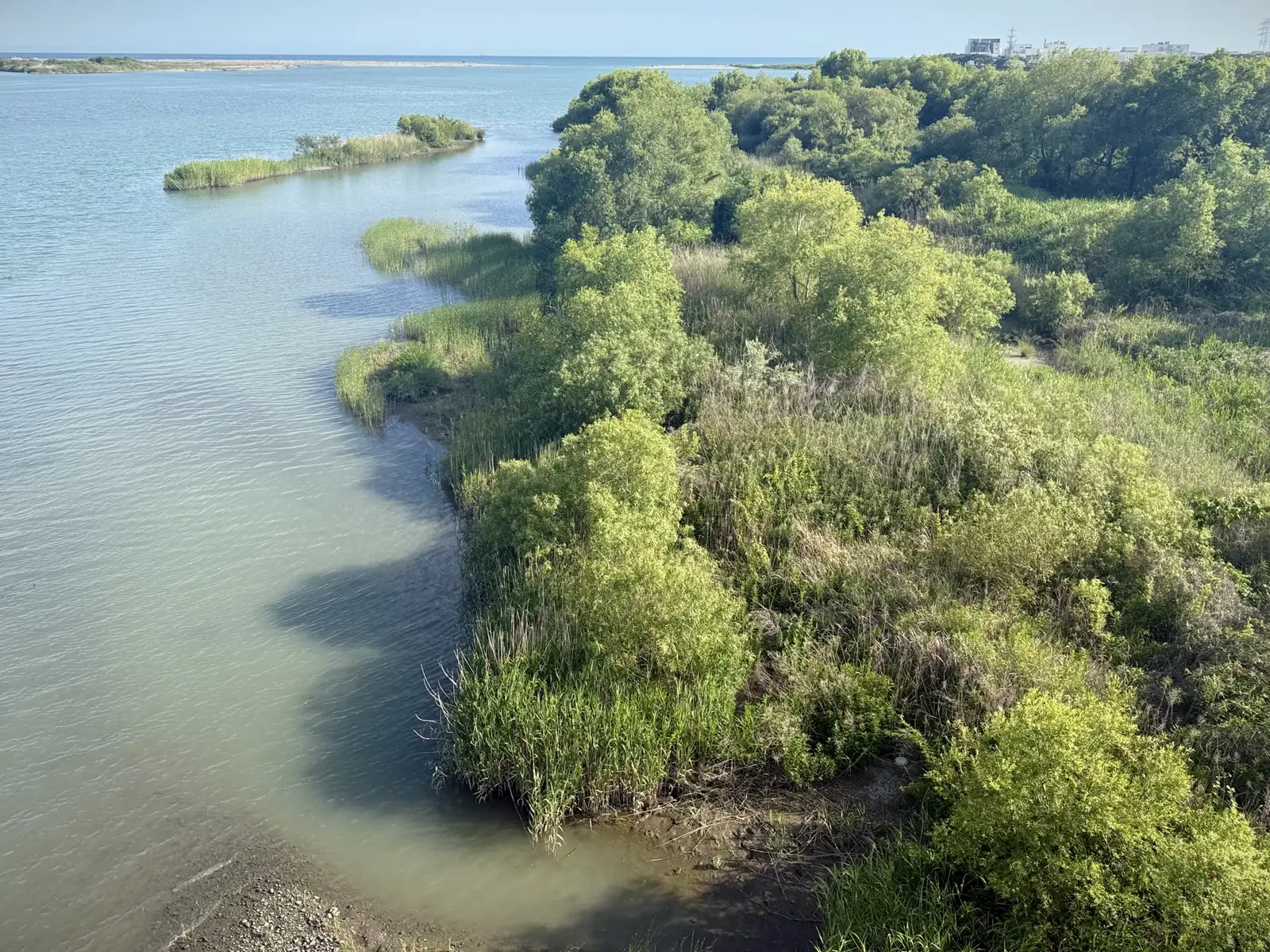
In Hamamatsu I finally crossed a few rivers, and I was relieved to get over those bridges. The other side meant no more detours. Later I crossed another bridge, this one over the huge Lake Hamana, and crossing it felt like clearing the last hurdle.
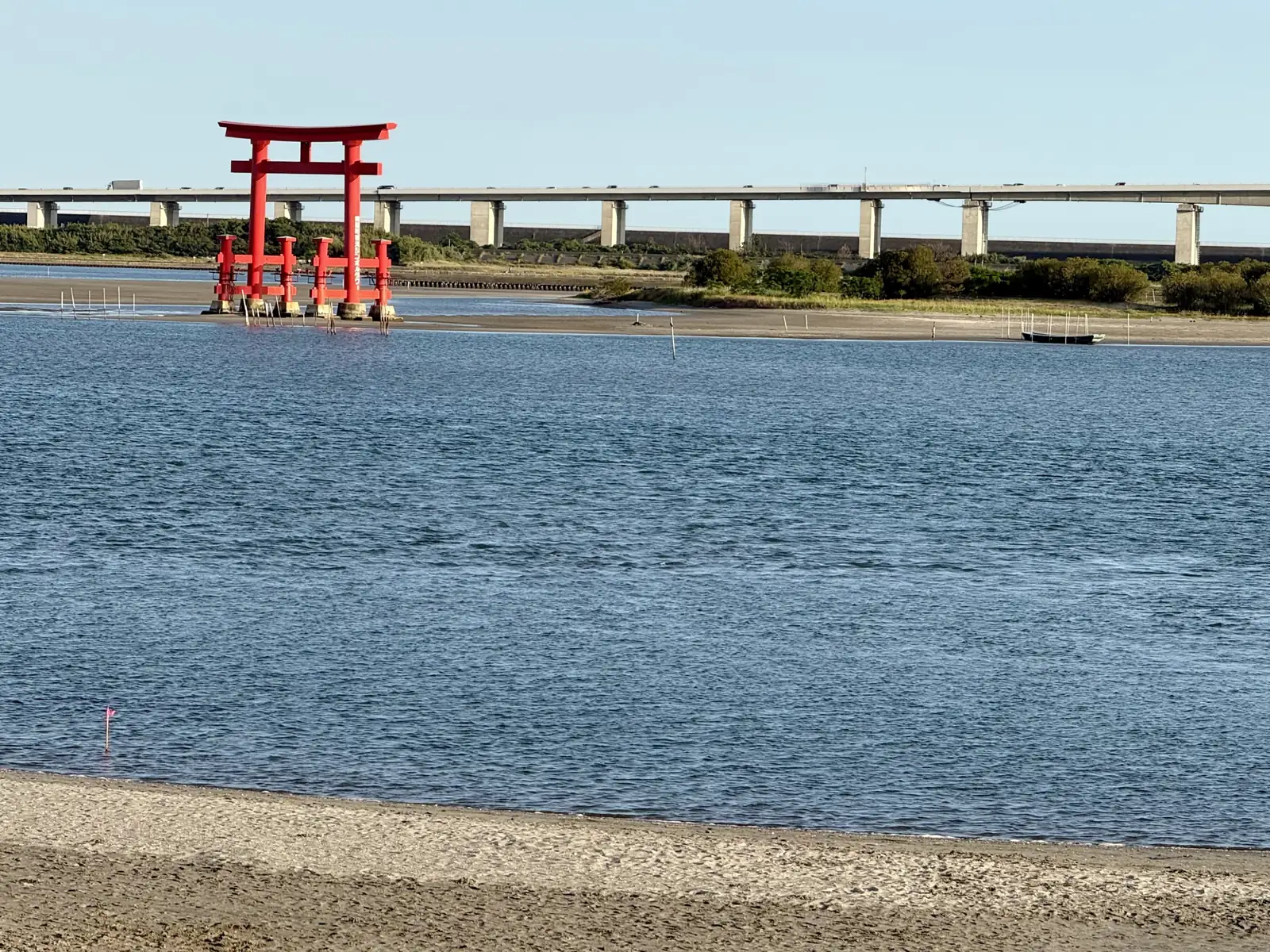
That day I also crossed paths with the Shinkansen (bullet train) a few times. Sometimes I saw it far off, sometimes I rode right alongside the tracks, sometimes I passed under its overpass. The funny thing is that up close you don’t hear it coming at all. Just a sudden thunderous sound for about five seconds, and then it’s gone and everything is silent again. Like an arrow. I wonder how many passed me that day while I was riding.
Somewhere along the way I’d decided the bike needed a name. I couldn’t keep calling it by its boring technical title, the YPJ-TC. By now it had conquered just about everything I’d thrown under it: smooth asphalt, loose gravel, literal forest, every awkward maneuver in between, and it never once complained. So I gave it the only name that fit: the Beast. Yamaha built this thing like a tank. I’ve had it over five years now and it hasn’t needed a single repair. From here on, when I mention the Beast, you’ll know it’s the bike.
I finally reached Toyohashi after dark, around 8pm, and went straight to the hotel to soak in the tub and get ready for the next day. 150 kilometers, more or less. The Beast still had 20% left. I’m not sure I did.