Tokyo to Kyoto by E-Bike, Day 1: Tokyo to Odawara Along the Shonan Coast
The first day of riding from Tokyo to Kyoto took me out of the city, down to the sea at Shonan, and into Odawara by evening, past a secret Blade Runner alley, a beach run by crows, and a hotel named Drake.
And here I thought I could journal on this blog while riding from Tokyo to Kyoto, like I promised in my last post I would. Fat chance. Most days were seven, eight, nine hours in the saddle, and by evening my legs were done and my head had nothing left for writing. If I’d really wanted to journal, I’d have had to narrate into a voice recorder while pedaling up a hill, gasping between sentences as the cars went by and possibly missing the next drink vending machine.
Which is why I’m only writing this now. I finally parked myself at the corner seat on the second floor of Doutor — my favorite seat in Kyoto, the one I try to make for every time I’m here. Why this seat? Because it’s the VIP seat, and the price of admission is one chilled Shine Muscat Yogurn (which is what I’m sipping right now, and it fits the hot weather). I’ve got the perfect view of Shijo Ohashi, one of the most famous bridges in Kyoto. Hordes of tourists cross it at any given time, snapping selfies and shooting photos of those fancy restaurants on wooden pillars along the Kamogawa. Two hawks keep circling the bridge strategically, looking for a chance to snatch some food. The sky is perfectly clear, and across the water the Minamiza kabuki theater catches the light of the setting sun. Hard to believe that in two days all of this will be drenched in rain from an upcoming typhoon.
Let’s rewind to last Saturday morning, seven prefectures ago. The day when I rolled out of Tokyo. It’s only been a week but it feels like I’ve been on that bike for months. I almost forgot where I actually live.
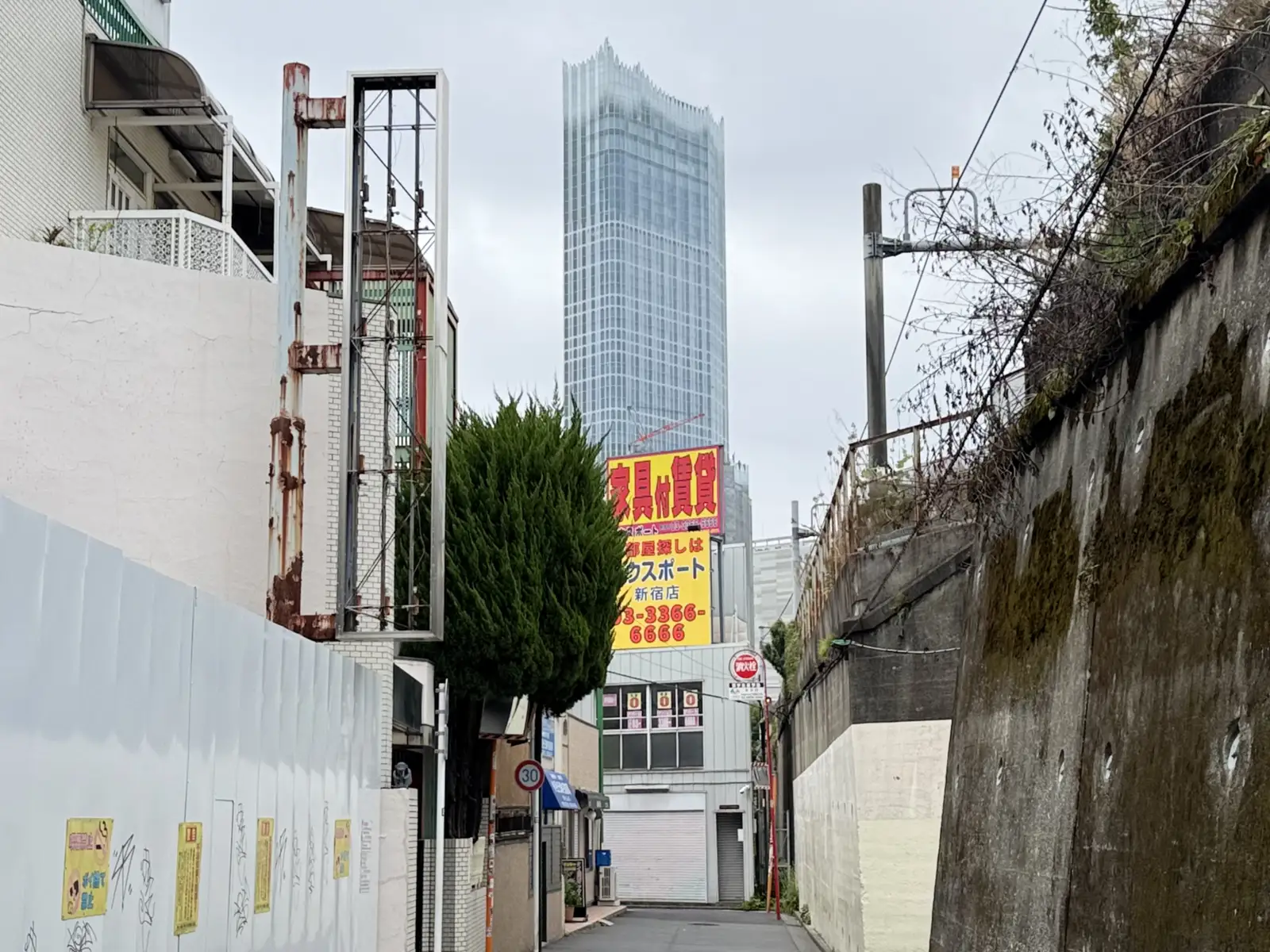
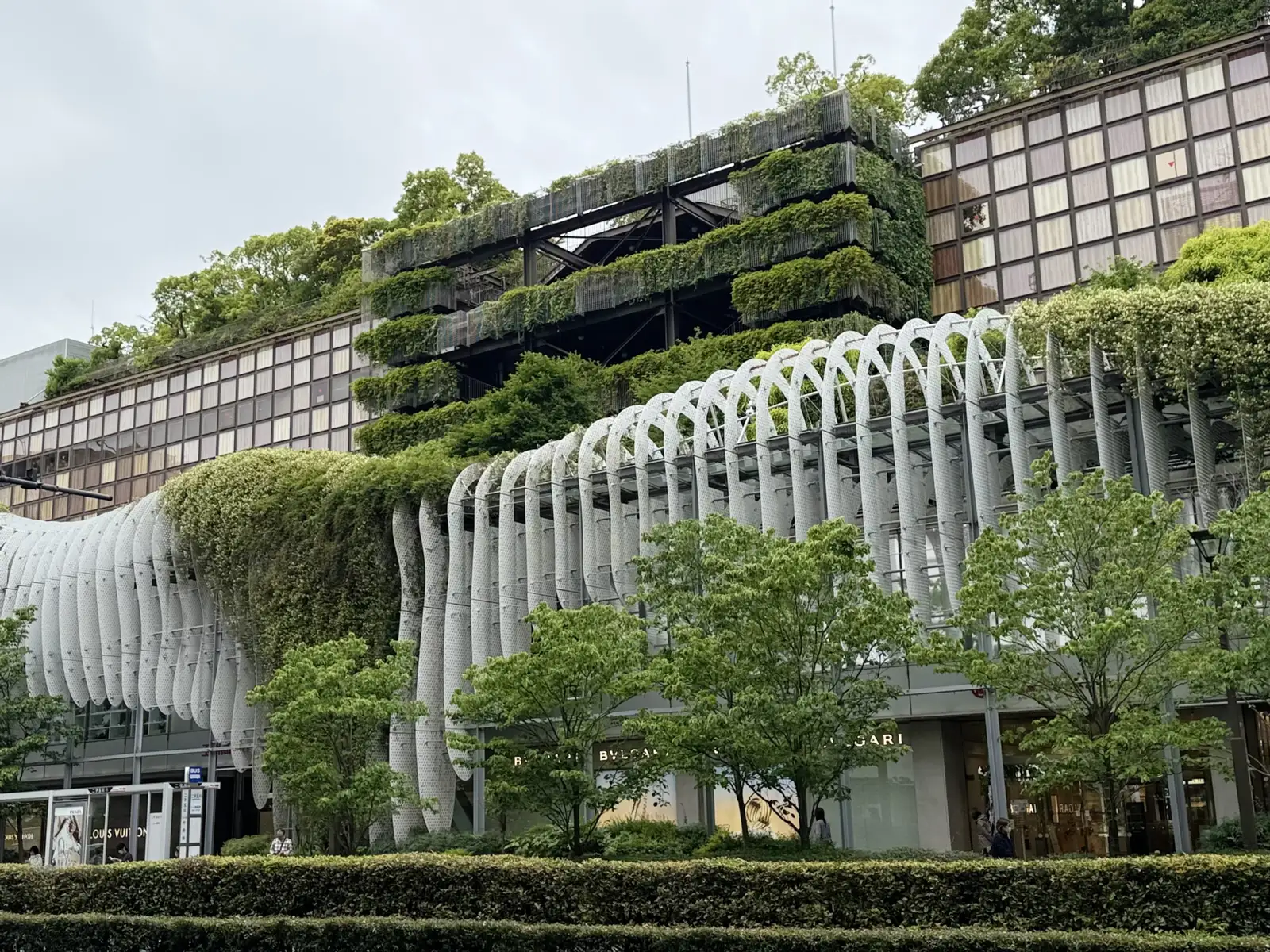
My route out of northern Tokyo crossed the Arakawa and the Sumida, then ran west through Oji, Ikebukuro, Shinjuku, Setagaya, and down a long slope into Futako-Tamagawa, before crossing into Kanagawa at Kawasaki. I’ve passed through all of these a hundred times by train. But on a bike it’s a different city. Just before I cut into the center of Shinjuku, I turned down a narrow alley beside the train tracks, and there in front of me: a small street, a digital billboard, and the new Kabukicho Tower rising out of the overcast behind it. Something about it really caught me. I had to get off and snap a photo. Standing there, I imagined what it would look like at night, in the rain, with a little fog. Pure Blade Runner!
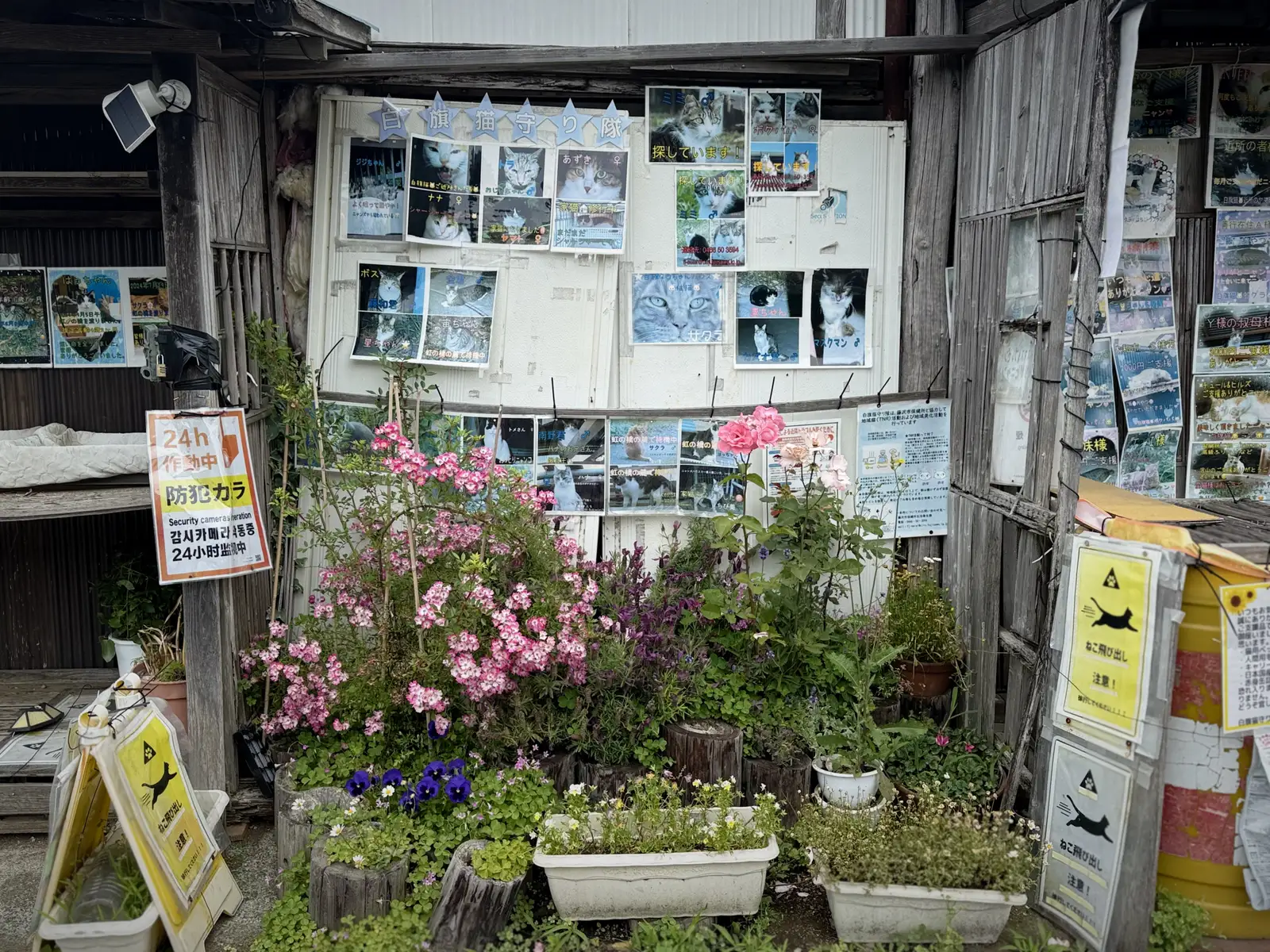
After Kawasaki the road pitched up and down for a while, then flattened out toward Fujisawa. For a stretch it ran through proper countryside, a patchwork of small fields on either side. Somewhere in there I rode past a weathered little wooden hut, its whole front wall and fence covered in photographs of cats. A hand-painted sign called it the Shirahata Cat Protection Squad, some kind of grassroots cat-protection spot run by locals. Some of the photos were missing-cat notices, others looked like memorials. I still don’t entirely understand what I was looking at, but I loved it. Then the road dropped me down to the Shonan coast.
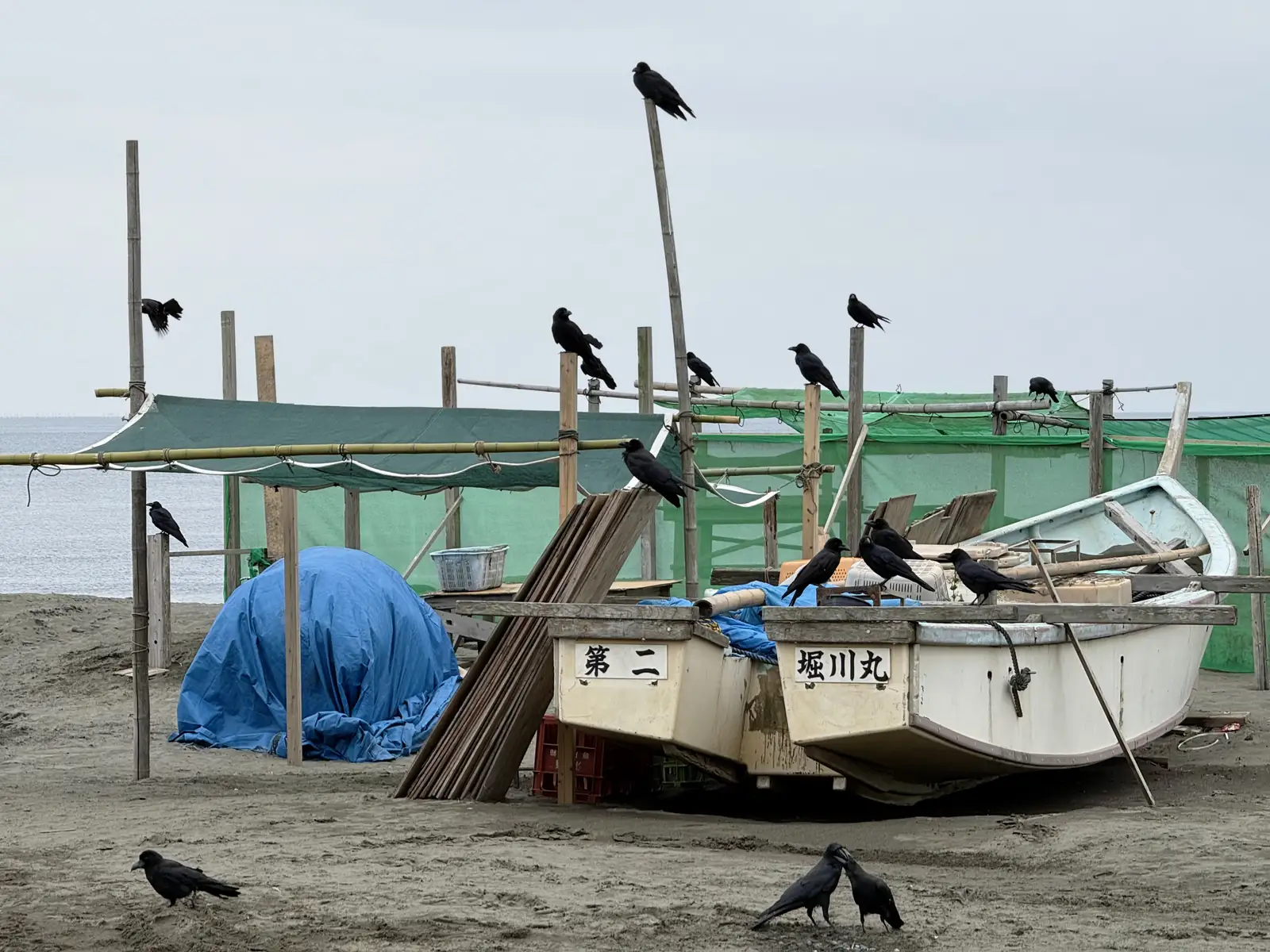
If you go to Shonan, people assume you’re there to do one of two things: surf, or eat shirasu (whitebait). I wasn’t doing either (no time!). My route west brought me out onto the sand at Kugenuma, with Enoshima off to the east — the popular little island off Kamakura. To my surprise, the first thing I saw there was a gang of crows. They were posted up on the boats parked along the beach like they owned them, with a gray silhouette of Enoshima behind them. The sky was a boring white overcast. On a day like that, those crows fit the scene perfectly.
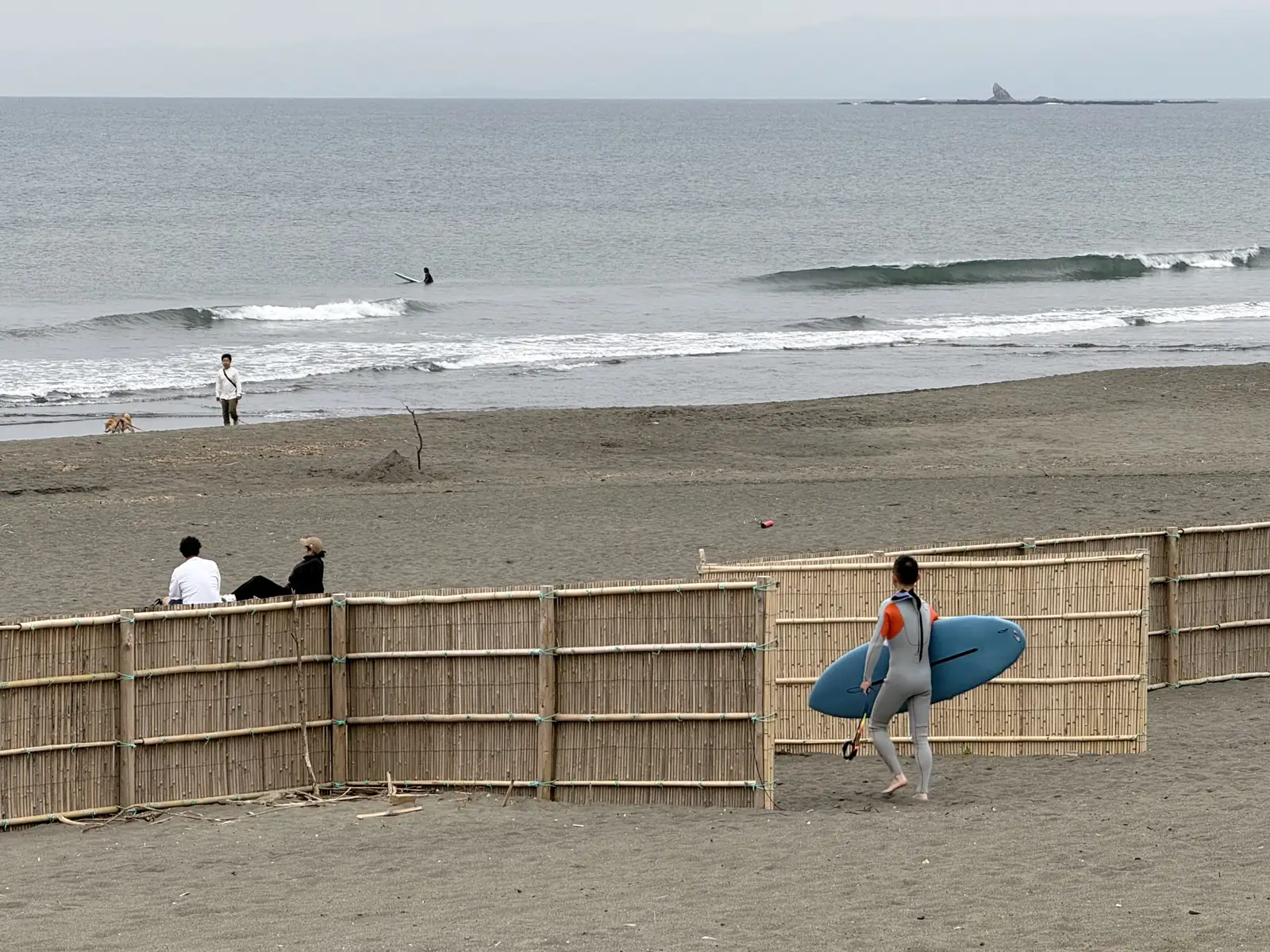
I’ve been to Shonan plenty of times, but I’d never noticed a dedicated walking and cycling path that runs several kilometers right along the beach, backed by some surprisingly big sand dunes. A few surfers were out on the water, hoping to catch that Great Wave off Kanagawa (yes, the one Hokusai painted).
Along the way I passed through Chigasaki. I remember this place well. A couple of years ago I came here to see the Hamaori festival, held every year on Marine Day. It’s an unusual one. It starts sometime after midnight: participants gather at local shrines scattered across the city, hoist the mikoshi (the sacred portable shrines) onto their shoulders, and carry them through the streets toward Nishihama Beach. The main event comes at sunrise, when the first mikoshi reaches the shore and is carried straight into the sea for a ritual purification. It runs until around nine in the morning, so to see the whole thing you have to stay up all night. I was filming it, often pushing in close to the shrines, and the whole thing made me feel like I was in the middle of some ancient battle. It gets that wild! Around forty shrines, one after another, hauled into the waves in the early morning light. The rhythmic chants of “Dokkoi! Dokkoi!” (a sound unique to this area) filled the air, and occasionally, you could hear Chigasaki Jinku being sung as the mikoshi were carried. I’ve never seen anything like it at any other festival in Japan. A gentle reminder: a video I made in 2024 about Hamaori matsuri is up on my channel (you can watch it here).
One thing I only found out later, from the TV coverage: Kono Taro had been there too, a cabinet minister at the time, and a local, born just up the coast in Hiratsuka. If it can drag a government minister out to the beach, it can drag anyone!
As the story goes, the festival dates back to 1838, the ninth year of the Tenpo era. That spring, the mikoshi of Samukawa Shrine was being carried home from the annual Kokumatsuri when, crossing the Sagami River, a dispute broke out between the Samukawa parishioners and the local villagers. In the scuffle the mikoshi tipped into the river and was lost.
A few days later, a fisherman named Magosuke, from Nanko, found it while out on the water and returned it to the shrine. That recovery is said to be the origin of the tradition: every year since, the mikoshi has come down to the beach at Nanko to perform misogi, the same ritual purification, as a gesture of gratitude.
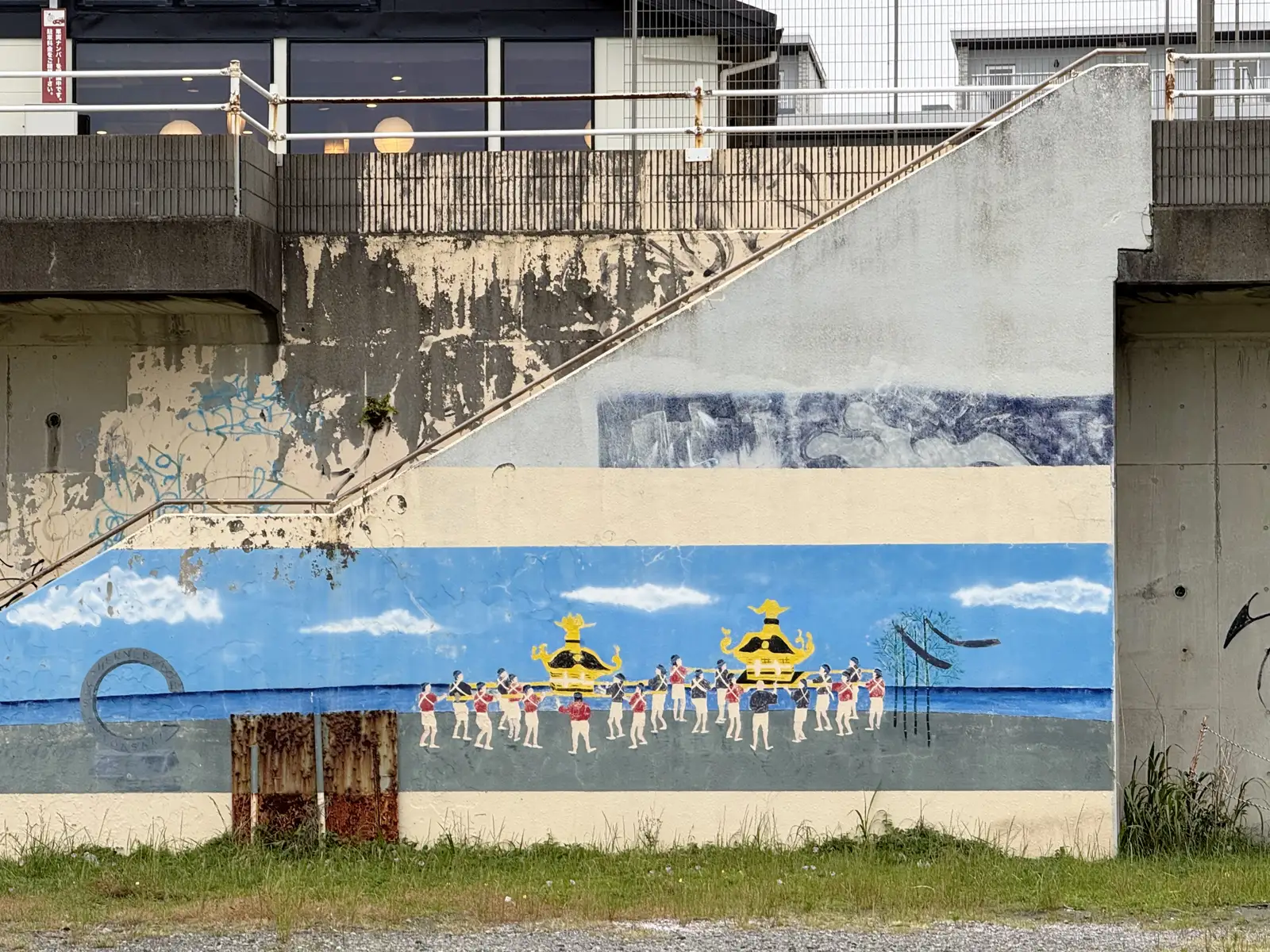
Anyway, that’s Chigasaki. This time I didn’t stop; I pushed on west toward Odawara, where I had a room waiting near Kamonomiya Station, on the edge of town. I got there a little before six, stopping at a local supermarket on the way for some nutritional breakfast supplies. At check-in the receptionist was fighting with the scanner, trying to scan my ID card and getting nowhere, so to fill the silence I told him where I was headed. Kyoto, by bike. He pulled a little grimace, the kind that says ouch, and that was even after I mentioned it was electric. He got curious and asked about my route.
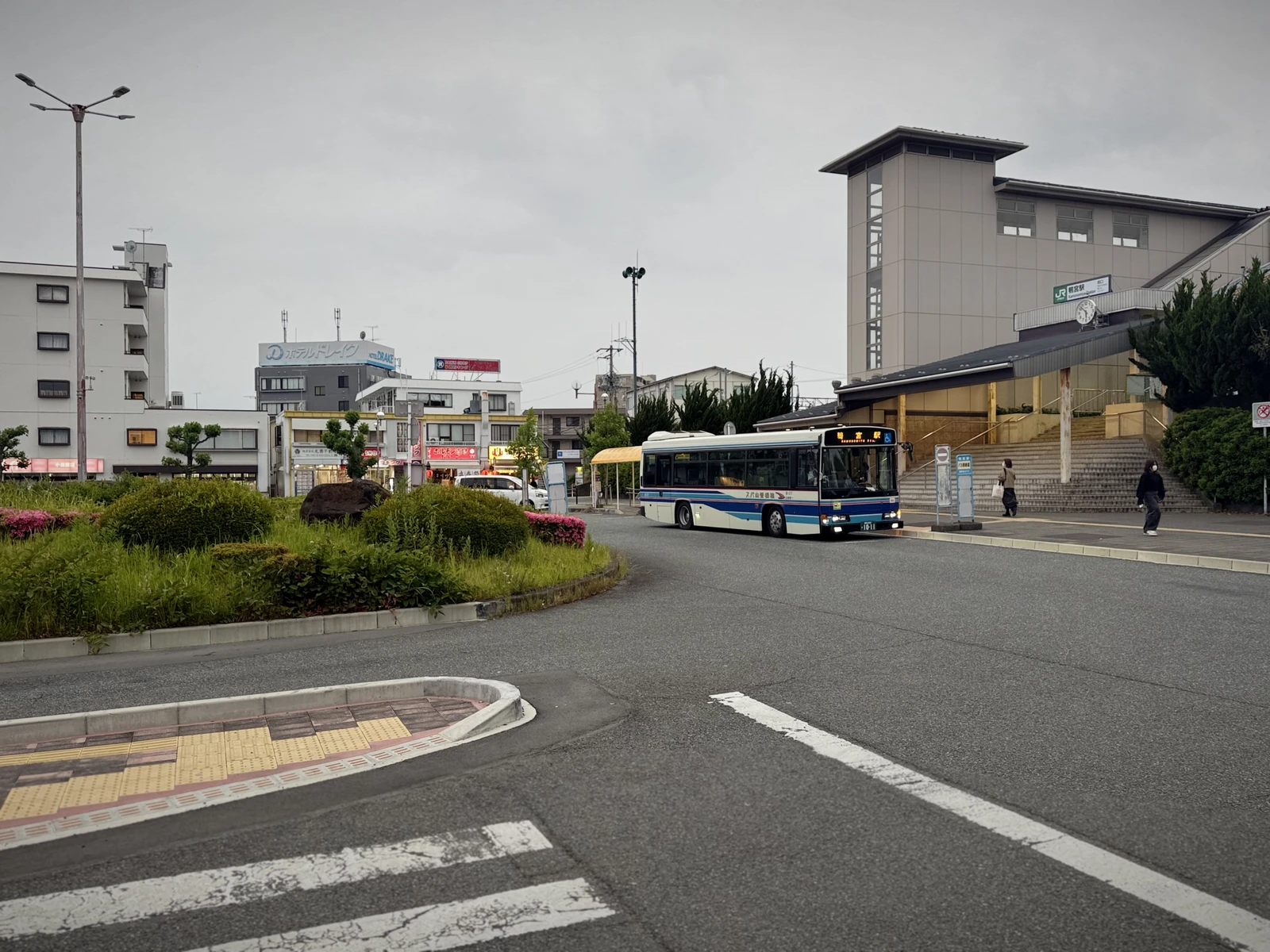
A light drizzle had started, so I threw a cover over the bike in case it picked up overnight, then went up to my room and ran a warm bath. This little business hotel, gloriously named Drake, had a slightly dated, bubble-era look from outside, its front all curved white tile, but the room itself was perfectly comfortable and clearly renovated. None of the worn-out Showa texture you sometimes brace for in these old places: no faded wallpaper, no smell of old tatami, nothing of the sort. I ate, looked over the next day’s route, and let the legs (and wrists) recover. A hundred kilometers behind me, five hundred-odd still to come.