Nagarebashi, the Bridge That Floats Away
South of Kyoto, on the Kizu River, there’s a wooden footbridge that looks a hundred years out of date. It’s one of the longest of its kind in Japan, built to be carried off every time the river floods, then hauled back once the water drops. That’s the whole point.
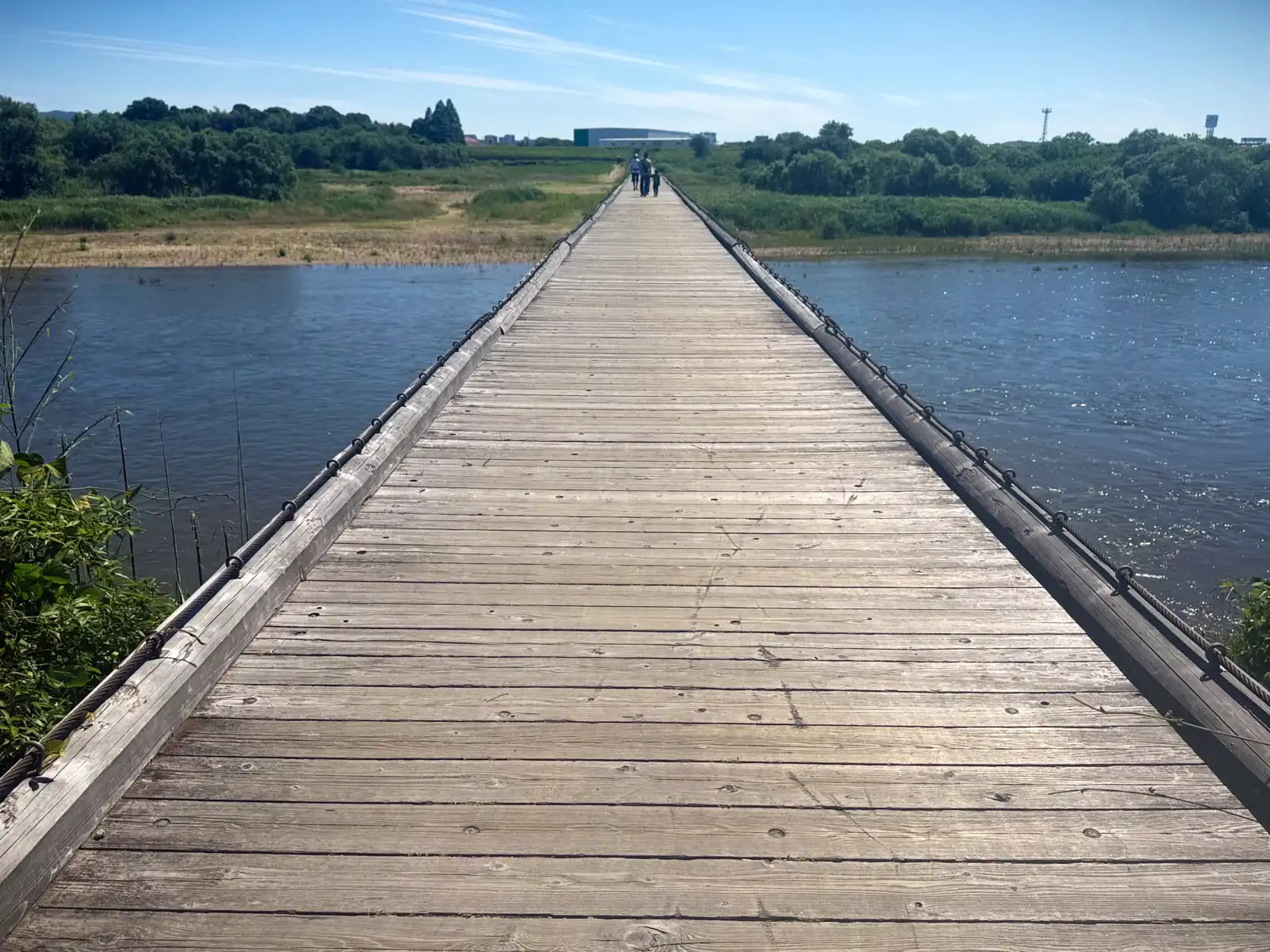
The first thing you’ll notice is that there are no railings. A bare plank walkway, 356 meters of it, laid low over a wide, shallow river, with nothing to hold on to. It carries no signs, no lights, nothing that would place it in the present century. It looks less like a bridge than a film set nobody bothered to take down, and a few weeks a year that’s pretty much what it is. It has the look of the Edo period for a practical reason: it is built to fall apart. When the Kizu rises past a certain point, the deck lifts off its piers and floats off downstream. That isn’t the bridge failing. That’s the bridge working. Locals call it Nagarebashi, the flowing bridge, and the nickname has stuck better than its official name ever did.
When the deck floats off, it doesn’t wash away. You’d think loose planks in a flooded river would be gone for good, but these don’t go anywhere. The deck is built in separate sections, and each one is cabled to the piers. So when the water lifts a section free, it just rides there in the current like a boat on a mooring, pulling at its line but going nowhere.
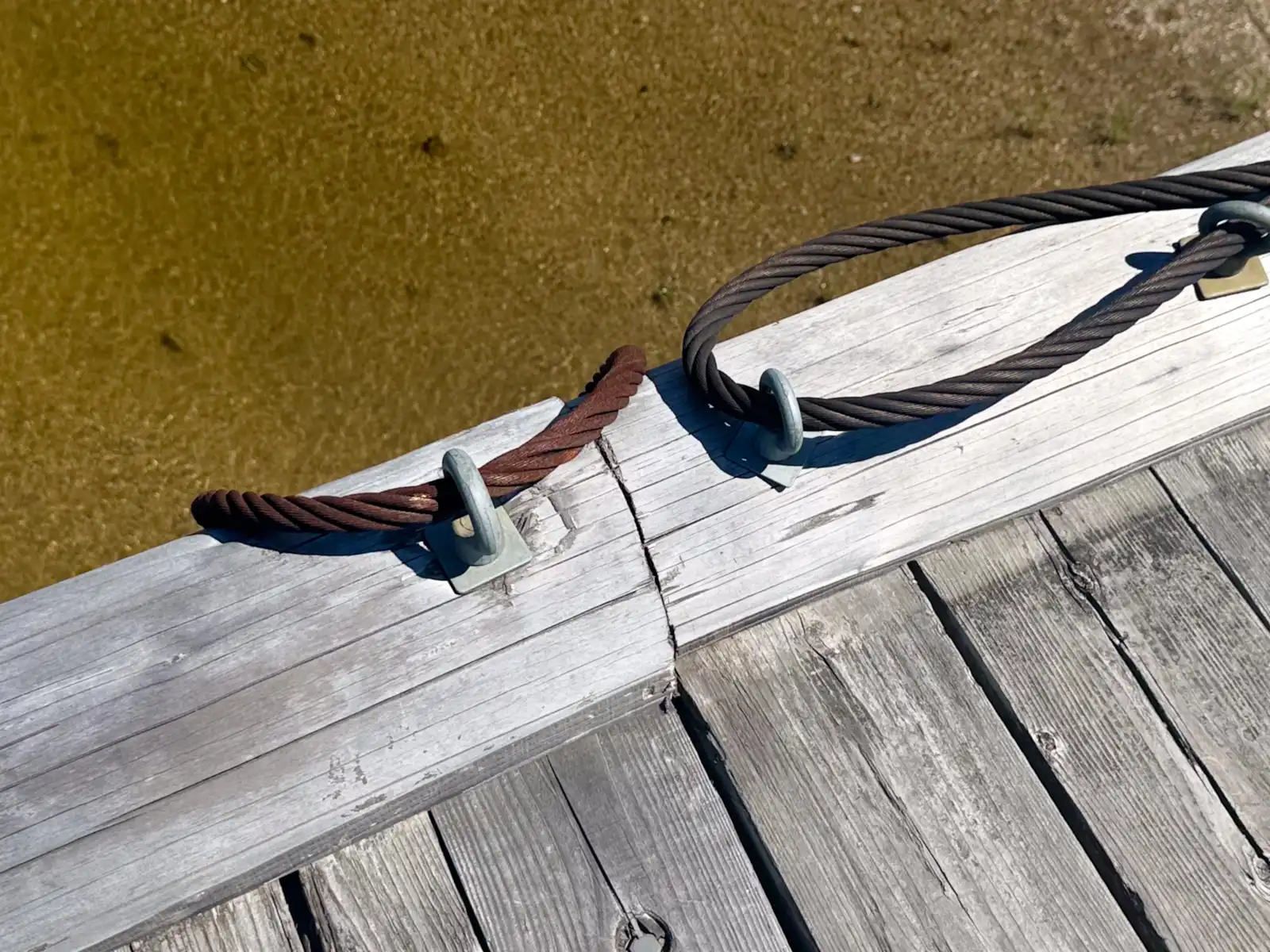
The one difference is that a boat settles back on its own; here, once the water drops, crews have to haul the sections up and lay them across the piers again before the bridge is a bridge once more. It has been doing this since it was built in 1953. When a typhoon took the whole deck in 2019, a news crew filmed what was left: bare piers standing in the water, the bridge closed until it could be put back together.
Its official name is the Kōzuya Bridge, after the district on the Yawata side. It crosses the Kizu River to the town of Kumiyama on the far bank. By most counts it is one of the longest wooden bridges in Japan, and only about 3.3 meters wide. Cars can’t pass here. It was only ever built for people on foot, and if you bring a bike you’re expected to get off and push.
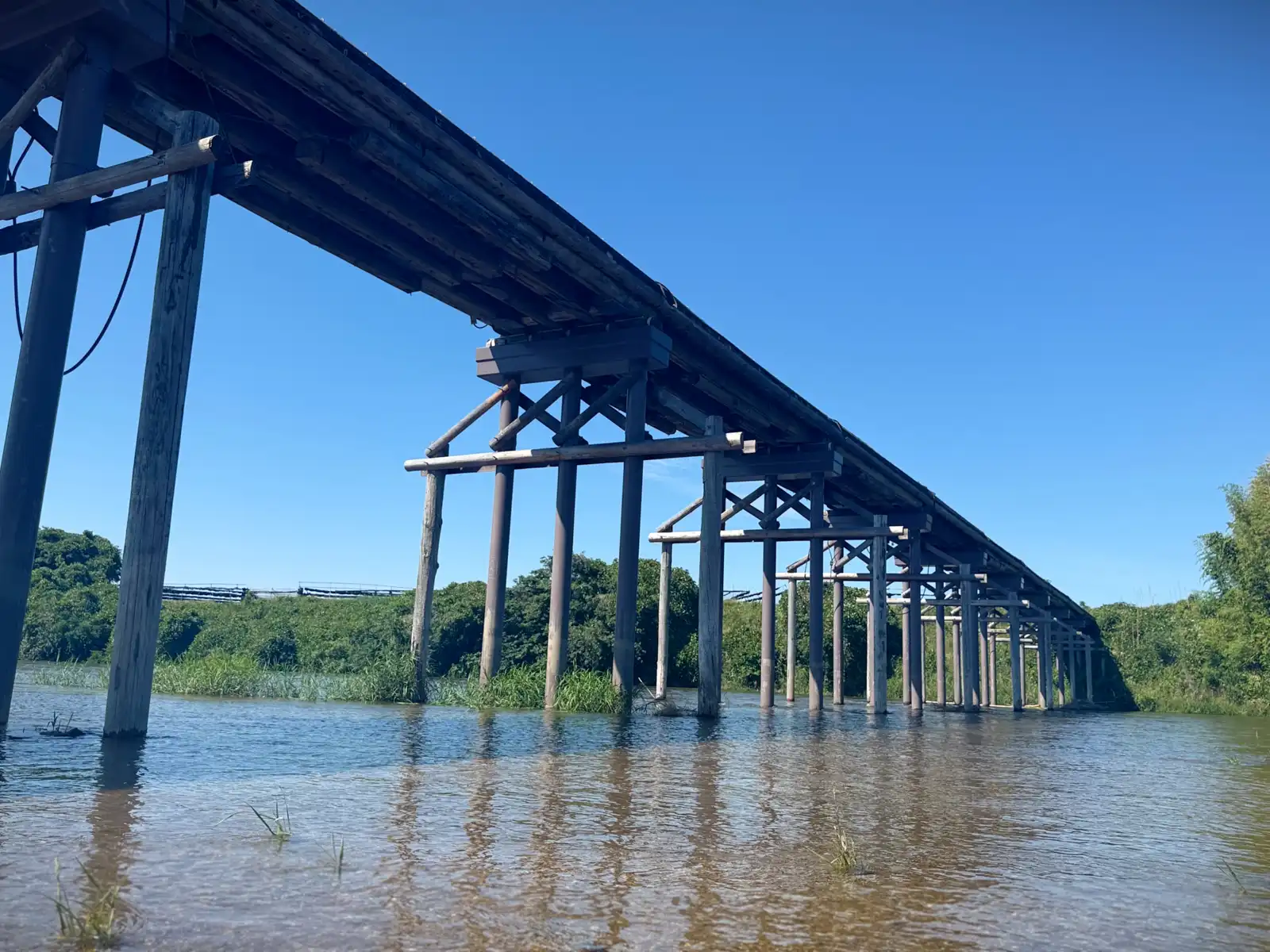
For a bridge designed to come apart, it comes apart often. By the time of its 2015 rebuild it had been washed away and put back around twenty-one times, almost always after a typhoon, now and then a hard summer rain, and for four years, from 2011 to 2014, the river took it every single year. A bridge that spends that much of its life in pieces on the riverbank is either a tradition or a mistake, depending on how you feel about it. The prefecture decided it was a tradition. When they did that rebuild, though, they hedged: they raised the deck, set part of the base in concrete, and widened the gaps between the piers so the water would have an easier time passing through. They could have gone further. By the committee’s own reckoning, another 75 centimeters of height would have cut the floods to one in ten years instead of one in five, but a taller bridge with no railings is more dangerous to cross, and it wouldn’t look anymore like the old bridge people come to see, so they stopped where they did and accepted the floods that came with it.
What all of this leaves you with, on a normal day, is the strangest thing about the place: it looks like nowhere in particular, and no particular time. Nothing tall or modern breaks the line of it, so a camera pointed along the planks catches only wood, water, and sky. Film crews worked this out a long time ago. Period productions have been shooting here since at least 1956, when the Nakamura Kinnosuke adventure Himaraya no Maō (“The Demon King of the Himalayas”) was filmed on the bridge, and they kept coming through the decades that followed: Shin Hebihime-sama: Oshima Sentarō in 1965, starring the singer Misora Hibari, an entry in the popular Red Peony Gambler series in 1969, and the Ichikawa Raizō samurai picture Sleepy Eyes of Death: Sword of Seduction in 1964. Hollywood turned up too, for the air-rescue film Flight from Ashiya the same year. It is said that some productions used the bridge as the old Tōkaidō, dropping in a shot of Mt. Fuji behind it to complete the illusion. There is no Fuji here, of course. Only a shallow brown river, the bridge straight across it, and hills far away.
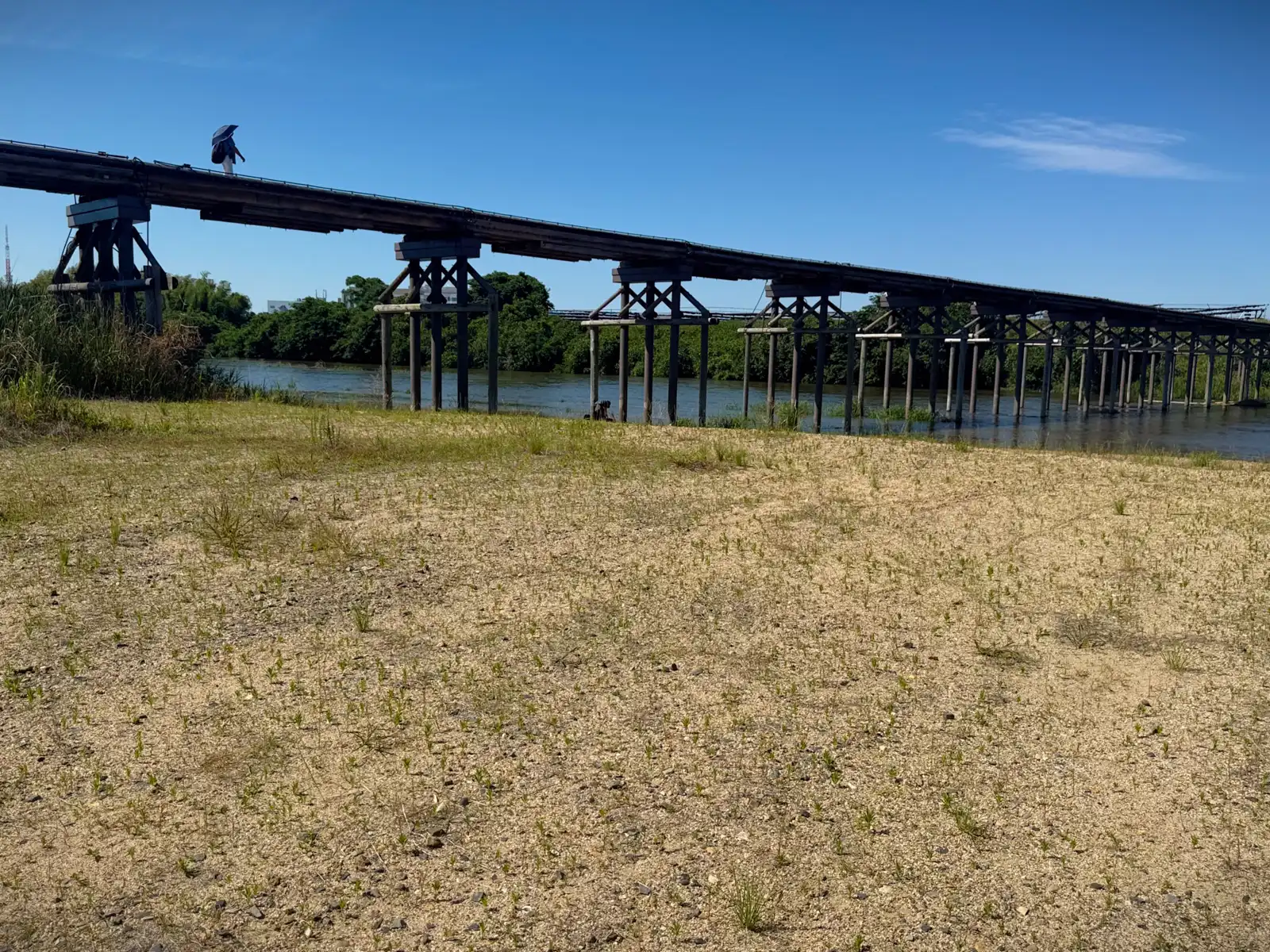
I reached it from the Kyoto side, riding south and west, a little downstream of Uji, on a very warm afternoon. There is almost no shade near the bridge, unless you count the strip beneath the deck itself. The heat sits on the open riverbed with nothing to break it. The river was low, shallow enough in places to wade, which made the whole idea of a bridge that floods seem faintly absurd until you remember what a typhoon does to a river like this. People kept crossing while I was there. A few looked local, wheeling a bicycle across as a shortcut to the other side. Others had clearly come out of their way, as I had, stopping halfway to take a photo back along the bridge.
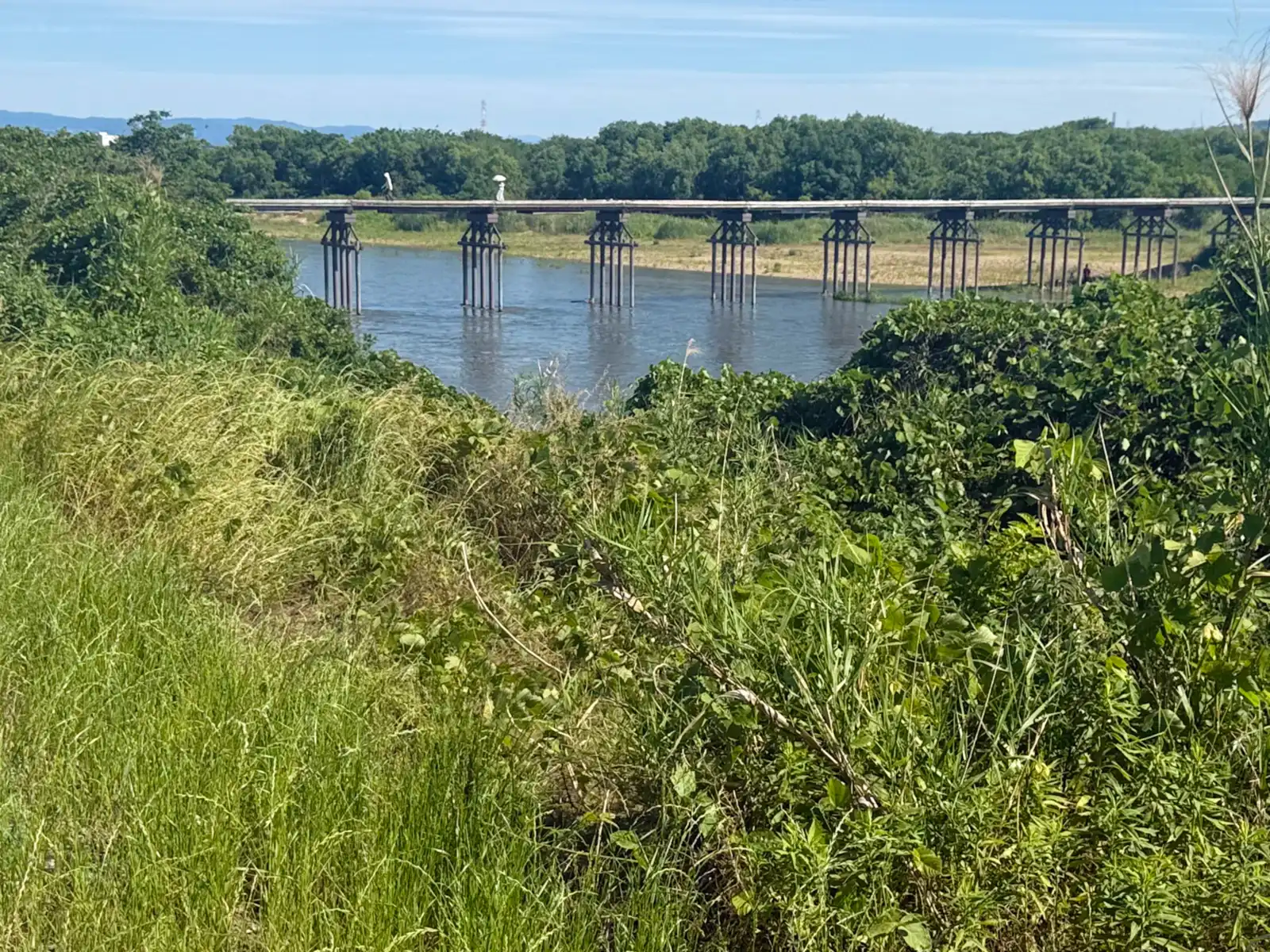
The fields on both banks are worth a look before you leave, because they’re part of the same story. The flat land beside the river grows tea, but not ordinary tea. The floods that carry the bridge away also lay down fresh sandy soil here each time. It washes off the weathered granite hills upstream, piles up on the riverbed until the river tops its banks, and settles across these fields until the tea thrives on it. Same sand, doing both jobs. That sandy soil grows the leaf that becomes matcha. The local name for it is hamacha, roughly “beach tea,” for the riverside ground it grows on. In 2021 the tea from Kumiyama, just across the bridge, was judged the best in the country in its category at the national tea competition. The bridge and its tea fields are part of a Japan Heritage route the Agency for Cultural Affairs calls, plainly enough, “800 years of Japanese tea.” It’s the same thinking in both places. Nobody tried to hold the river back, they just built for what it does. The bridge is built to let it pass, and the fields are built to take what it leaves behind.
When the 2014 flood swept it away, the bridge was gone for a year and seven months. It came back in the spring of 2016, and the town opened it the way you open any new bridge in Japan, with a watari-zome, the traditional first crossing: a ribbon, a paper ball broken open, and three generations of one family walking over together. The rite is meant to wish a new bridge a long life. Odd thing to wish on a bridge built to wash away, but I think it fits anyway.
In the end you cross the way everyone does, carefully, watching the planks, half aware there is nothing to grab if you slipped, on a surface the river will carry off on its own schedule and people will haul back up and lay across the piers again, the way they have for more than seventy years.
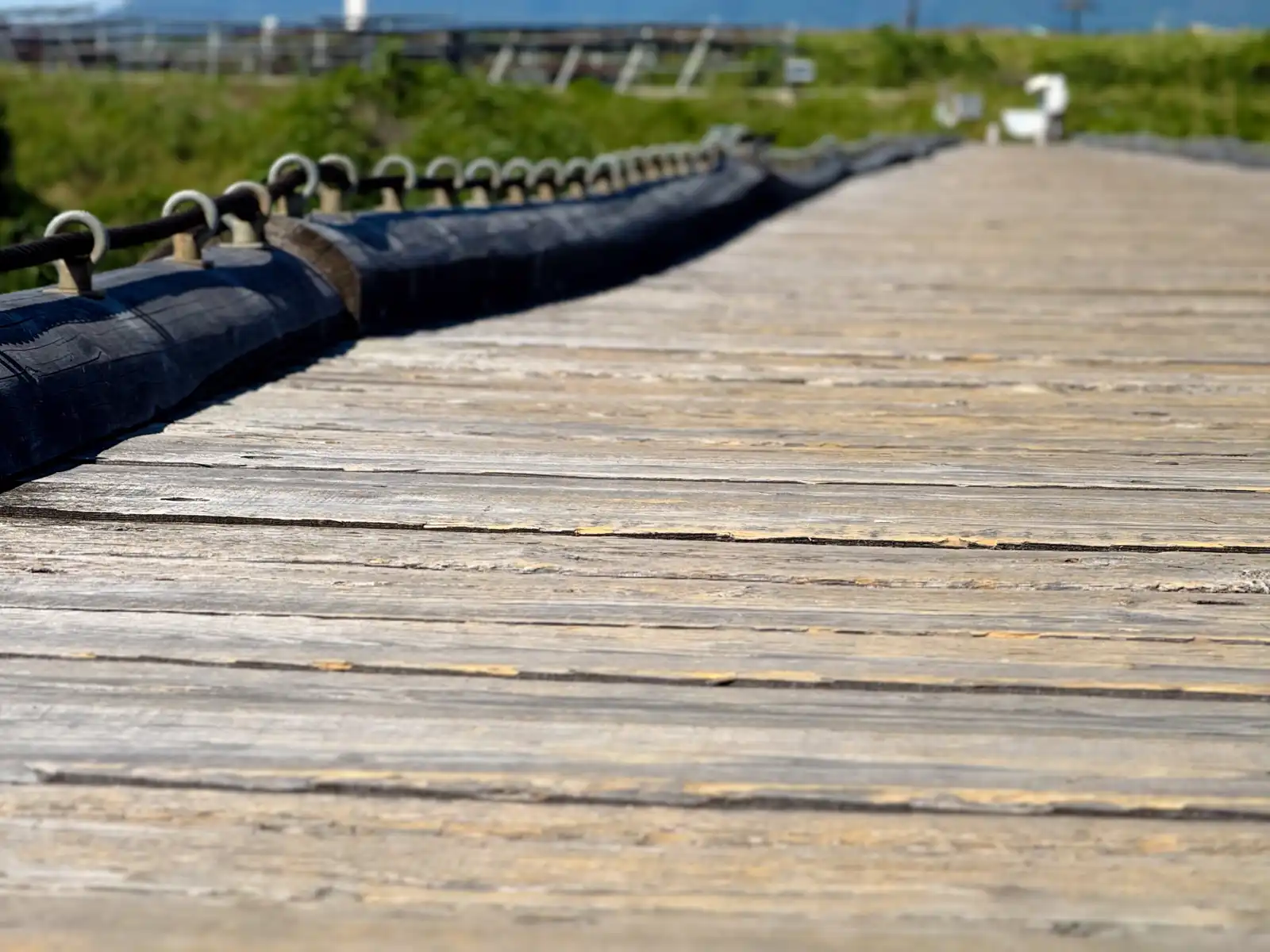
See more photos of the bridge in the gallery.