Oiwa Shrine, Abandoned to the Forest
Something moved in the water as I passed the pond, too fast to see. I didn’t look closer. An abandoned shrine near the top of a small mountain in southern Kyoto, my third visit in the past several years, and a place I’d rather keep to myself.
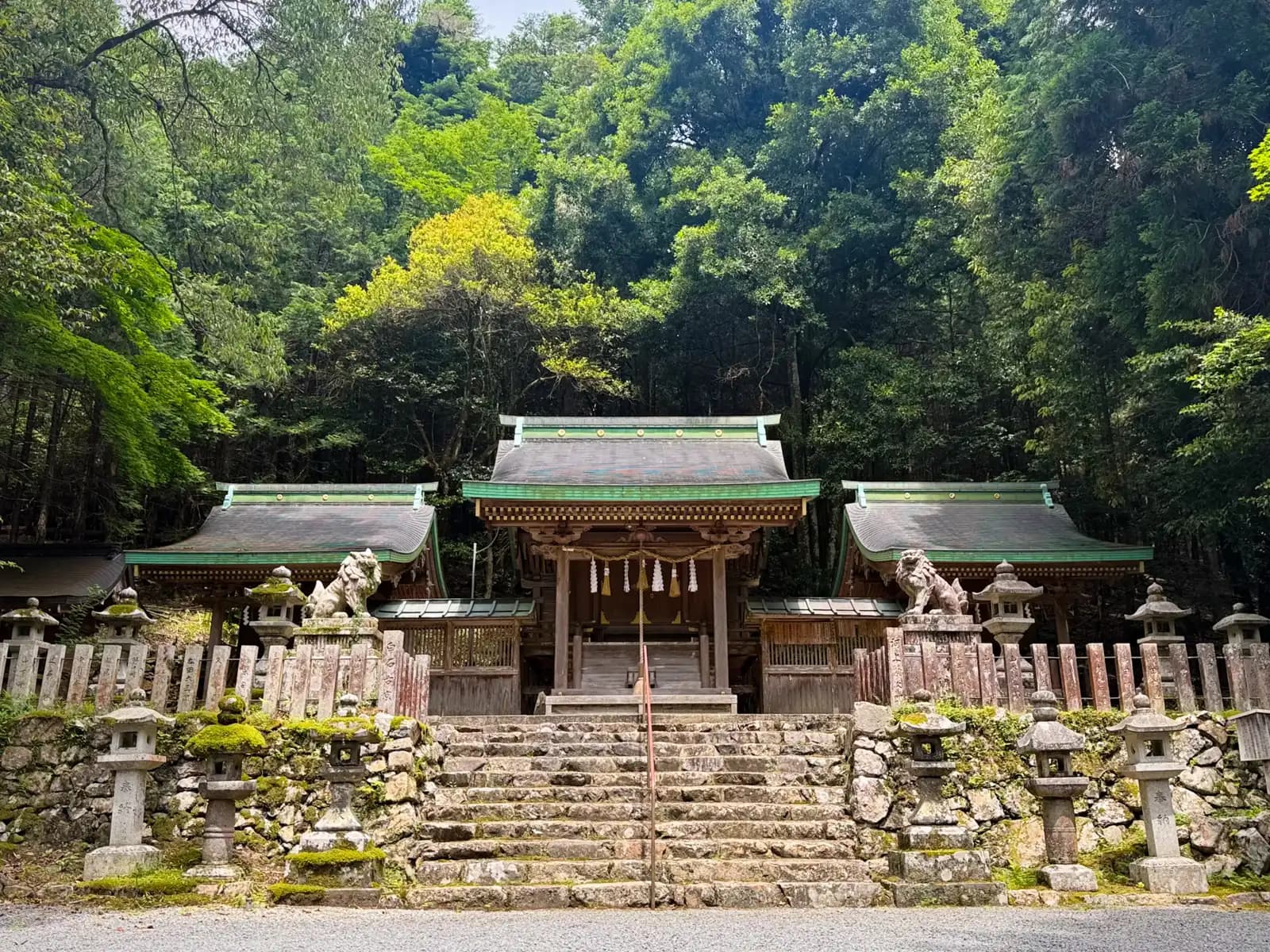
During my recent bicycle trip to Kyoto, I visited Oiwa Shrine, which sits near the peak of Mount Oiwa in the south of the city. This was actually my third time there, the previous visit three years ago, and I’ve posted the photos from this one here.
Oiwa Shrine (Oiwa means ‘big rock’) has been abandoned since 2015, pretty much hidden in the forest, and most of the time it’s quiet with nobody around. It’s accessible two ways: a long bamboo path that leads up to the lower grounds, from where you climb the hill to reach the main shrine higher up, or the asphalt road that runs past those upper grounds and brings you close to the mountaintop.
The shrine sits just below the summit of Mt. Oiwa, a modest hill of about 180 meters. The mountain was once called Mikusa, “Honorable Grass,” after the grass that was cut here to feed the horses of the first Tokugawa shogun, Ieyasu, on his trips to the capital in the early Edo period. The shrine itself is known for a pair of ancient deities, one male and one female, said to live in two boulders near the peak, one large and one small.
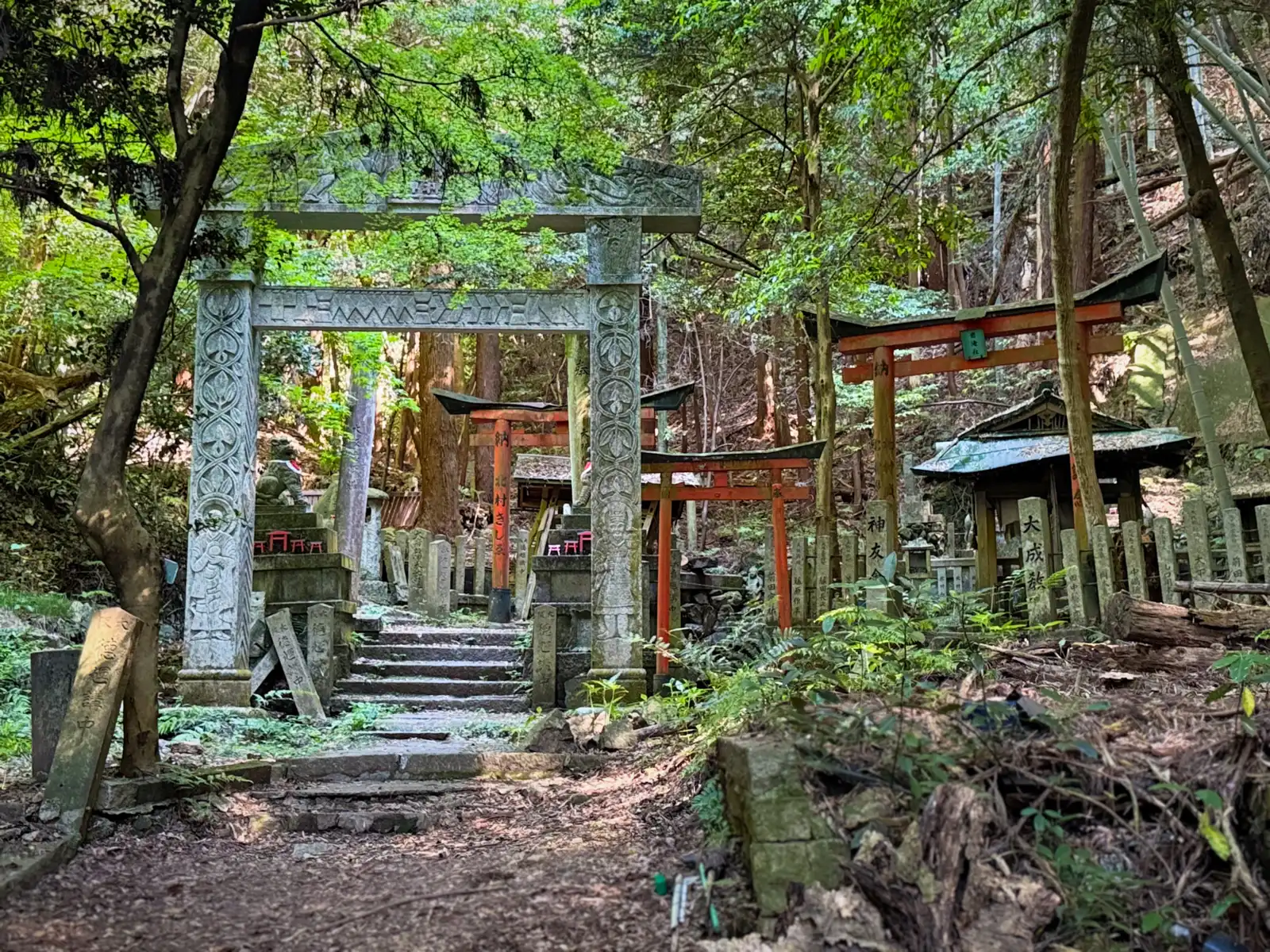
Nobody knows when it was founded. The old records burned in a forest fire during the Edo period, so the date is lost, though the shrine is believed to have housed a guardian deity for the Ki clan, who had lived in Fukakusa for generations. The path up is lined with small mounds, and along the way stand two unusual, non-traditional torii of different sizes, both carved from stone.
I took the bamboo path up. The huge stalks are impressive, knocking and cracking against each other in the wind, and the whole place does feel a bit eerie, especially knowing you’re about to visit an abandoned shrine. Just before the lower grounds I passed a pond, and right as I walked by, something moved in the water. All I saw was a sudden splash, and then big ripples. I waited for a moment, but everything just got dead quiet. A bit too quiet.
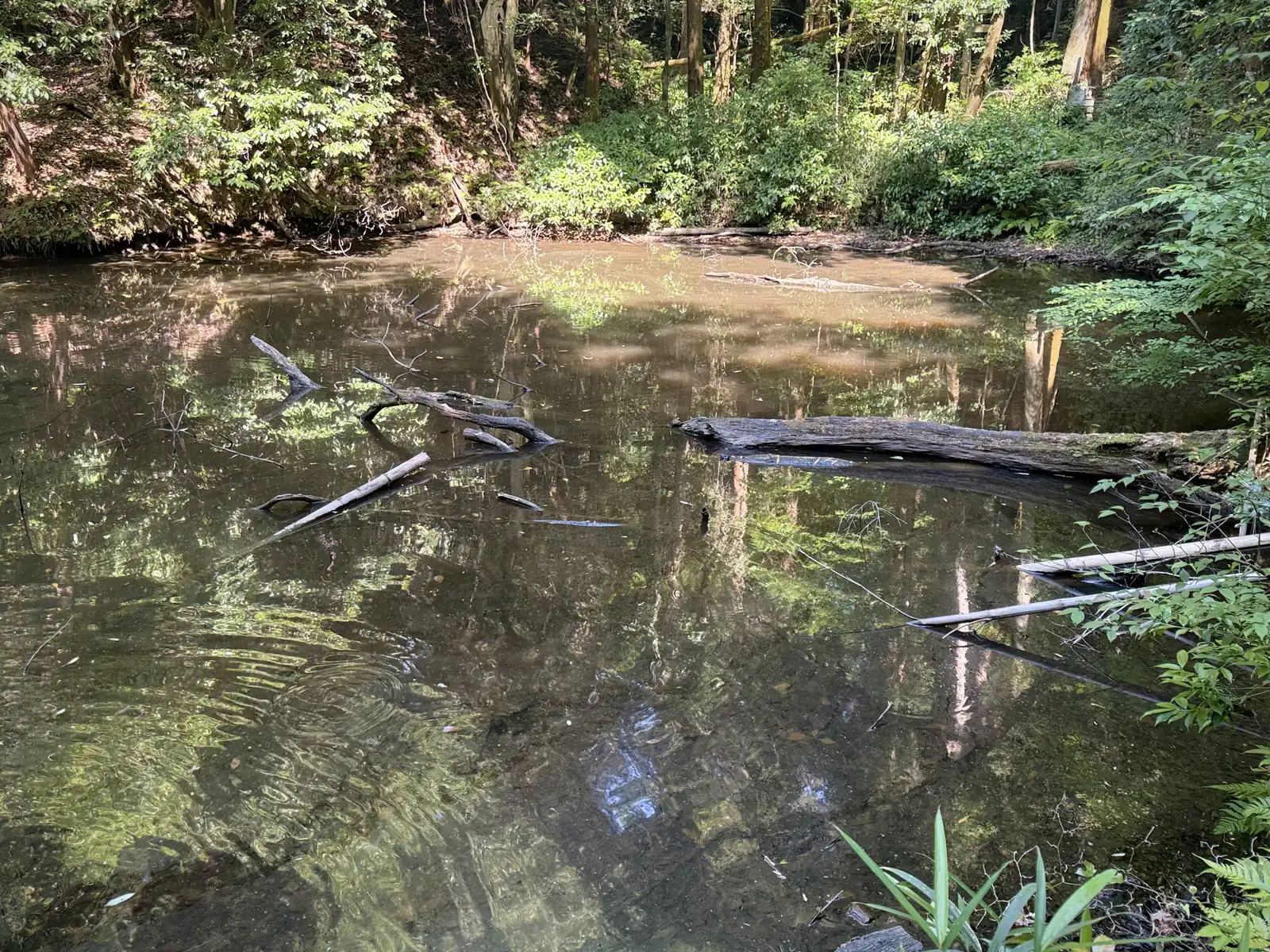
A big catfish? Or a ghost of a samurai? I guess I’ll never know. But I found out later that the pond has a story. By local legend it’s where Akechi Mitsuhide sank his armor. After he killed Oda Nobunaga at Honno-ji in 1582 and then lost the Battle of Yamazaki eleven days later, he ran for Sakamoto Castle, and his route is said to have come up over these hills, where he is supposed to have sunk his armor in this pond as he crossed. He never reached the castle; peasants caught him on the run and finished him off in the hills southeast of here. Whether his armor is really down in that water nobody can say, and the dragon-goddess stone on the bank is recent, put up only in 1980. But standing there after whatever it was that moved, I was glad it was still daytime. This is not a place to hang out at night!
There were also a couple of signs warning about mamushi snakes, and sure enough, I came across one on the path. The mamushi is small but not one to shrug off; its bite does real tissue damage and turns dangerous fast without treatment. I didn’t stop for a closer inspection. The mosquitoes, for their part, are relentless here. The first time I came I brought a big camera and paid for it. They swarmed the thing, and sat on my hand while I tried to work the shutter, so I shot fast and left covered in bites. This time I knew better, sprayed myself before getting into the forest, and got away with only a few. It also helped that all I carried was a phone.
So if you feel adventurous, have a bit of Indiana Jones in you, and don’t mind a venomous snake or two and mosquitoes that follow you the whole way up, this place is for you. Just keep quiet while you’re here, and leave everything where it is.
This third time, there were many miniature votive torii set out in places I hadn’t seen them before, perched on stone monuments and lanterns. Abandoned as the shrine is, people clearly still come here to pray and leave offerings. There’s no priest, though, and nobody on the grounds. You might run into a cat, hanging around the main hall.
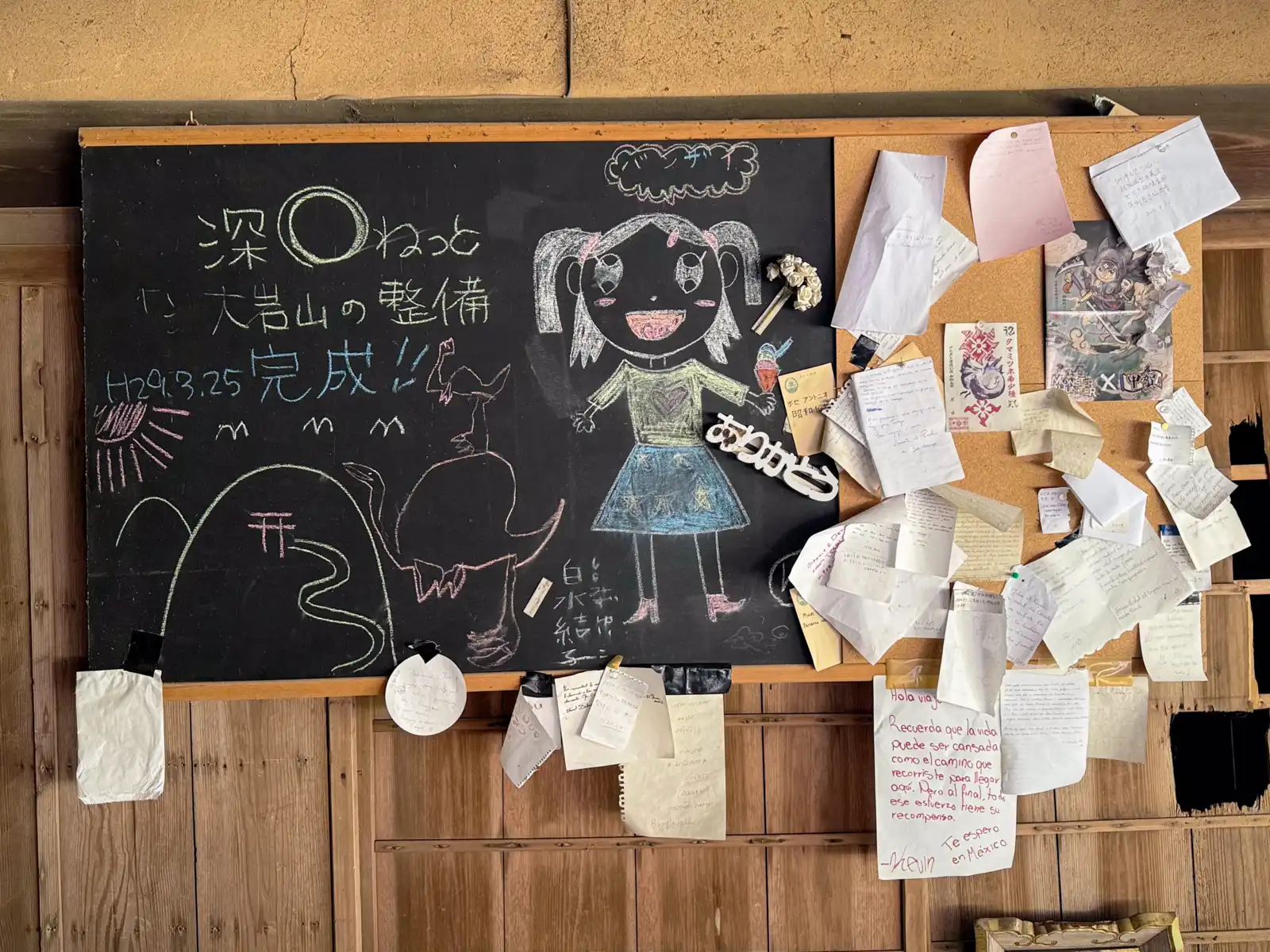
In the abandoned shrine office there’s a blackboard covered in drawings and writing, with paper messages pinned all over it, a lot of them left by visitors from other countries. I’m fairly sure the drawing of a girl on it is the same one that was there when I came years ago. Nobody touches any of it, and I hope nobody ever does.
The shrine has long had a reputation for healing serious illness, and one of the people who came here to pray was the Kyoto painter Domoto Insho. He and his mother were both devout at Oiwa, and back in the mid-20th century he designed and donated the two carved stone torii you pass on the way up, the large one down on the approach and the smaller one near the main hall. His mother had been gravely ill, and the torii were his way of giving thanks once she recovered.
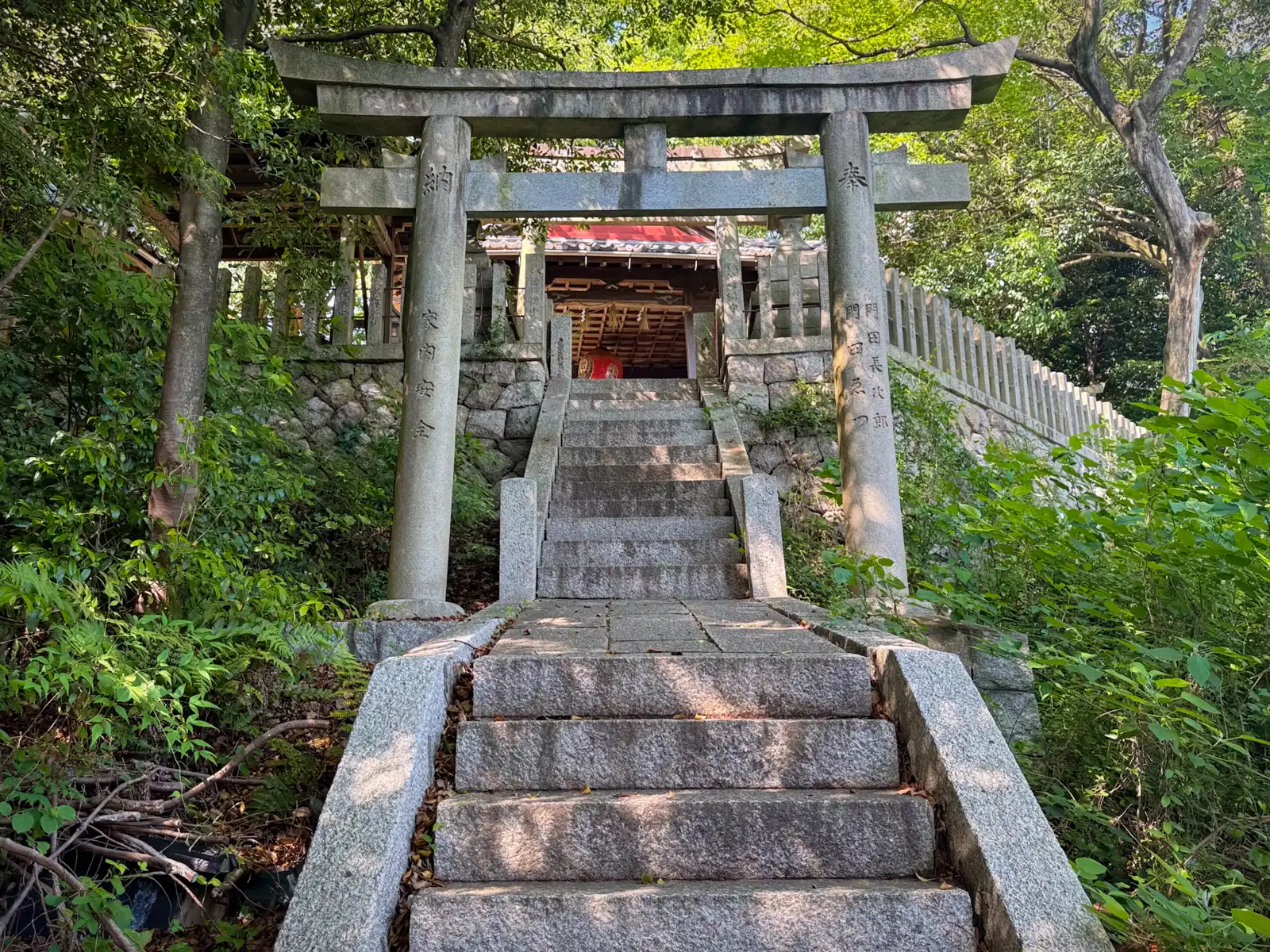
It’s hard to picture now, but the place used to draw crowds. A 1933 gazetteer of the Fukakusa area, Fukakusa-shi, describes it as a working pilgrimage site for people with illnesses thought incurable, tuberculosis above all, with buses running worshippers up from Fujinomori station and the devout staying for days at a time to pray. The names carved into the torii and the stone fences are mostly Osaka merchants, who came all this way for a cure. These days you can climb the whole path and not pass a soul.
There’s something backwards about closing an article with photos of a place and then hoping you’ll leave it alone. But that’s where I’ve landed. Look at the pictures. They’re the version without the climb, the snakes, or whatever it was that moved in that pond. The place has done fine without visitors for over ten years now. I hope it gets another ten.